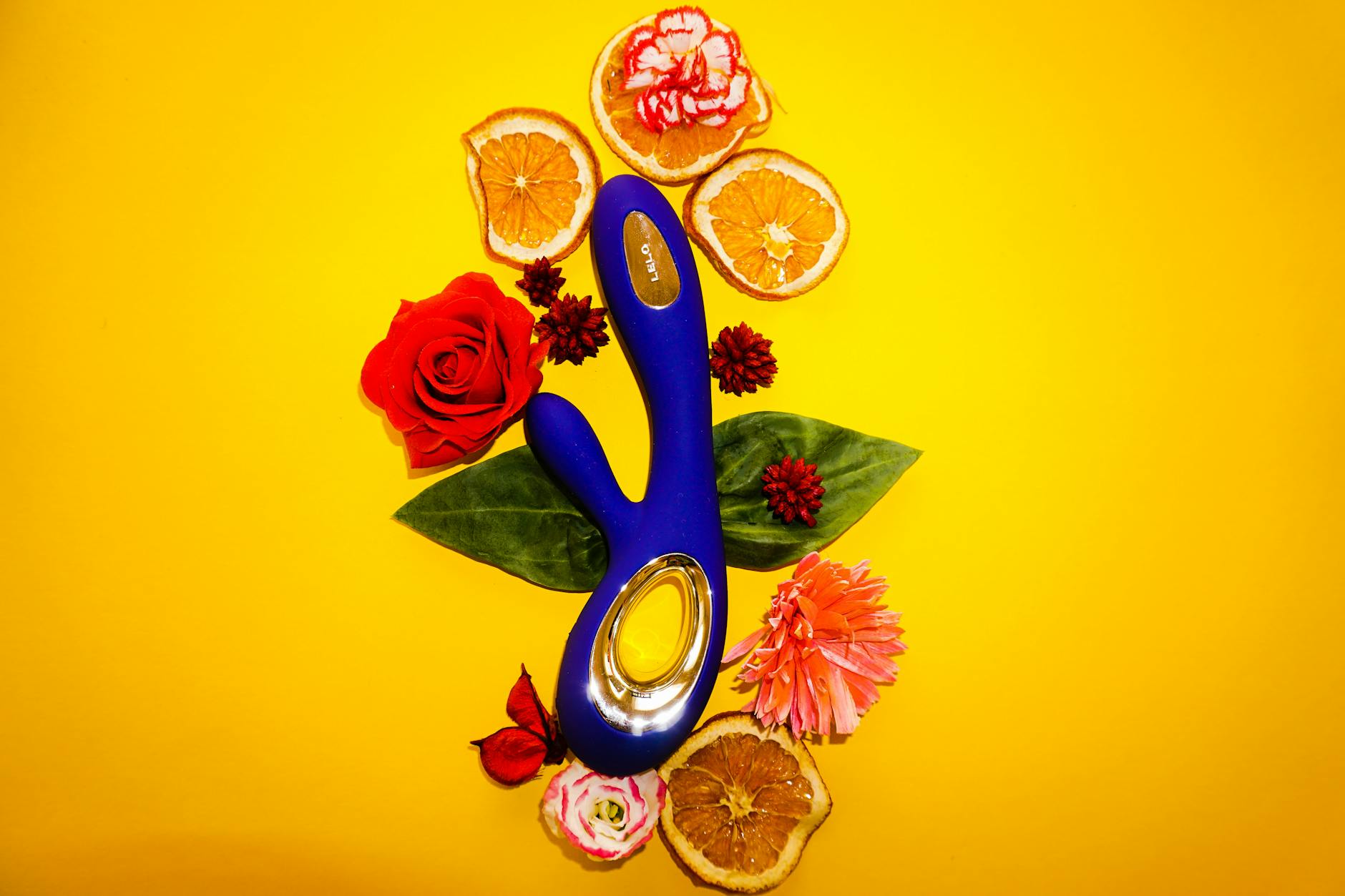
Here's what nobody tells you about your cycle
Your pleasure isn't static. Every 28 days (give or take), your hormones shift in predictable ways. Estrogen climbs, peaks, crashes. Progesterone follows its own timeline. Testosterone spikes briefly mid-cycle. These aren't just abstract biochemical events. They literally change how your clitoris responds to stimulation, how quickly you get aroused, and what kind of orgasm you experience.
If you've ever noticed that your lemon vibrator feels incredible some weeks and meh other weeks, you're not imagining it. Your body is genuinely responding differently. The problem is that most people think something is wrong instead of recognizing that something is working exactly as designed.
The follicular phase: rising estrogen, rising sensitivity
Your follicular phase starts on day one of your period and lasts until ovulation (roughly days 1-14, though this varies wildly). Estrogen is rising steadily. Your brain is getting more dopamine. Energy is climbing.
During this phase, your clitoris is more engorged and more accessible. Tissue is thicker and more lubricated. Your arousal threshold is lower, meaning it takes less stimulation to trigger a response. Many people report that they can orgasm faster, more easily, and sometimes multiple times in succession.
This is when a lemon clitoral vibrator often feels the most intense. The suction mechanism of devices like the Lem works beautifully with the increased blood flow and sensitivity. You might find yourself naturally gravitating toward higher patterns (5-7 instead of 2-3) and enjoying longer sessions.
For your cycle, this is often the phase where you might experiment with longer warm-up times become unnecessary. You might skip the first few intensity levels and find that patterns you'd normally build toward feel comfortable right away.
The ovulatory phase: testosterone peaks, desire peaks
Ovulation happens around day 14. For a few days on either side, testosterone surges alongside the estrogen peak. This is the phase where desire is highest, orgasms are often most intense, and your body is literally signaling readiness for connection.
Your clitoris is still engorged. Your vaginal lubrication is at its peak. Your arousal unfolds quickly but doesn't necessarily peak as fast as in early follicular.
This window is when lemon vibrators often feel the most pleasurable. The combination of testosterone (which amplifies pleasure sensation), estrogen, and heightened blood flow creates what many people describe as their best experiences. Orgasms during ovulation tend to have more muscular contractions and longer resolution phases.
One note: if you're using a lemon sucker or any suction-based vibrator, pay attention to whether the intensity needs to shift. Some people find that the peak sensitivity during ovulation means they need slightly lower patterns than they expected. Others find they want more intensity. There's no rule. Your job is to notice.
The luteal phase: progesterone takes over, sensation dulls
After ovulation, progesterone rises. Estrogen drops. This second half of your cycle (roughly days 15-28) is metabolically and neurologically different from the first half.
Progesterone is a depressant on your nervous system. It's calming, grounding, and it also blunts sensation. Your clitoris is less engorged. Lubrication decreases. Your arousal takes longer to build. Your orgasms, when they happen, tend to be less explosive and more diffuse.
This is when you might notice that your lemon vibrator feels less responsive. That pattern that was perfect last week suddenly feels too gentle. Or alternatively, you might feel overstimulated by the same intensity that felt great during ovulation. Both responses are normal.
Many people make the mistake of thinking they've lost interest in pleasure during the luteal phase. What's actually happening is that your nervous system is downregulated. You're not broken. You're cycling.
Premenstrual sensitivity: a brief window of change
In the five to seven days before your period, progesterone is still high but beginning to drop. Your uterus is preparing to shed its lining. Your pelvic floor might feel slightly more tense. Your clitoris might feel more tender.
This is when some people experience heightened sensitivity that can actually feel good. Others find that the same vibrator intensity that felt pleasant two weeks ago now feels too intense or even uncomfortable. Touch aversion can show up here. Your nervous system is on higher alert.
If you're someone who experiences touch aversion at certain times of your cycle, the luteal and premenstrual phases are worth paying attention to. You might benefit from lower intensity patterns, longer warm-up time, or shifting to external-only stimulation during this window.
How to track what actually works for you
Here's the practical part. Buy a simple cycle tracking app (Clue, Natural Cycles, even just a calendar note) and start logging one piece of information: which pattern on your lemon vibrator felt best that day, and whether arousal took longer than usual.
After two or three cycles, patterns will emerge. You'll notice that pattern 4 feels perfect on day 10 but overwhelming on day 24. You'll notice that your warm-up time on day 13 is about five minutes, but on day 22 it's twenty. You'll notice that your orgasms during ovulation feel fundamentally different from your orgasms during the luteal phase.
This isn't something to fix. It's something to anticipate and work with. When you know that your sensitivity is lower during the luteal phase, you can plan accordingly. You can use longer warm-up time. You can explore patterns you normally skip. You can be patient with yourself instead of frustrated.
What doesn't change across your cycle
Your capacity for pleasure is constant. Your clitoris has roughly 8,000 nerve endings whether you're in the follicular or luteal phase. Your brain's reward pathway doesn't disappear mid-cycle. You can still orgasm during every phase of your cycle, even if the path to orgasm looks different.
The mystique around cycle-based pleasure often makes it sound like you're either "on" or "off." That's not accurate. You're modulating. You're shifting. You're cycling through different versions of pleasure rather than on and off switches.
The conversation with a partner
If you're partnered, your cycle rhythm might not sync with theirs (people without menstrual cycles have their own arousal rhythms, usually flatter and less predictable). This means some weeks you're in sync and other weeks you're genuinely cycling through different arousal landscapes.
The trick isn't to fight this. It's to name it. "I'm noticing that I need longer warm-up this week" is information, not rejection. "I'm more sensitive right now, so let's keep intensity lower" is a request, not a complaint.
Your cycle isn't a bug in your pleasure system. It's a feature. The variation is where the richness lives.
If you're exploring solo with a lemon vibrator, this information just means you can get to know multiple versions of your body. Your ovulatory self has different preferences than your luteal self. Both are you.
When hormone-based changes feel wrong
If your cycle has suddenly shifted in a way that doesn't match this general map, or if you're experiencing pain, cramping during arousal, or loss of sensation that doesn't come back when expected, those are signals worth investigating with a gynecologist or menopause specialist.
Conditions like endometriosis, PCOS, and others can change how your body responds across your cycle. Starting or stopping hormonal birth control reshuffles the entire rhythm (which is why the post on how to use a lemon vibrator during hormonal birth control is worth revisiting if you've recently made a change).
Your cycle should shift your pleasure experience. It shouldn't eliminate it.
The rhythm is your advantage
Here's what I tell my clients: most people experience their bodies as random. "Sometimes I feel like sex, sometimes I don't." "Sometimes my vibrator works great, sometimes it doesn't." The randomness feels chaotic and a little bit broken.
Once you understand your cycle, that chaos becomes rhythm. You start to anticipate. You plan for it. You work with it instead of against it. Your lemon vibrator becomes less of a tool that sometimes works and more of a partner in a conversation you're having with your own body across twenty-eight days.
That shift changes everything.
People also ask
Can you use a lemon vibrator safely during your period?
Absolutely. Your period is not a barrier to pleasure. In fact, many people find that orgasms during menstruation feel particularly intense because your pelvic muscles are already contracting with the shedding process. You might experience slightly different sensations because blood flow is at its peak, but using a lemon clitoral vibrator is safe and often deeply pleasurable. Just make sure you're comfortable, use a darker bedding or towel if you're worried about mess, and adjust intensity if your sensitivity feels different.
Why does my arousal take longer during certain weeks?
Progesterone, the dominant hormone in the second half of your cycle, is a nervous system depressant. It's calming and grounding, which is great for stress management but slows down arousal. During the luteal phase, your clitoris is less engorged, your lubrication is reduced, and your brain is literally less responsive to dopamine. This is biology, not dysfunction. Building in longer foreplay or warm-up time during these weeks works with your body instead of fighting it.
Does birth control change how lemon vibrators feel?
Yes. Hormonal birth control suppresses the hormonal fluctuations that create cycle rhythm. If you're on hormonal birth control, your arousal and sensation remain more stable across the month, but you also lose the natural peaks and valleys that some people enjoy. Your sensitivity might be lower overall or your arousal might take longer throughout the month. Some people find this consistency freeing. Others miss the rhythm. Neither response is wrong.
What if my cycle is irregular? Do these patterns still apply?
If your cycle length varies significantly or you're approaching menopause, your hormone patterns are less predictable. You might still notice that your sensitivity shifts week to week, but you won't have the same repeating pattern. Tracking becomes even more useful here because the pattern that emerges is specific to your body, not a textbook 28-day cycle. Also worth knowing: conditions like PCOS, thyroid issues, and perimenopause all shift cycle length and hormone timing. A gynecologist can help clarify what's happening.
Why do some weeks feel like I lose sensation entirely?
During the luteal phase, progesterone is elevated. This hormone genuinely reduces your nervous system's responsiveness to stimulation. Your brain is less primed for arousal. Your clitoris is less engorged. It's not that you've lost sensation. It's that your baseline sensitivity has shifted lower. This is temporary and cyclical, not permanent. If sensation loss persists across multiple cycles or doesn't correspond to your menstrual timing, that's worth discussing with a healthcare provider.
Can I predict my best pleasure days?
Yes, roughly. Ovulation and the few days before it are typically your peak arousal window. Early follicular phase (days 1-7) is also usually strong. Late luteal (days 22-28) is typically lower but not absent. That said, individual variation is huge. Some people's best days align perfectly with ovulation. Others find their sweet spot mid-follicular. Tracking gives you the answer for your specific body.