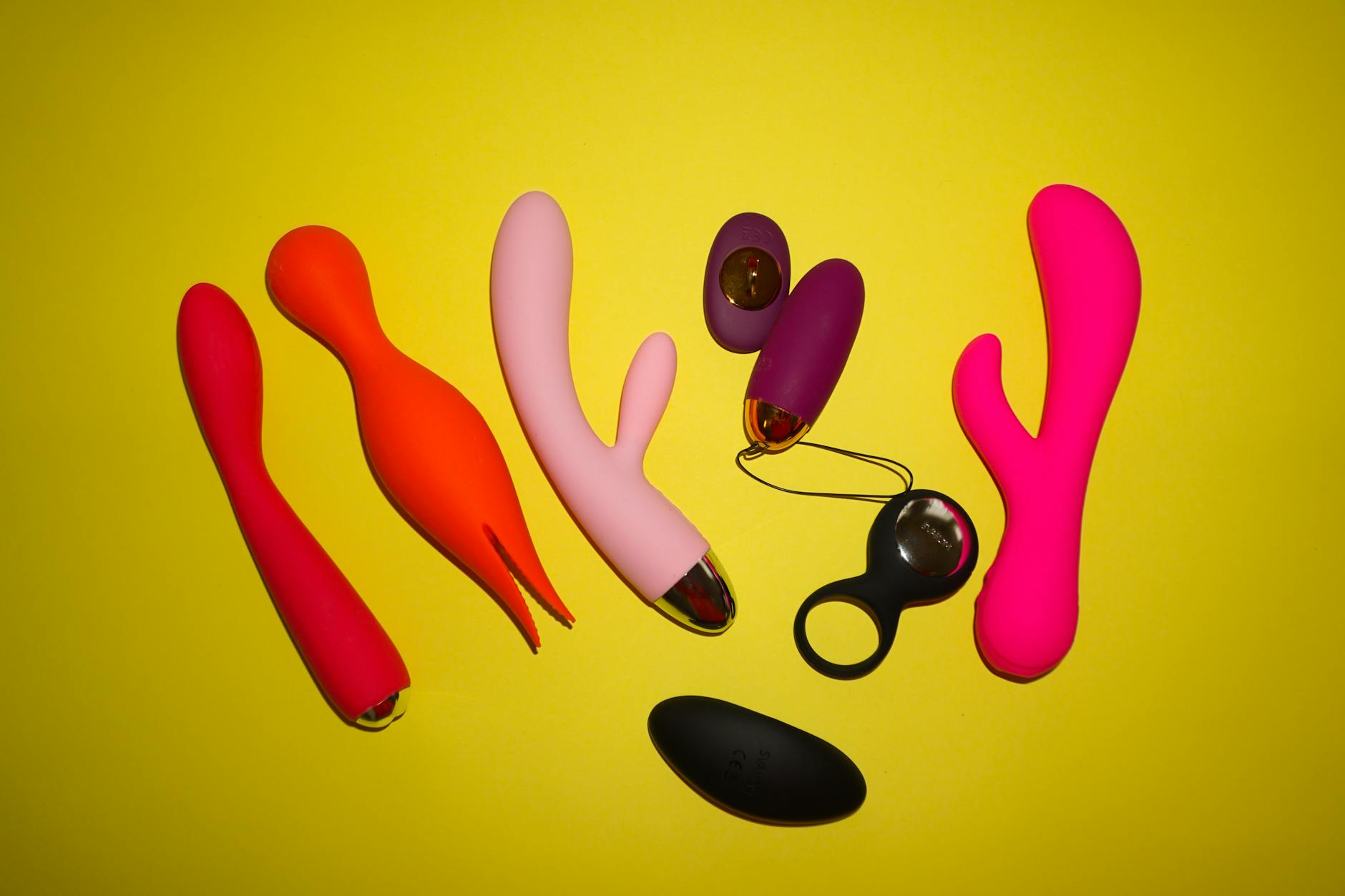
Let's start with the honest part
One of you wants a lemon vibrator. The other prefers fingers. This isn't a mismatch. It's an opportunity, if you stop treating it like a problem.
Most couples frame this as either/or. Either we use the toy and they feel excluded, or we don't use it and one of you resents the other. Both outcomes are avoidable. The real move is integration, not compromise.
Why manual lovers and vibrator lovers can actually complement each other
Here's what usually happens. A partner who loves manual stimulation is drawn to the variability of hands. Pressure changes. Speed shifts. The rhythm responds to feedback in real time. It feels alive because it literally is alive. There's no script.
Meanwhile, a partner who loves lemon vibrators or other clitoral vibrators appreciates precision. The vibration pattern is consistent. The intensity is adjustable. There's no guesswork, no hoping they'll find the right spot. It's direct access to what works.
These aren't opposed. They're complementary. The key is using them together instead of separately.
The integration framework
Start by renaming what you're doing. This isn't "using a toy." This is expanding your shared toolkit. You already have hands, mouths, bodies. A lemon vibrator is another instrument in the band, not a replacement for any of them.
The manual lover can use their hands as the primary tool and introduce the lemon vibrator as the accent. Or the person who loves vibration can focus on the device while their partner maintains skin contact elsewhere. Or you alternate control. The architecture matters less than the intention: you're building something together.
Three patterns that actually work
Pattern One: The Hand and Device Combo
One partner uses the lemon clitoral vibrator while the other uses their hands on different areas. Maybe they're using the vibrator on the clitoris while they kiss their partner's neck, or use fingers internally while the vibrator works externally. The manual partner isn't replaced. They're repositioned. They get to stay hands-on while their partner gets the precision they need.
The beauty of this approach is that the manual partner can still read what's happening. They're watching, touching, responding. It doesn't feel robotic because a human is still the primary navigator.
Pattern Two: Alternating Control
Start with hands. Build arousal manually for 10 to 15 minutes. When the person receiving feels ready, introduce the lemon vibrator. Hand it over or use it together. The switch from manual to vibration can actually intensify sensation because the tissues are already warmed up and engaged.
After a few minutes of vibration, you can switch back to hands if it feels right. Some couples find this rhythm especially satisfying because it's not a one-note experience. It's a conversation with texture.
Pattern Three: Hand-Held Vibrator, Active Partner
One partner holds and controls the lemon vibrator while the other partner stays physically present and active elsewhere. The manual lover gets to stay in control of something. They're not sidelined. They're just not the sole source of stimulation. For some partners, holding the vibrator while maintaining other contact is exactly the kind of involvement they need to feel connected.
The conversation that makes this work
None of these patterns matter if you don't have the talk first. Here's what to say.
"I love how you touch me. That's not changing. Here's what I also want to explore: a lemon vibrator can give me a specific kind of sensation that I struggle to get other ways. That doesn't mean your touch is wrong. It means I need both. Can we figure out how to have both?"
If your partner expresses worry ("Does this mean I'm not enough?"), the honest answer is no. A vibrator isn't a judgment on their hands. It's a different tool. You wouldn't tell someone who loves oral sex that fingers are enough. You'd recognize they like different things.
If your partner needs more reassurance, try this: "I want you there while I'm using this. I want to feel your hands on me. I want this to be us, not me and a toy."
That language shift changes everything. It stops being about the device and becomes about inclusion.
Why manual partners often soften on vibrators
The first time a partner who prefers manual stimulation watches or participates in vibrator use, something often shifts. They realize the vibrator isn't reducing their role. It's clarifying what works. That clarity is useful. Next time you're together, they might go straight to the technique they watched work. They might use it as foreplay before adding manual touch. They might hold the vibrator while they kiss you.
I've worked with hundreds of couples navigating this. The manual partners who resist vibrators the least are the ones who feel actively involved. If they're holding it, controlling the pattern, or positioned close enough to feel the vibration, they stop seeing it as replacement and start seeing it as collaboration.
Practical setup tips
Position matters. If you're lying down, a lemon vibrator is easier to manage than a large wand. The compact shape means your partner can still access other areas easily. If you're in a position where you want to maintain eye contact, sitting up or facing each other changes what's possible.
Start with lower settings. A manual partner sometimes feels the vibration is too intense and worries about causing numbness. Most lemon vibrators have 3 to 5 speeds. Beginning at level 1 or 2 gives your partner a chance to adjust to the sensation.
Keep lubrication handy. A manual partner often provides natural lubrication through touch. A vibrator doesn't. Water-based lube makes the whole experience smoother and keeps the manual partner's hands engaged comfortably.
Talk during, not just before. "Does this feel good?" "Do you want me to speed up?" "Should I switch back?" Running commentary makes it clear you're still connected, not disappearing into a solo experience.
When manual partners come around (and when they don't)
Some manual partners soften immediately. Others take time. A few don't come around, and that's real. If your partner is firmly opposed to vibrators in shared sexual experiences, pushing won't help. Instead, explore whether the resistance is about feeling replaced, about control, or about something else entirely.
Sometimes the block isn't about the vibrator itself. It's about feeling disconnected in the relationship, or not being heard in other parts of your intimate life. I've worked with couples where vibrator resistance was really a symptom of a larger disconnection. Fixing the underlying issue sometimes makes space for the vibrator conversation to happen differently.
If your partner never wants to use a lemon vibrator together, you have options. You can use it alone. You can use it with different partners if that's your relationship structure. Or you can accept that this particular pleasure isn't a shared one and find other forms of integration. None of these are failures.
The reframe that changes everything
Here's what I tell couples in my practice. A vibrator isn't a threat to manual stimulation. It's evidence that you're curious about sensation, and that's something to build on together.
If your manual-loving partner can reframe the lemon vibrator from "replacement" to "expansion," the whole dynamic shifts. You're not choosing between hands and vibration. You're saying yes to both. That's not compromise. That's abundance.
Start small. Use these patterns as experiments, not rules. Pay attention to what feels connected and what feels isolated. Adjust based on what you actually experience, not what you think should work.
Your pleasure matters. Their preference for manual touch matters. Both can be true in the same room, at the same time. That's the whole point.
People also ask
Can you use a lemon vibrator with a partner who's never used one before?
Absolutely. Start by explaining how it works without the pressure of using it immediately. Let them hold one, feel the vibration at different speeds. Normalize it as an object before it becomes part of your intimate life. Many first-time experiences with a lemon vibrator happen when there's zero expectation and lots of curiosity. That's the sweet spot.
Does using a vibrator make manual sex less satisfying later?
No. In fact, many couples report the opposite. Using a lemon vibrator helps clarify exactly what kind of touch feels best, which partners then replicate manually. It's like you're teaching each other a new language. The vibrator is the textbook; hands become fluent over time.
What if my partner uses the vibrator on me but I don't want them to touch me at the same time?
That's valid. Some people need to focus on the vibration without additional sensory input. You can ask for that explicitly. "I want to focus on the vibrator for now. Let me tell you when I want your hands." Your partner can stay present without touching, offer verbal encouragement, or simply be nearby. Presence doesn't require physical contact.
Is it weird if my partner gets aroused watching me use a lemon vibrator?
Not even slightly. Many manual-loving partners find watching intensely arousing. They see you enjoying yourself. They witness the precision and intensity. Some partners say watching their partner with a vibrator is one of the hottest things they've seen. That arousal can fuel the next phase of intimacy, whether that's manual touch, sex, or something else entirely.
How do I bring this up if my partner has said they don't like vibrators?
Frame it as evolution, not a do-over. "I've been thinking about what you said about vibrators. I'm curious if you'd be open to trying something different than before. Not to replace what we already do, but to add to it." Then describe one specific pattern, not a theoretical situation. Make it concrete and collaborative from the start.
What if my partner is a manual stimulation purist and refuses any toys?
Respect that boundary while being honest about your own needs. You might say, "I want to explore this with you if possible. If not, I need to understand what the barrier is, because this is important to me." That might open a conversation about the real concern, or it might confirm that this is a genuine incompatibility. Both outcomes are useful information. You can then decide what feels right for your relationship.
The bottom line
Lemon vibrators don't have to divide couples who value different kinds of touch. They can connect you. The manual lover gets to stay involved, to watch, to participate. The person who loves vibration gets precision and clarity. Neither loses anything. Both gain texture.
If you're ready to explore this with your partner, start with a conversation, not the device. Everything else builds from there.
Have questions about how to navigate vibrator use in your specific dynamic? We're here to help. Get in touch and let's talk through what would work best for you both.