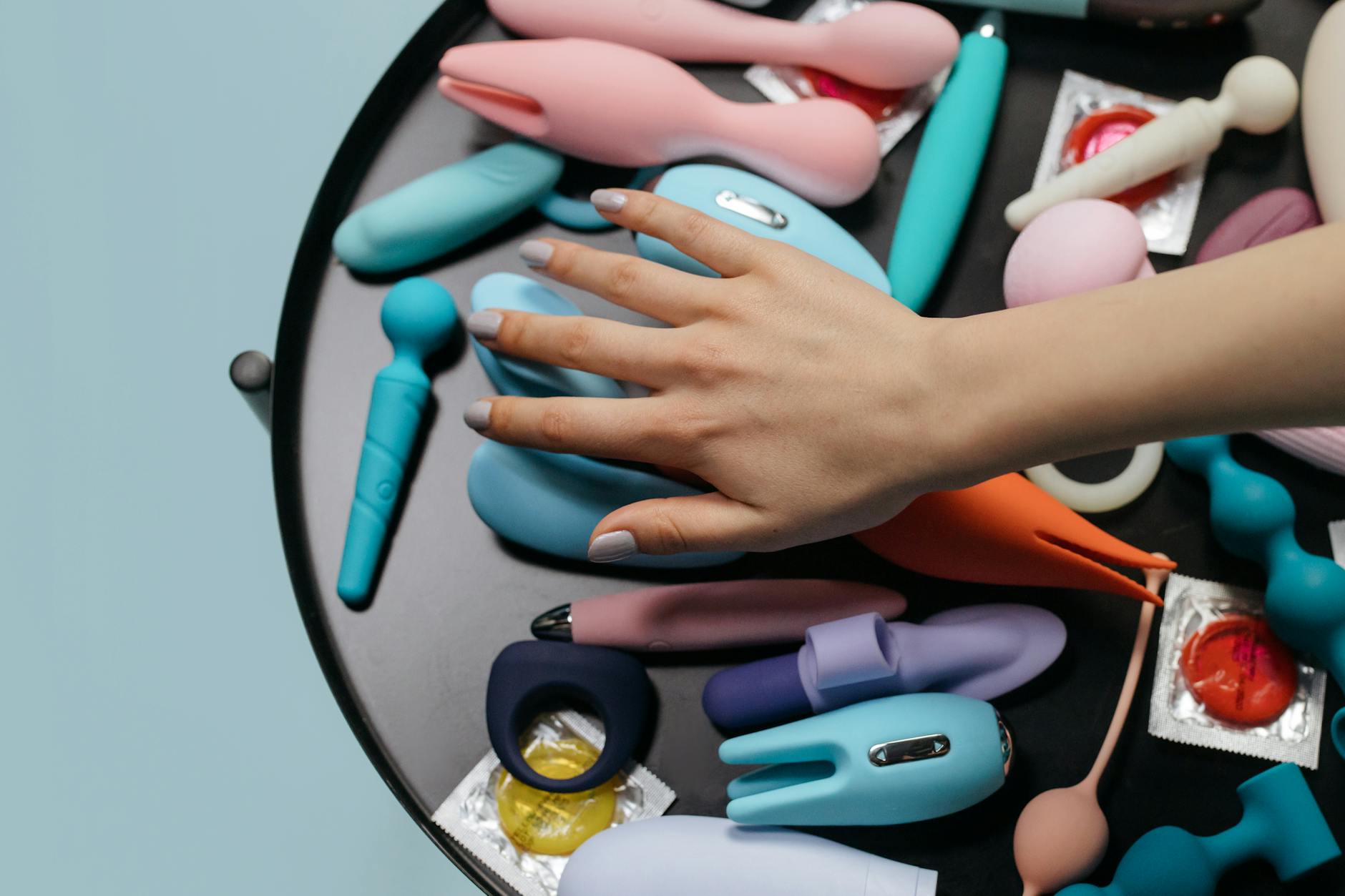
Here's the thing about introducing toys when partners aren't on the same page
One of you has been thinking about this for months. The other just heard about it five minutes ago. Or maybe you're both curious but scared of different things. The desire is there, but the comfort levels don't match up. This is the actual scenario most couples face, and it's way more solvable than you think.
I've worked with hundreds of couples navigating this exact tension. The couples who succeed aren't the ones with naturally aligned desires. They're the ones who can have an awkward conversation without making it mean something it doesn't.
Why the conversation fails before you even start
Most people introduce the idea of a lemon vibrator or any clitoral vibrator like this: "Hey, I think we should try a toy." Then they wait for a reaction. And the reaction is usually defensive, because introducing a vibrator can feel like a critique. It can land as "What we're doing isn't enough" or "I want something you can't give me."
Neither of those things is usually true. But that's what the person who didn't bring it up hears.
The other common failure mode is avoidance. One partner wants to explore, and the other is nervous, so nobody says anything. The nervous partner is too uncomfortable to speak up. The curious partner is too afraid of rejection to push. And slowly, the desire to explore becomes a thing that lives between you, unspoken and growing heavier.
That's the dynamic that actually damages intimacy. Not the vibrator. The silence.
How to start the conversation before anything else
Here's what actually works: separate the conversation about desire from the conversation about tools.
First conversation: "I've been thinking about our sex life, and I want to make sure we're both getting what we need. I'm curious about trying something new, but I want to understand what you actually want first. Can we talk about that?"
That's it. You're not pitching the lemon vibrator yet. You're just making space for honesty.
The person who's nervous will likely say something like, "I like what we're doing" or "I'm worried it means something's wrong." And that's the real conversation. Not about toys. About what your current intimate life means to each of you, and whether either of you feels like something's missing.
Often, what's actually missing isn't a vibrator. It's time, or attention, or feeling desired. Once you name that, the vibrator becomes a solution to something specific, not a Band-Aid on silence.
The sensitivity mismatch problem
One of the most common tensions: one partner is highly sensitive, and the intensity of a lemon clitoral vibrator feels too much. The other partner could use more stimulation to feel anything.
Solution: a lemon vibrator is actually useful here because the suction technology works differently than traditional vibration. It stimulates the entire clitoral complex without the sharp, direct pressure of a wand. This means it often feels good for both high and low sensitivity people, just at different intensity levels.
When you're testing it together, start at pattern 1 or 2. That's the point. You're not trying to reach maximum pleasure on day one. You're finding the threshold where both people feel something good. For the sensitive partner, low intensity often feels like a release. For the person who needs more, you can gradually increase or use it as part of foreplay that builds gradually.
The key: both partners get to control the pacing. If one person is holding the lemon vibrator, they should be checking in constantly. "Does this feel good?" "Too much?" "Want me to change the pattern?" That's not just considerate. That's erotic. It's collaboration.
When desire is completely mismatched
One partner wants sex twice a week. The other wants it once a month. This is where couples often think a vibrator will solve the problem. It won't. But it can change the dynamic in a useful way.
Here's the reality I tell couples: desire discrepancy is about frequency, not about the person being touched. A lemon vibrator can help the higher-desire partner feel satisfied solo, which takes pressure off the lower-desire partner. But that only works if both people agree to it explicitly.
The conversation sounds like: "I want to make sure you're not feeling pressured. I know I want sex more often than you do. I'm thinking I might explore solo pleasure on nights when you're not interested. I want you to feel completely comfortable saying no, and I want to feel taken care of too. Does that feel fair?"
That's honest. And it creates space for the lower-desire partner to sometimes surprise you by being interested, because they're not defending against constant pursuit.
The lemon sucker becomes a tool for both people to feel safe, not a replacement for your partner or a sign of failure.
Different comfort zones about bodies
Some people are shy about their own pleasure. Some people worry about being watched. Some people have past trauma that makes certain touches feel unsafe.
All of this gets easier with a lemon vibrator because it changes what the interaction feels like. It's not about your partner's hands on you. It's about a tool that creates sensation. For some people, that distance feels safer. They can focus on pleasure without the vulnerability of being seen.
If your partner feels uncomfortable being watched while using a clitoral vibrator, respect that completely. Suggest using it under covers or in lower light. Or just turn away. The point is pleasure, not performance.
If your partner is uncomfortable with the idea of you having pleasure from something other than them, that's a different conversation entirely. It's worth having with a therapist, because that belief usually points to deeper insecurity that a vibrator won't solve. But I can tell you: a lemon vibrator doesn't replace a partner. It expands what pleasure is possible. Two different things.
The partner who's hesitant but willing
This is actually the most common scenario. One person brings it up. The other person isn't excited, but they're willing to try.
If this is your situation, here's what makes the difference: no pressure. Seriously. Bring the lemon vibrator home, show them it's there, and then drop it. The second they feel pressure to be enthusiastic or to have a specific reaction, they'll build resistance.
When you do try it together, frame it as exploration, not performance. You're not trying to have the best sex of your lives. You're learning what feels good. If it feels weird or awkward, that's information. Name it. Laugh about it. Try something different.
Most couples who start hesitant end up being curious because they've separated the tool from the pressure. The lemon vibrator becomes a neutral third thing you're both investigating together, not a symbol of desire discrepancy.
Creating ongoing consent and check-ins
One conversation isn't enough. You need to build in regular moments where you can say: "This is working for us" or "I'm feeling weird about this" without judgment.
I recommend checking in every few weeks. Not in a serious, scheduled way. Just: "How are you feeling about trying things together lately?" The answer might be "I love it, let's do it more" or "I'm still getting used to it" or "Actually, I'd like to try something else instead."
All of those are real. And all of them require you to listen without defending.
If your partner says they're uncomfortable, that's not a reflection on you. That's information you need to make decisions together. If they say they love it, that's also not about you. That's about them discovering something that feels good. The sexiness is in the collaboration, not in the tool.
What actually changes when you do this right
Couples who navigate this conversation well report that intimacy deepens. Not because the lemon vibrator is magical. Because they've proven they can talk about desire honestly. They can ask for what they need. They can listen without taking it personally.
That's the actual win. The vibrator is just the reason you had to learn how to communicate about pleasure in the first place.
People also ask
How do I bring up a lemon vibrator if my partner has never mentioned interest?
Start with your own desire, not the tool. "I've been curious about exploring new ways to feel pleasure" is different from "I want to buy a vibrator." The second one can sound like a critique. The first one is about you. Once they understand you're exploring for yourself, the conversation about whether to do it together becomes less defensive.
What if my partner thinks a vibrator means I'm not satisfied with them?
You'll need to say it directly: "This isn't about you not being enough. This is about me wanting to discover something new, and wanting to discover it with you." And then you need to mean it. If you've been resentful about your sex life, that resentment has to come up in conversation first. The vibrator won't fix an underlying relationship problem. But it can be part of rebuilding intimacy if both people are willing.
Can we use a lemon vibrator if one of us has trauma around sexuality?
Absolutely, but carefully. Trauma usually means you need even more communication, not less. The person with trauma should feel completely in control of pacing, intensity, and whether to continue. Consider working with a sex-positive therapist alongside exploring toys. Healing and pleasure can happen together, but it requires professional support and a partner who can handle going slowly.
What if my partner wants to use it solo and I feel left out?
That's real. Talk about it. Maybe you use it together sometimes and they use it solo other times. Maybe you're present while they explore on their own. Maybe you use different tools. The goal is that everyone gets to experience pleasure without resentment building. That takes negotiation, not sacrifice.
How do we avoid the vibrator becoming a crutch instead of something we enjoy together?
Check in regularly. If one partner relies on the lemon vibrator every single time and won't explore without it, that might be worth discussing with a therapist. But honestly, if both people feel satisfied, there's no problem. Some couples use vibrators sometimes. Some use them all the time. What matters is that both partners chose it, not that it was forced out of necessity.
Is it normal to feel awkward the first time we use it together?
Completely normal. Most couples do. The awkwardness usually passes after the second or third time, once the novelty wears off and you're just focused on sensation. If it doesn't pass, that might be worth exploring. Are you actually interested, or were you going along with it? Are you worried about being judged? Those are real conversations to have.
The actual truth
Introducing a lemon clitoral vibrator or any tool into your intimate life with a partner isn't about the vibrator. It's about whether you can talk about desire, listen without defensiveness, and give each other permission to explore. The vibrator just gives you a reason to start.
If you and your partner can have an honest conversation about introducing toys, you can have honest conversations about almost anything. That's the real gift.
Ready to explore together? Start with the conversation. The tool will feel easy once you've done the actual work of communicating. If you're stuck or need support navigating this with your partner, reach out to Hello Nancy. We're here to help.