The honest conversation nobody's having
You started antidepressants. Your mood stabilized. Your anxiety lifted. And then you noticed: orgasms feel miles away, sensation is duller, your body doesn't respond the way it used to. You're not broken. This is one of the most common sexual side effects of SSRIs and SNRIs, and it affects roughly 40-60% of people taking them. It's also almost never discussed during your initial appointment.
Here's what's actually happening in your body, why it matters, and what helps.
How antidepressants change sensation
SSRIs (selective serotonin reuptake inhibitors) and SNRIs (serotonin-norepinephrine reuptake inhibitors) work by keeping more serotonin available in your brain. That's brilliant for mood. But serotonin plays a massive role in sexual arousal and orgasm too. High serotonin actually suppresses the neural cascade that leads to climax. You're getting chemically less excitable.
What this means physically: arousal takes longer to build. Sensation feels muted, like you're experiencing everything through a layer of cotton. Orgasms either take forever to reach or feel less intense when they arrive. Some people describe it as needing to work twice as hard for half the payoff.
The weird part? This doesn't mean your ability to orgasm is gone. It's still there. Your nerves still fire. Your brain still registers pleasure. The signal is just quieter, and reaching it requires more stimulation and more time.
Why clitoral vibrators work when sensation is numb
This is where lemon vibrators change the game. External clitoral stimulation with a vibrator applies precisely calibrated, sustained pressure to an area packed with thousands of nerve endings. When pharmaceutical dampening is happening, that concentrated, repetitive stimulation bypasses the need for the subtler sensations your body isn't registering anymore.
Think of it this way. If your baseline sensitivity is turned down to 3, you need stronger input to reach 8. A lemon clitoral vibrator delivers that input without requiring you to amp up your own arousal or rush the process. You get direct, consistent feedback to the exact nerves that matter.
Many people on SSRIs report that vibrators are the difference between "orgasm feels theoretically possible" and "orgasm actually happens." It's not compensation for broken pleasure. It's a tool that matches the neurochemical reality of medication.
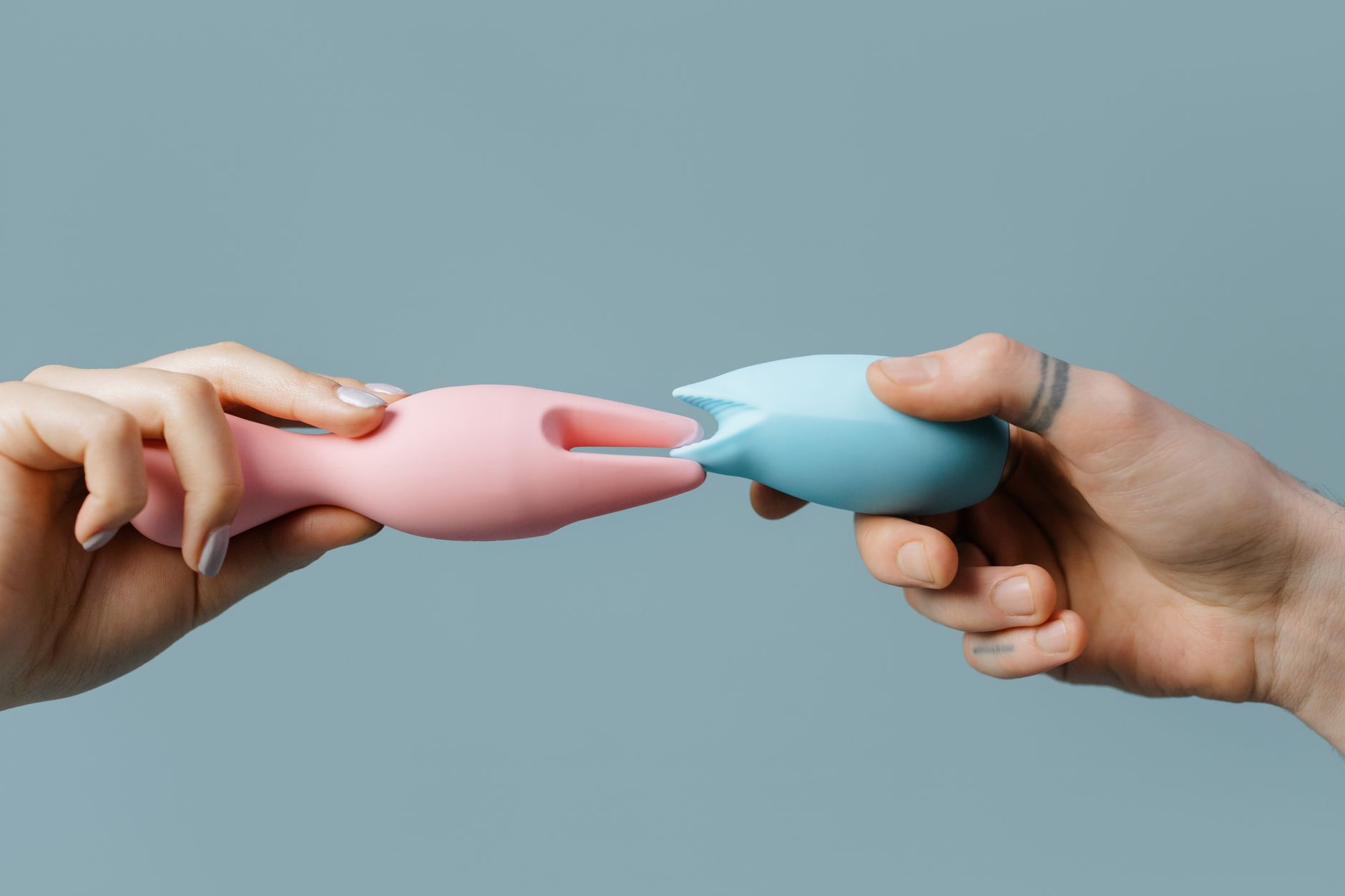
Photo by cottonbro studio on Pexels
The timeline of adjustment
When you first start SSRIs, sexual side effects often hit hardest in the first 2-4 weeks, then plateau. Some people adapt over months. Others don't adapt at all, and that's equally valid. Your brain might find a new equilibrium. You might not. Neither outcome means medication isn't working for your mental health.
What matters is separating two conversations. "Medication is keeping me stable and that's good" is true. "This sexual side effect sucks and I want tools to manage it" is also true. Both things coexist. Using a lemon vibrator or other clitoral vibrators doesn't mean you're fighting your medication. It means you're honoring your whole self, not just the part that needed chemical support.
What actually helps
I work with couples navigating this all the time, and here's what moves the needle.
Slow the approach. If you're used to 15 minutes of foreplay before stimulation, your medicated body might need 25-30 minutes. That's not laziness. That's physiology. Budget time. Remove the pressure to climax on a schedule.
Start with the strongest setting. On a lemon vibrator, this usually means pattern 2 or 3, not the gentlest option. Counterintuitive, but necessary when sensation is dampened. Your job isn't to be delicate. It's to create enough input for your brain to register pleasure.
Use lube even if you don't think you need it. Antidepressants often dry tissue slightly. Water-based lubricant removes friction variability and lets your vibrator do its job without extra drag.
Try partnered use first. If you're with someone, let them hold the vibrator while you focus on arousal cues. Shared responsibility reduces the pressure on you to "perform" your orgasm.
If orgasm still doesn't come, that's okay. Some people on SSRIs experience anorgasmia that doesn't fully resolve. That doesn't mean pleasure isn't happening. Pleasure and orgasm are not the same thing. You might have a genuinely good sexual experience that doesn't end in climax. That's still sex worth having.
Talking to your doctor about it
If sexual side effects are severe, bring it to your prescriber. Options exist. Some people switch to medications with fewer sexual side effects (bupropion is notorious for having the opposite problem, or mirtazapine, which sometimes enhances libido). Others add a second medication like buspirone to counteract the dampening. Some reduce dosage slightly.
None of these changes are guaranteed, and some might affect your mood stability. But your prescriber should be aware and honest about trade-offs. If they dismiss it as "not a real problem," find a new one.
Couples dynamics when one partner is medicated
Here's what I see in therapy. The medicated partner feels guilt. "I'm the reason we're not having good sex." The non-medicated partner feels rejected. "They don't want me." Both are wrong, and both need to hear it.
Medication isn't rejection. It's treatment. It's your partner choosing mental stability, and that choice includes you. The loss of spontaneous arousal isn't personal. It's pharmaceutical. Reframing it from "you don't want me" to "your brain chemistry changed and we need different tools" transforms how couples move through this.
Using a lemon clitoral vibrator together can actually deepen intimacy here. It shifts focus from "can we have sex the way we used to?" to "what does good sex look like now?" That question has better answers.
When to expect improvement
Some people's bodies adapt to SSRIs around the 8-12 week mark, and sensation returns partially. Some never fully adapt, and that's where tools like lemon vibrators become part of your sexual practice long-term. Not a temporary workaround. A genuine part of what works for your body and your relationship.
Many couples I work with say that introducing vibrators while managing medication side effects actually strengthened their sex life afterward. They had to get intentional. They had to communicate. They had to stop assuming "good sex" meant unmedicated spontaneity. What replaced it was more connected, more creative, more honest.
FAQs
Can lemon vibrators replace the sensation antidepressants take away?
Not exactly replace, but they provide the input your nervous system needs to register pleasure despite the dampening. It's like turning up the volume on a quiet song. The music is still the same, but now you can actually hear it.
Is it normal to need stronger stimulation after starting SSRIs?
Completely. Sexual anhedonia from SSRIs is dose-dependent and neurologically real. Your sensitivity genuinely has decreased. Higher intensity isn't a kink shift. It's an adaptation to medication.
If I'm taking antidepressants and can't orgasm with a vibrator, should I switch medications?
Not automatically. First, make sure you're giving it time and using vibrators correctly, like how to choose a lemon vibrator based on your clitoral sensitivity level. If anorgasmia persists for months and distresses you, talk to your prescriber about alternatives. Mental health always comes first, but sexual health matters too.
Do all antidepressants cause sexual side effects?
Most SSRIs and SNRIs do, but not universally. Bupropion, tricyclic antidepressants, and some others have lower rates. If sexual side effects are severe, medication choice conversation is worth having.
Will my sexual response ever fully return after stopping antidepressants?
Often, yes. Most people regain baseline sensitivity within weeks of stopping SSRIs. Some retain changes longer. Others never notice a difference. It varies wildly and depends on how long you took the medication and your individual neurology.
Can I use a lemon vibrator while on antidepressants if I'm also on other medications?
Vibrators are compatible with virtually all medications. Just use water-based lube and avoid penetrative use if you have any pelvic sensitivities. Check with your doctor if you're on blood thinners or have a pacemaker.
The real conversation
Antidepressants are one of the best things medicine offers for managing depression and anxiety. They're also tools with real trade-offs. One of those trade-offs is sexual blunting. It's not weakness. It's not failure. It's a known side effect that affects millions of people and is almost never discussed at the pharmacy counter.
Using a lemon clitoral vibrator, slowing down, being honest with your partner, adjusting your expectations of what sex looks like now, and talking openly with your prescriber about the full picture. That's how you reclaim pleasure on medication. Not by pretending the side effects don't exist. By designing a sexual life that works around them.