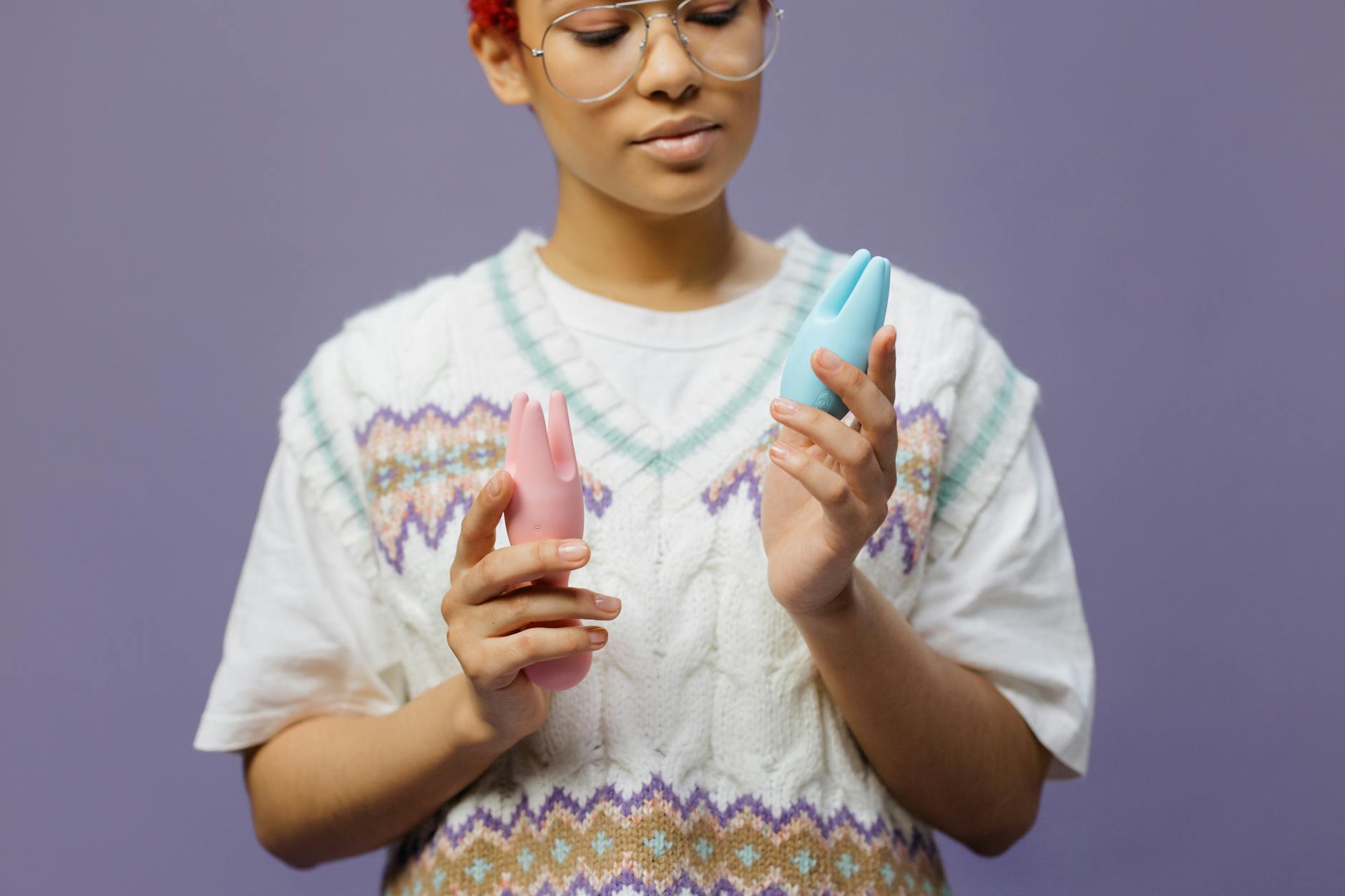
Why anxiety hijacks pleasure
Let's be real. When you're anxious, your body doesn't care about the toy. It cares about threat. Your nervous system tenses up, blood stays in your core instead of flowing to your genitals, your mind loops on worry instead of sensation, and arousal becomes next to impossible. It's not laziness. It's biology.
Anxiety is a powerful pleasure blocker. It activates your sympathetic nervous system, the fight-or-flight response. When that's activated, the parasympathetic nervous system—the one responsible for arousal and relaxation—gets locked out. You can have the best lemon clitoral vibrator in the world, and if your nervous system is dysregulated, you'll feel almost nothing.
Here's the problem nobody talks about: adding a vibrator when you're anxious sometimes makes it worse. If you're already tense and your device isn't working the way it usually does, that becomes another thing to worry about. The spiral continues.
How anxiety changes sensation in real time
When you're stressed or anxious, several things happen simultaneously:
Your tissues respond slowly. Blood vessels constrict. Lubrication doesn't arrive on schedule. Your clitoris doesn't engorge the way it normally would. This means the same vibration pattern from your lemon sexual toy feels less intense, takes longer to build, or feels almost numbed. It's not the vibrator. It's your nervous system managing resources elsewhere.
Your mind isn't present. Pleasure lives in attention. The second half of your brain starts narrating everything: "Why isn't this working? Is something wrong with me? What if I can't come? What if my partner thinks I'm broken?" That internal monologue is louder than any vibration.
Your pelvic floor tightens. Anxiety triggers tension throughout your body, especially in the pelvic floor. This is the opposite of what you need for orgasm. A tight pelvic floor blocks sensation, delays climax, and can even make vibration feel uncomfortable.
Your sense of time warps. When you're anxious, five minutes feels like twenty. You're waiting for pleasure that feels like it's not coming. The waiting breeds more anxiety. The cycle deepens.
The anxiety-arousal feedback loop
This is where things get sticky. Anxiety doesn't just delay arousal. It creates a negative feedback loop that kills it entirely.
You start anxious. You try your lem vibrator. Because you're anxious, sensation is muted. You wait, hoping it builds. It doesn't build as fast as usual. You get more anxious. "Why isn't this working?" Your parasympathetic nervous system shuts down further. Sensation gets even quieter. Frustration builds. You give up. Next time, you approach the experience already worried it won't work. And it doesn't, because you predicted the failure.
The vibrator isn't the problem. Your nervous system's threat-detection system is running the show, and pleasure is the last priority.
How to reset your nervous system before using a lemon vibrator
You need to downshift before you add stimulation. Four techniques that actually work:
Box breathing (5 minutes minimum). Inhale for 4 counts, hold for 4, exhale for 4, hold for 4. Repeat 10 times. This is one of the fastest ways to toggle from sympathetic to parasympathetic. Your nervous system responds to breath more than anything else. Do this before you even think about pleasure.
Progressive muscle relaxation. Tense each muscle group for 3 seconds, then release. Start at your toes, work up to your head. This teaches your body what release feels like, especially the pelvic floor, which often holds anxiety like a clenched fist.
5-4-3-2-1 grounding. Name five things you see, four you can touch, three you hear, two you smell, one you taste. This pulls your brain out of worry-loop and back into the present moment. Sensation only happens in the present.
Movement before stillness. A 10-minute walk, light stretching, or dancing shifts your nervous system state. Stagnation breeds anxiety. Moving your body tells your nervous system you're safe enough to stop bracing.
What to actually do differently with your lemon sexual toy when anxiety is present
Once your nervous system has downshifted, adjust your approach:
Start at the lowest setting. Anxiety makes you hypersensitive to overstimulation. The usual starting pattern on your lemon vibrator might feel jarring or unpleasant. Begin at pattern 1 or 2 and stay there for 3-5 minutes before increasing. Your body needs permission to warm up.
Add 50% more warm-up time than usual. If you usually need 10 minutes of foreplay, budget 15-20 when you're coming out of anxiety. Your tissues are slower to respond. Respect that, don't fight it. Use your vibrator on the lowest setting for longer rather than jumping to higher intensity.
Focus on sensation, not outcome. The goal is not to come. The goal is to notice what you feel. This single reframe breaks the anxiety loop. You stop waiting for orgasm and start being present with sensation. Paradoxically, this often makes orgasm easier when it arrives.
Use your clitoral vibrator solo first. Anxiety gets worse with performance pressure. Partner pressure, even unspoken, amplifies it. A lemon clitoral vibrator experience alone removes the audience and the expectations. Once you've reconnected to pleasure alone, partnered intimacy is easier.
Keep your phone off and the room familiar. New environments add sensory load. Anxious nervous systems are already on high alert. Stick with what's comfortable. No distractions. No notifications. Just you and your body.
When to seek support beyond solo practice
If anxiety around arousal has been persistent for months, consider talking to a therapist. Sometimes anxiety isn't about performance. It's about relationship stress, trauma, or clinical anxiety disorder. A lem vibrator can't fix those things. But a trained therapist can help you understand what's underneath.
If anxiety arrived suddenly alongside other changes—like a new medication, a major life stressor, or a relationship shift—there's often a direct cause. Naming it changes everything. Your vibrator can support reconnection, but first you need to understand why disconnection happened.
For some people, a short course of anxiety-targeted therapy combined with these nervosystem regulation practices creates permanent change. For others, it's ongoing maintenance—which is completely fine. Pleasure is worth the effort.
Rebuilding confidence with sensation
Here's what I've seen work for hundreds of people. Start using your lemon vibrators in the lowest-pressure context possible. Solo. No timer. No goal. Just curiosity. Notice what sensations you get, even small ones. A lemon clitoral vibrator on the gentlest setting might produce just a subtle buzz. That's enough. That's data. That's evidence your body still works.
Do this three to five times without pushing toward orgasm. The goal is to rebuild trust in your body's responsiveness. After a few sessions of low-pressure, low-intensity exploration, most people notice sensation getting stronger. That's your nervous system saying: "Okay, this is safe. I can relax a little." Once your nervous system believes it's safe, pleasure returns faster.
Your anxiety didn't break your pleasure. It just paused it. A lemon vibrator, used with nervous system awareness, can be the tool that rebuilds the connection between arousal and sensation. But the real work is learning to recognize when anxiety is running the show and choosing a different approach.
FAQ: Anxiety, arousal, and lemon vibrators
Why do lemon vibrators feel numb when I'm stressed?
Stress triggers vasoconstriction. Blood pulls away from your genitals and toward your core. Without adequate blood flow, tissue swells less, sensation dulls, and nerves don't light up the way they normally would. Your lemon clitoral vibrator is working fine. Your nervous system is just running a different program.
Can I use my lem vibrator if I have diagnosed anxiety disorder?
Completely. But timing matters. Use it after you've brought your nervous system down from high alert. Box breathing, movement, or grounding first. Then explore. Your anxiety disorder doesn't make pleasure impossible. It just means you need to create safety before you can feel much. A lemon vibrator can absolutely be part of reconnection once you've done that groundwork.
How long does it take to feel normal sensation again?
It depends on the source of your anxiety. If it's situational stress, most people report return to normal sensation within two to three weeks of regular low-pressure practice. If it's rooted in relationship issues or clinical anxiety, it might take longer. Consistency matters more than speed. Three times a week of gentle exploration beats sporadic, goal-oriented attempts.
Does my partner cause the anxiety, or does my own mind?
Often both. External pressure and internal self-doubt combine. If partner presence triggers anxiety, solo practice with your lemon vibrator first rebuilds confidence. Once you know your body responds alone, partnered intimacy becomes easier because you're not trying to perform. You're just inviting someone into something that already works.
Should I tell my partner my lemon clitoral vibrator feels different right now?
Yes. Honesty beats mystery. "My nervous system is a little dysregulated right now, so I'm exploring solo for a bit. It's not about you. I'm just rebuilding trust with my body." Most partners appreciate clarity. They'd rather know what's true than guess.
What if my anxiety is about the vibrator itself?
Some people have performance pressure around toys. They feel like they "should" respond a certain way. If that's you, remove the toy entirely for a week. Just focus on your own touch. Rebuild the feeling that your body is yours and worthy of pleasure without any equipment. Then reintroduce the lemon vibrator slowly. Sometimes we need to remember that sensation existed before the device and doesn't depend on it.