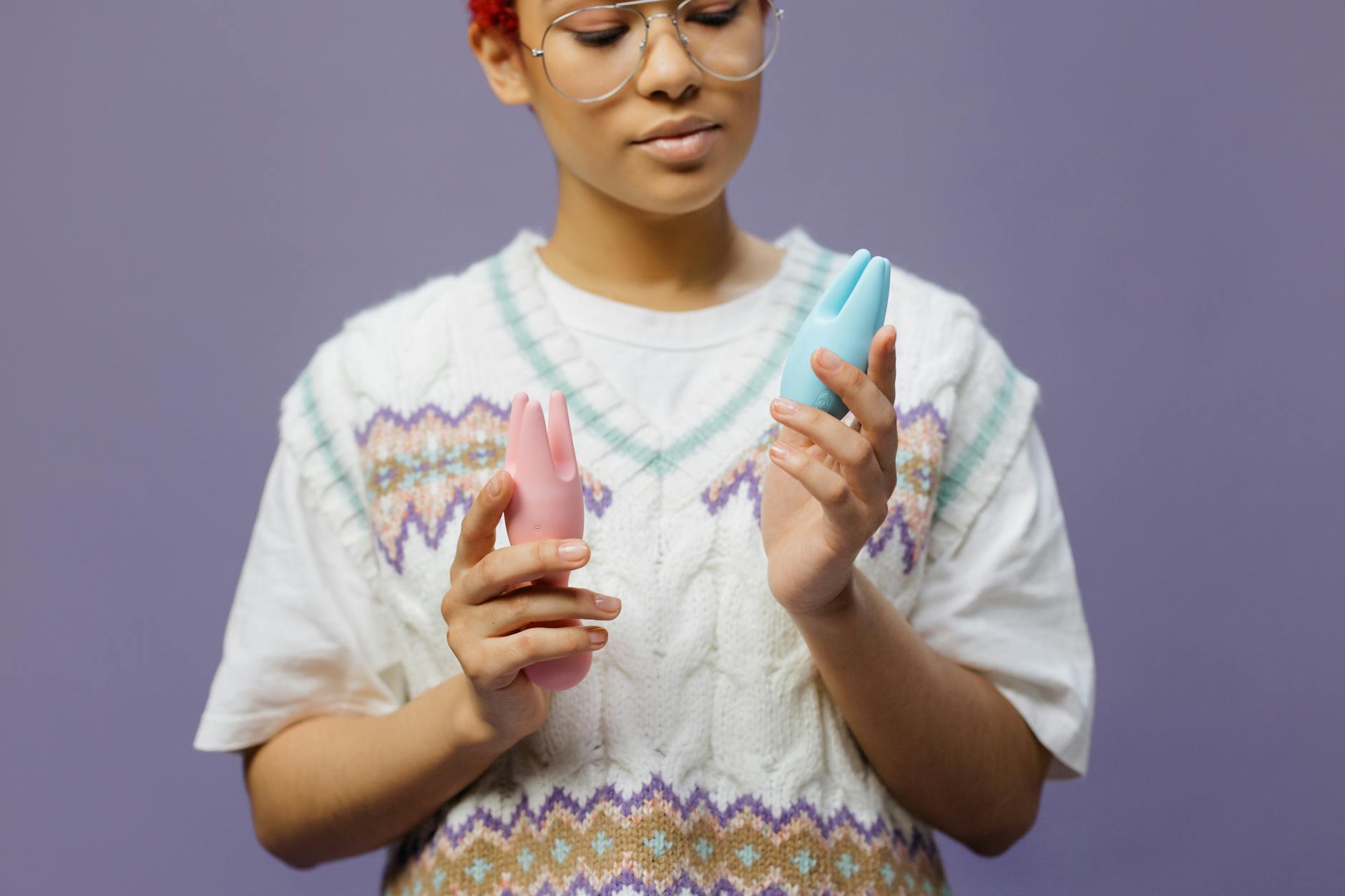
Why Lemon Vibrators Feel Different During Your Period
Let's be real: your pleasure doesn't pause during your cycle. But it does shift. A lemon clitoral vibrator that felt perfect last week might feel intense this week, or underwhelming the next. That's not a sign something's wrong with you or your lemon vibrator. It's biology.
Your menstrual cycle is a four-week hormone dance that touches every system in your body, including the one that makes pleasure happen. If you're using clitoral vibrators like Hello Nancy's Lemon, knowing how your cycle affects sensation means you can stop chasing one "perfect" setting and start working with what your body actually needs.
How your cycle changes physical sensitivity
Estrogen and progesterone don't just manage your period. They reshape your pelvic tissue, blood flow, nerve sensitivity, and how quickly your body arousal ramps up. Follicular phase (days 1-14, roughly) brings rising estrogen. That means more blood flow to the vulva, thinner vaginal tissue, and heightened clitoral sensitivity. Your nervous system is more responsive. A lemon vibrator on pattern 3 might feel right during ovulation when estrogen peaks.
Then luteal phase (days 15-28) flips it. Progesterone climbs. Blood vessels constrict slightly. Tissue becomes less engorged. Sensation can feel duller, more localized, sometimes almost numb. That same pattern 3 might feel barely noticeable. So you turn it up. Then day one hits and suddenly you're on pattern 4, your vulva is tender from period cramps, and you're wondering why your usual setup now feels like too much.
This isn't random. It's predictable. And when you understand the pattern, you stop fighting your body and start working with it.
Menstruation and the first few days after
Days 1-3 are tender territory. Uterine cramps mean the entire pelvic floor is working overtime. Blood flow to the vulva is high, which sounds like it'd increase sensitivity. In reality, pain and inflammation can make direct stimulation feel uncomfortable, especially if you usually prefer firm, focused pressure.
Here's what I recommend: if you want to use your lemon vibrator during your period, start on the lowest patterns (1 or 2) and treat it as gentle, exploratory rather than goal-oriented. Some people find that light suction actually helps ease cramps by creating a mild counter-sensation. Others find the whole zone too tender and just skip it. Both are fine.
Water-based lubricant becomes extra useful here because period-related dryness is real, even though overall blood flow is elevated. Your usual routine might need more lubrication than you'd expect.
The follicular window where sensation peaks
Days 5-12 are where the magic happens for most people. Estrogen is climbing fast. Your vulva is becoming increasingly engorged and sensitive. If you track pleasure patterns, this is usually when orgasms come easiest, feel most intense, and build fastest. Your clitoral vibrator needs less intensity to create strong sensation.
Much of the research on pleasure and the menstrual cycle finds that self-pleasure interest and capacity peak right here. If you've been struggling to orgasm or feeling "numb" to sensation, wait until this phase. You might discover your lemon vibrator feels completely different when your hormones are at their strongest.
This is also when you might want to experiment with patterns you usually find too subtle. If pattern 1 usually feels like background noise, during this phase it might feel precisely right.
Ovulation and the sensitivity sweet spot
Aroundday 14, estrogen hits its absolute peak right before ovulation. This is the moment of maximum clitoral engorgement and nerve sensitivity. Some research suggests that orgasms during this window are neurologically more intense because the tissues are at maximum responsiveness.
If you're going to really push your lemon vibrator to its higher patterns and explore longer sessions, this is the week where your body can handle it comfortably. That said, ovulation doesn't automatically mean better pleasure. Mental state, partner dynamics, stress, and a hundred other factors still matter. But physiologically, your tissue is in its most receptive state.
The luteal phase and why sensation gets quieter
Days 15-21 bring the first part of luteal phase. Progesterone starts climbing. This shift is so powerful that many women describe feeling "less interested" in pleasure during this window. It's not that you should push harder to feel something. It's that your body is genuinely less sensitive.
Instead of fighting this, adjust your approach. Go back to patterns 4 or 5 on your lemon vibrator if you usually use 2 or 3. Allow longer warm-up time. Use more lubricant. If you're used to 15-minute sessions, budget 25. Your body still has pleasure capacity. It's just asking you to dial up the input slightly.
Some people find that during this phase, they prefer longer, sustained patterns over rapid pulses. The Lemon offers multiple patterns, which means you have the flexibility to match your body's changing preferences across the month.
Late luteal phase and PMS sensitivity
Days 22-28 are the premenstrual dip. Progesterone is high, estrogen is crashing, and many people experience heightened emotional intensity, anxiety, or irritability. Physically, some tissues become more sensitive (especially the breast), while others feel less responsive. The pelvic floor can hold tension.
If you want to use a lemon clitoral vibrator here, gentler often works better. Rushing doesn't. Some people find that pleasure is actually restorative during this phase, a kind of physical self-care that eases the emotional heaviness. Others find it adds frustration on top of discomfort. Honor what your body actually needs, not what you think you should want.
One useful note: if you have severe PMS or PMDD, check in with yourself about whether pleasure-seeking during this phase helps or hurts. For some people, it's deeply soothing. For others, it's another layer of "perform, feel something, be fine" pressure. Permission to skip it is also permission to take care of yourself.
Tracking your own patterns
You don't need to rigidly follow what I've just described. Your cycle might not look textbook. Your sensitivity might peak differently. But the next time you use your lemon vibrator, notice what week you're in. Notice what pattern feels best, how long warm-up took, whether lubrication mattered, what kind of sensation you were chasing.
Over two or three months, you'll build a personal map. "Week 2 is always pattern 3." "Right before my period I need way more lube." "Around ovulation I actually prefer longer hold patterns over pulses." That personalized knowledge beats any generic advice.
If you're using a lemon vibrator with a partner, this information becomes shared knowledge too. "I'm in that phase where sensation feels duller" is way clearer than "it doesn't feel good today." You're not blaming the tool or yourself. You're reading your own biology.
When cycle-based changes signal something else
There's normal cycle-based sensitivity shift, and then there's something worth investigating. If your pleasure response has flattened completely across all phases, or if sensation has become consistently painful rather than tender, that's worth a conversation with a healthcare provider. Hormonal birth control can change how these phases feel. PCOS, endometriosis, and other conditions create different patterns entirely.
What matters is that you stop assuming your body is broken because the lemon vibrator experience changes month to month. Your body isn't broken. It's responsive. And responsiveness is actually the thing that makes pleasure possible.
Why this matters beyond the mechanics
Understanding how your cycle shapes sensation does something deeper than just helping you optimize your lemon vibrator use. It brings you back into relationship with your body as a system, not as a machine that should feel the same way every single day.
The culture tells us pleasure should be consistent, available on demand, one-note. Real pleasure is cyclical. It has seasons. Some weeks your body is shouting. Other weeks it's whispering. Learning to hear the difference, and to adjust your approach accordingly, is actually how you build deeper, more sustainable pleasure.
Your body isn't asking you to push harder. It's asking you to pay attention.
People also ask
Can I use a lemon vibrator during my period?
Yes, if your body feels comfortable. The first few days can be tender, so start with the lowest patterns and stop if anything feels painful (crampy sensation is different from sharp pain). Light suction sometimes helps ease cramping. Use water-based lube generously because period-related dryness can happen even though blood flow is high. Skip it if you'd rather. There's no rule that says you have to.
Does my lemon vibrator feel different at different times of my cycle?
Absolutely. Rising estrogen during the follicular phase increases clitoral sensitivity. Lower estrogen and higher progesterone during the luteal phase can make sensation feel duller, so you might need higher intensity patterns or longer warm-up time. This is normal and shifts back as your cycle moves forward. Tracking which patterns feel best each week helps you see your own pattern.
Why does clitoral sensation feel numb in my luteal phase?
During the luteal phase, progesterone rises and blood flow to the genital area shifts. Tissue engorges less. Nerve sensitivity naturally decreases. This isn't something wrong with your lemon vibrator or your body. It's your body's actual hormonal reality. The solution is adjusting intensity and warm-up time, not assuming you've broken something.
Is it normal for orgasms to feel different throughout my cycle?
Completely normal. Ovulation typically brings the most intense orgasms because clitoral tissue is maximally engorged. Follicular phase orgasms often build faster. Luteal phase orgasms might take longer to build but can still be deeply satisfying if you give your body the time and intensity it needs. Menstrual phase might feel too tender or might feel surprisingly good. Your body is shifting week to week.
How should I adjust my lemon vibrator use for my cycle?
During high-estrogen phases (follicular, ovulation), start on lower patterns since sensation is heightened. During luteal phase when sensitivity naturally dips, increase intensity or allow longer warm-up. Days 1-3 of menstruation, use the gentlest patterns and prioritize lubrication. Track what actually feels best in your body rather than forcing one routine all month.
Does hormonal birth control change how my lemon vibrator feels?
Yes. Birth control hormones override your natural cycle, so the dramatic sensitivity shifts I've described might be much more subtle or completely flat. Some people find they feel more consistently responsive on hormonal birth control. Others feel consistently numb. The pattern you're looking for is the same, just potentially different. If your lemon vibrator has never felt as good as you'd hoped, cycle timing might not be the issue.
Understanding how your menstrual cycle shapes your experience with lemon clitoral vibrators takes the mystery out of why "it" works sometimes and feels meh other times. You're not broken. Your body is working exactly as it should. It's just asking you to work with it, not against it. That's when pleasure stops being a project and becomes something you actually feel.