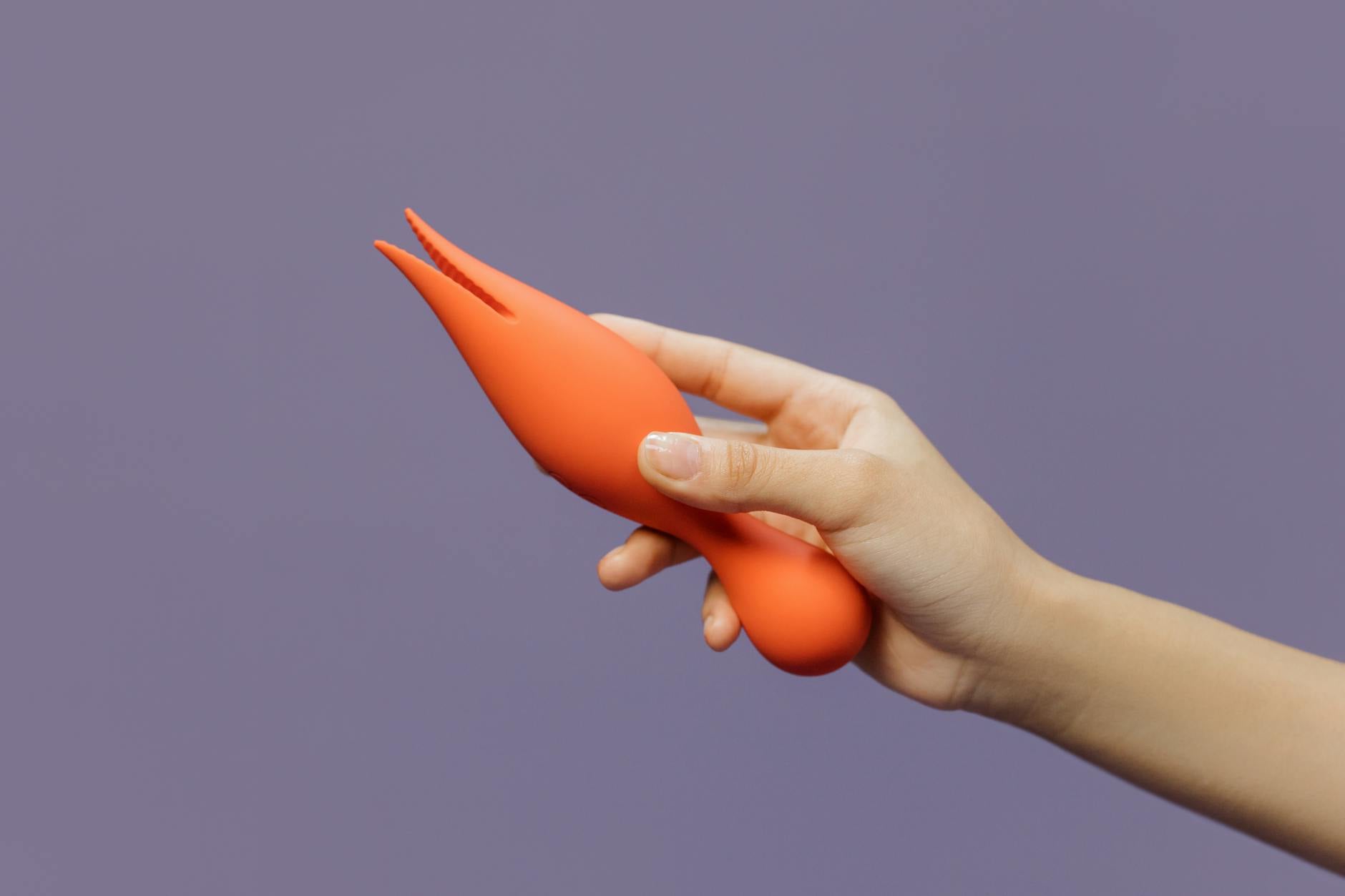
Why Lemon Vibrators Feel Better After Vaginal Atrophy Treatment
Let's be real: vaginal atrophy treatment works. The topical estrogen, the vaginal moisturizers, the systemic hormone therapy if you've chosen it. Your tissue starts to plump again. Dryness eases. Things feel closer to what they used to be.
But here's what nobody mentions in that doctor's appointment. Your sensation doesn't snap back to exactly where it was. It changes. And that change is actually an opportunity, not a problem.
I've worked with dozens of people reintroducing pleasure during vaginal atrophy recovery, and the ones who understand this transition thrive. The ones who expect their bodies to simply "go back to normal" end up frustrated or, worse, think something's still broken. It's not. You're just exploring different territory.
How treatment shifts your physical response
Vaginal atrophy happens because estrogen drops. The tissue becomes thinner, less elastic, drier. Treating it restores that tissue layer by layer. But this happens gradually, and sensation in those newly healed tissues isn't identical to what was there before.
Here's the clinical piece: when you're using topical estrogen cream or going through systemic hormone replacement, the vaginal tissue thickens first. The deeper layers of the vaginal wall recover. But the surface nerve endings? They're rerouting themselves, becoming more sensitive to certain types of stimulation and sometimes less responsive to others.
This is temporary. And it's also incredibly useful information.
Most people expect clitoral sensation to bounce back unchanged. Honestly? It often does. The clitoris has a separate vascular system from the vaginal tissue, so atrophy affects it less directly. But the surrounding tissue, the pelvic floor support, the overall coordination of arousal. That's all recalibrating.
Why direct friction feels different right now
During the healing phase, direct mechanical vibration can feel too intense on recovering tissue. I don't mean painful. I mean almost overstimulating, like the sensation is too sharp, too pointed. It's not a sign something's wrong. It's actually a sign your tissue is waking up.
This is where lemon clitoral vibrators, specifically suction-based designs like the Lem, become wildly useful. Instead of direct friction against recovering tissue, suction stimulates the clitoral complex without the same mechanical pressure. It's gentler on the newly responsive nerve endings while actually triggering more robust, layered sensation.
Take the Lem Vibrator, for example. The suction mechanism creates a seal and pulls gently, stimulating through pressure waves rather than vibration alone. During atrophy recovery, this feels phenomenal because it's powerful without being sharp. You get deep stimulation of the clitoral nerve network without triggering that "too much, too fast" response.
The timeline thing nobody talks about
Vaginal atrophy treatment isn't instant. If you're using topical estrogen, meaningful changes show up around week three to four. If you're on systemic HRT, it can take eight to twelve weeks. And sensation recalibration can take even longer.
Many people make the mistake of introducing vibrators too early in this process, then assume they don't work because the experience feels muted or off. You're not broken. You're just not done healing yet.
A good framework: wait until your doctor tells you atrophy is improving, then start with external-only stimulation. No internal penetration yet unless your doctor says otherwise. Let external clitoral tools do the heavy lifting for the first month or so. The Lem or other lemon vibrators work beautifully here because they're designed for external stimulation anyway.
Why suction changes the game during recovery
There are three main types of clitoral stimulation: vibration alone, pulsing, and suction. During vaginal atrophy recovery, suction is often the winner.
Vibration can feel spiky on sensitive, recovering tissue. Pulsing is better but still mechanical. Suction, though? It creates a rhythmic pressure that feels almost like manual stimulation, which your nervous system recognizes as safer, more natural. It's deeper. It involves more of the clitoral complex, not just the tip.
Lemon vibrators designed with suction technology work with your healing body instead of against it. The Lem, specifically, uses gentle air-suction patterns that gradually build sensation without the jarring intensity of traditional vibrators.
I've had clients tell me that introducing a lemon sucker after three or four weeks of atrophy treatment felt like flipping a switch. Not because their body had suddenly healed completely, but because the tool matched where their nervous system actually was.
Building sensation back systematically
Here's what a recovery timeline looks like in practice:
Weeks 1-2 of treatment: No vibrators. Hands only if you want, but honestly, just let your body rest. You're healing.
Weeks 3-4: Introduce external-only clitoral stimulation at the lowest intensity. If you're using a lemon vibrator, start at pattern 1 on a device like the Lem. Spend 5-10 minutes getting to know how your body responds. This is research, not performance.
Weeks 5-8: Gradually increase intensity or try different patterns. Pay attention. Does suction feel better than vibration right now? Does pulsing wear you out faster? These are clues about where your nervous system is in its recovery.
Week 8+: Most people find orgasm becomes increasingly accessible. Sensation sharpens. Pleasure deepens. This is when you can confidently layer in more complex stimulation or longer sessions.
Nobody's timeline is identical. Some people move faster. Some need more time. The key is listening to your body instead of comparing yourself to your pre-atrophy baseline.
Partnered pleasure during recovery
If you have a partner, this transition is a conversation, not a surprise. Honestly, talking about changing sensation actually deepens intimacy because it forces you both out of autopilot.
You might say something like: "My body's healing right now, and sensation feels different. Let's explore together. Can we try this toy and see what actually feels good right now, instead of what used to feel good?"
That's radically vulnerable. It's also incredibly powerful. Partners who lean into this often report that the rediscovery phase is more connected than the sex they'd been having before atrophy even started.
The lemon clitoral vibrators like the Lem work well here because they're intuitive. There's no learning curve. Your partner can hand it over and let you explore solo, or they can use it on you while you're together. The suction mechanism is quieter than traditional vibrators, which somehow makes the experience feel more intimate, less clinical.
When you're ready for more complex stimulation
Around week 8-10 of treatment, most people have recovered enough that they can start layering in vaginal stimulation if they want it. But here's the thing: you don't have to.
Many people discover during recovery that they actually prefer external-only stimulation. That's not because atrophy broke something. It's because they finally got clear on what their body actually enjoys when they're not stuck in one pattern.
If you do want to add internal sensation, go slowly. Use lots of water-based lubricant. A lemon vibrator can handle both roles, but there's also something to be said for keeping external and internal tools separate while you're still figuring out what feels good.
The mental piece that matters as much as the physical
Vaginal atrophy doesn't just change tissue. It changes how you think about your body. For a lot of people, atrophy arrives with a grief hit. Something's changing. Something feels lost.
Reintroducing pleasure during recovery isn't just about sensation. It's about reclaiming your body as a site of joy, not just as a problem to fix. When you use a tool like the Lem and it actually feels amazing in ways your body can handle right now, something shifts psychologically. You're not chasing a version of yourself that's gone. You're discovering who you are now.
That might sound dramatic. But I've watched it happen enough times to know it's real. People move from "my body's broken" to "my body's different, and different is interesting" somewhere between week six and week ten of treatment. That shift is as important as any physiological recovery.
FAQ
How long after starting vaginal atrophy treatment can I use a vibrator?
Wait until your doctor confirms the tissue is improving, usually around week three to four. Then start low. Use external-only stimulation at the lowest intensity. Your nervous system needs time to recalibrate alongside your healing tissue.
Will using a vibrator during recovery make atrophy worse?
No. Gentle external stimulation actually supports healing because it increases blood flow. The key is "gentle." Start at low intensity. If anything feels sharp or painful, stop and check with your doctor. Sensation change isn't pain. Sharp discomfort is different.
Why does suction feel better than vibration right now?
During recovery, your newly healing tissue is hypersensitive to sharp, direct stimulation. Suction creates a gentler pressure wave that stimulates the full clitoral complex without that pointed intensity. It also mimics manual touch, which your nervous system registers as more familiar and safer.
Can I use a lemon vibrator internally during recovery?
Check with your doctor first. Many recommend external-only stimulation for the first four to six weeks. After that, if your doctor clears you, you can explore internal use slowly with lots of lubrication. Some people find they prefer external-only permanently. Both are fine.
Will my sensation fully return to pre-atrophy baseline?
Often, yes. But "fully" doesn't always mean "identical." Many people report their sensation is actually sharper, more nuanced after recovery because they've had to get intentional about what feels good. You might discover you prefer different types of stimulation than you did before.
What if I'm still not feeling much by week eight?
Vaginal atrophy recovery isn't linear for everyone. Some people take twelve to sixteen weeks. If you're eight weeks in and sensation still feels flat, talk to your doctor about whether your treatment dosage or method needs adjustment. Also consider whether stress, mood, or medications might be dampening sensation. Those are separate from atrophy but can overlap.
One more thing
Vaginal atrophy treatment gives you back tissue. Your job is to give yourself back pleasure. A lemon clitoral vibrator is a tool for that. It's not magic. But when it's designed thoughtfully and you're using it in sync with where your body actually is in its recovery, it feels pretty close.
You deserve this. And your body is absolutely capable of it. You're just meeting it where it is right now, not where it used to be.