Let's be honest about solo play
Most of what we hear about lemon vibrators and self-pleasure is either apologetic or performative. Either it's framed as something to do when your partner isn't around, or it's dressed up in spiritual language about "self-love" and "knowing yourself." Neither captures what actually matters.
Here's the real thing: solo play with a lemon clitoral vibrator is where you learn your body's language. It's where you figure out what pressure feels good, what rhythm takes you there, whether you like teasing or directness. That knowledge doesn't just make solo sessions better. It transforms partnered sex, because you know what you're looking for and can ask for it clearly.
Why lemon vibrators work so well for solo exploration
The design of a lemon sucker or lemon clitoral vibrator matters here. Unlike traditional vibrators that rely on pure vibration, the air-suction mechanism creates a gentler, more diffuse stimulation. That's useful solo because it gives you room to experiment with positioning, pressure, and rhythm without overwhelming sensation forcing you into a narrow path.
The shaft is small enough to give you control. You can angle it, vary how much contact the opening makes with your skin, and move between intense stimulation and lighter play without changing devices. That flexibility teaches you something important: pleasure isn't binary. It's a landscape with peaks and valleys.
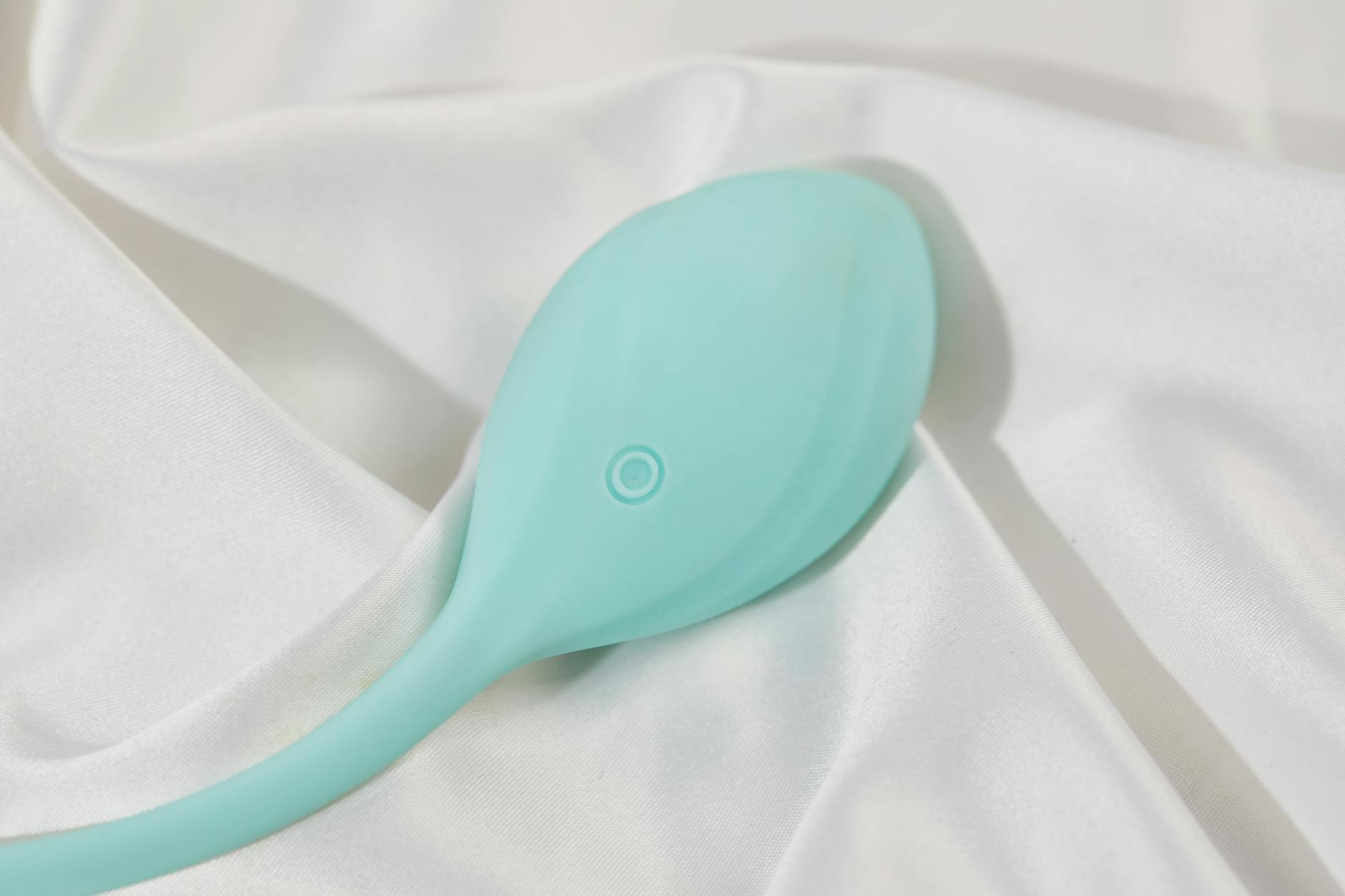
Photo by IFONNX Toys on Pexels
The setup that matters most
Four things change the experience:
Time. Block at least 30 minutes. Not because you need that long to orgasm, but because the first 20 minutes are about arrival. Your nervous system needs time to downshift. Your mind needs to clear. When you rush, you end up chasing sensation instead of noticing it.
Space. Somewhere you won't be interrupted. Not because penetration is about to happen (it won't), but because distraction kills the ability to feel nuance. Your phone in another room. Door locked. That's not paranoia. That's respect for what you're doing.
Lubrication. Even if you're naturally lubricated, a bit of water-based lubricant makes everything easier. It reduces friction, lets the lemon vibrator glide instead of stick, and honestly just feels better. Not more is better. A teaspoon is enough.
No goal. This one's the hardest. Solo sessions work best when you're not trying to reach orgasm by a certain time. You're exploring. Sometimes that exploration ends in orgasm. Sometimes it ends in understanding that your body wanted something different that day.
Building a solo practice that deepens over time
If you're new to lemon vibrators, start with the lowest intensity setting. Many people rush to the intense patterns because they assume sensation equals better. That's backwards. Lower intensities let you feel the nuance of where the opening sits, how the pressure changes as you adjust angle, what happens when you hold still versus moving.
Session one: Just explore. No goal except noticing. Where does the tip feel best? Does the left or right side of your clitoris respond differently? What happens if you press harder versus letting it sit lightly? What speed makes your breath change?
Session two and three: Return to what worked, but play with variation. If light pressure on one side felt good, what happens if you add a tiny rotation? If intensity three felt nice, is intensity four actually better or just louder? This is how you build genuine knowledge instead of just habit.
After four or five sessions, you'll notice a shift. Your body starts to anticipate. Your arousal builds faster. You know where to go. That's when solo play stops being exploration and becomes something closer to ritual. You know the path. You can wander off it sometimes, but you know how to get home.
The role of fantasy and mental space
Money conversations in relationships often avoid this, but so do pleasure conversations. Here's what I see in my practice: people feel guilty about what they think about during solo play. The solution isn't to think about the "right" thing. It's to give yourself permission to think about whatever creates arousal.
That might be a memory. A scenario. A person. A combination of none of that. Your brain is not under scrutiny. Your imagination has privacy. Solo sessions are the place to explore mentally without negotiation or explanation.
If you find that your mind goes blank, that's normal. Sometimes arousal is purely physical. But if you notice that having something to think about deepens sensation, give yourself permission to go there. Fantasy and physical sensation are not separate streams. They're integrated. The lemon clitoral vibrator is the physical tool. Your mind is the other half.
What happens when pleasure gets complicated
Sometimes solo sessions don't feel good. You're not in your body. Sensation feels distant or even uncomfortable. Before you assume something's wrong with the device, check these first.
Are you actually aroused, or did you decide it was solo time and move straight to the vibrator? Arousal is not a switch. It's a process. Five minutes of whatever gets you there mentally (fantasy, memory, reading something hot, watching something that works for you) changes everything.
Is your nervous system actually calm? If you've been in crisis mode or high stress, your body might not be accessible. That's not failure. That's just information. Some days you need to ease in more slowly.
Are you approaching it with curiosity, or are you performing for an imaginary audience? That shift from exploration to performance happens quietly. If you notice it, just pause. Return to noticing instead of achieving.
How solo play actually improves partnered sex
This is the part that matters most clinically. People often assume that solo play is separate from partnered pleasure. That if they explore alone, they're missing out on something they should experience together. That's not how bodies work.
When you know your own arousal landscape, you can communicate. You can say "slower here" or "more pressure there" not in a way that feels like correction, but as confident guidance. Partners genuinely like that. It removes guesswork. It makes the experience collaborative instead of one person hoping the other person is having fun.
You also become less dependent on a partner to create pleasure. This sounds like it would distance you from someone, but it does the opposite. When you're not desperately hoping your partner hits the right buttons, the entire dynamic relaxes. Sex stops being performance and starts being connection.
Getting started if you're genuinely new
If lemon vibrators or any vibrators are new to you, start here. The practice of solo exploration with a lemon sucker is straightforward, but permission is often the missing piece. You might feel silly. You might feel awkward. That's completely normal and completely temporary.
When you're ready, read the basics of how to use your specific device (we have a full guide on using a lemon vibrator for the first time). Then block time. Create space. And approach it with the same curiosity you'd bring to any new skill. Because that's what this is. Not indulgence. Skill-building.
Your pleasure is worth the time it takes to learn. Solo sessions with a lemon clitoral vibrator aren't a substitute for partnered sex or a stopgap until someone else comes along. They're foundational. They're where you learn yourself. And that knowledge makes everything that comes after it better.
FAQ: Solo play with lemon vibrators
How often should I use a lemon vibrator for solo play?
There's no rule. Daily is fine. Once a week is fine. The useful metric isn't frequency. It's whether you're approaching it with curiosity or compulsion. If solo sessions feel like something you want to do, the rhythm will find itself. If you're doing it because you think you should, scale back and notice what actually draws you.
Can I use a lemon vibrator while I'm in a relationship?
Yes. Solo play and partnered sex are different experiences that can coexist. Many people find that solo sessions actually help their partnered sex because they remove performance pressure and deepen self-knowledge. If you're in a relationship where this feels complicated, that's worth a conversation with your partner about what solo play means to each of you.
What if I can't orgasm with my lemon clitoral vibrator?
First, check that you're not making orgasm the goal. Lemon vibrators and other clitoral vibrators work best when you're exploring sensation without a deadline. Second, some bodies take longer to respond to vibration than others. That's not dysfunction. It's variation. You might find that slower intensities, longer warm-up time, or a different type of stimulation works better for you. That's the whole point of solo exploration.
Is it weird to use a lemon vibrator if I'm asexual or low-desire?
Not at all. Solo play isn't about high desire or hypersexuality. It's about knowing your body and giving it what it needs when it needs it. That might be daily. It might be monthly. It might be that you experience pleasure more mentally than physically. A lemon sucker is a tool. You use it on your timeline, not because anyone else's desire dictates it.
Should I tell my partner about my solo sessions?
That depends on your relationship and what you're both comfortable with. Some couples find that openness about solo play deepens intimacy. Others keep those sessions private. Neither is wrong. What matters is that you're making a choice that feels honest for you, not hiding something that makes you anxious or lying about something that feels normal.
How do I know if I'm using my lemon vibrator correctly?
If it feels good, you're using it correctly. There's no single right technique. Some people like direct contact on the clitoris. Others prefer stimulation around it. Some want firm pressure. Others want light touch. That's why exploration matters. Your body will tell you what works. Listen to that signal instead of any instruction that doesn't match your actual experience.