
Let's name what's actually happening
Your partner isn't nervous about a toy. They're nervous about what it means. Will you stop needing them? Are they not enough? Does this mean you've been faking it? The lemon vibrator becomes the surface-level thing you're actually talking about, and underneath it is a conversation about competence, desire, and whether they measure up.
Honestly, that's the conversation worth having first.
The real conversation, the one that matters
Before you bring a lemon vibrator into the bedroom, have this talk outside of it. Sit down, no phones, maybe coffee. Tell them what's true: you're interested in exploring something together, not because they're failing you, but because your body changes based on mood, hormones, stress, and rhythm. A vibrator is a tool, not a replacement. It's like saying you want to use a whisk when you're making cake. The whisk isn't saying your hand-mixing skills are bad. It's just faster and different.
Then listen. Let them tell you what they're actually worried about. Often it's not "will you like it better?" It's something quieter, like "I want to be the one who makes you feel that way." That's real. That's worth honoring. And it's not incompatible with using a lemon vibrator together.
Why lemon clitoral vibrators actually help with partner dynamics
Here's what I see in my practice: couples who introduce vibrators often report better communication, more playfulness, and honestly, less pressure on the partner. Why? Because external stimulation and internal partnership are actually different systems. A lemon vibrator handles one job beautifully. Your partner handles the rest: presence, rhythm, touch, conversation, the whole person-to-person part.
When you separate those roles, neither person has to do everything perfectly. Your partner doesn't have to be your vibrator. They can just be your partner. That's usually a relief once the initial anxiety settles.
How to introduce it without making it weird
Don't surprise them. Don't bring it out mid-sex the first time. Instead, treat it like you'd introduce anything new.
Show them the lemon vibrator outside the bedroom first. Let them hold it. See the size, the weight, the design. Lem vibrators look modern and minimal, not intimidating. Normalizing the object itself removes a lot of unnecessary mystery.
Then talk about how you'd like to use it together. Would they want to hold it? Would they want to watch? Would they want to start with you using it on yourself while they're inside you? There are many configurations. The one that works is the one where both of you feel like you chose it.
The first time actually using it together
Start when you're both genuinely interested, not when anyone's frustrated or in a hurry. Foreplay longer than you normally would. This isn't about efficiency. It's about building trust and sensation.
If your partner is holding the lemon vibrator, start on the lowest setting. Their job isn't to "do it right." It's to pay attention to your responses and adjust. Whisper guidance. "Slower." "Right there." "Deeper." This keeps them engaged and removes the pressure to intuitively know what will feel good.
If you're using it on yourself while they're involved, they might be inside you, or penetrating you with their fingers, or just present and touching you elsewhere. The point is they're not replaced. They're part of the experience, just with a specific role.
Many couples find that the vulnerability of using a vibrator together actually deepens intimacy. You're asking for what you want. Your partner's watching your pleasure happen in real time. That's real connection.
When they want to help but feel clumsy
Let's say your partner is holding the lemon vibrator and they're worried they're doing it wrong. They probably aren't. Here's what helps: communicate while it's happening. "Move it up a tiny bit." "That angle is perfect, keep it there." Your feedback isn't criticism. It's direction. Most partners actually find this helpful because now they're not guessing.
If it feels awkward, it's okay to laugh. Introducing anything new is weird at first. That's normal. The awkwardness usually dissolves after a few times.
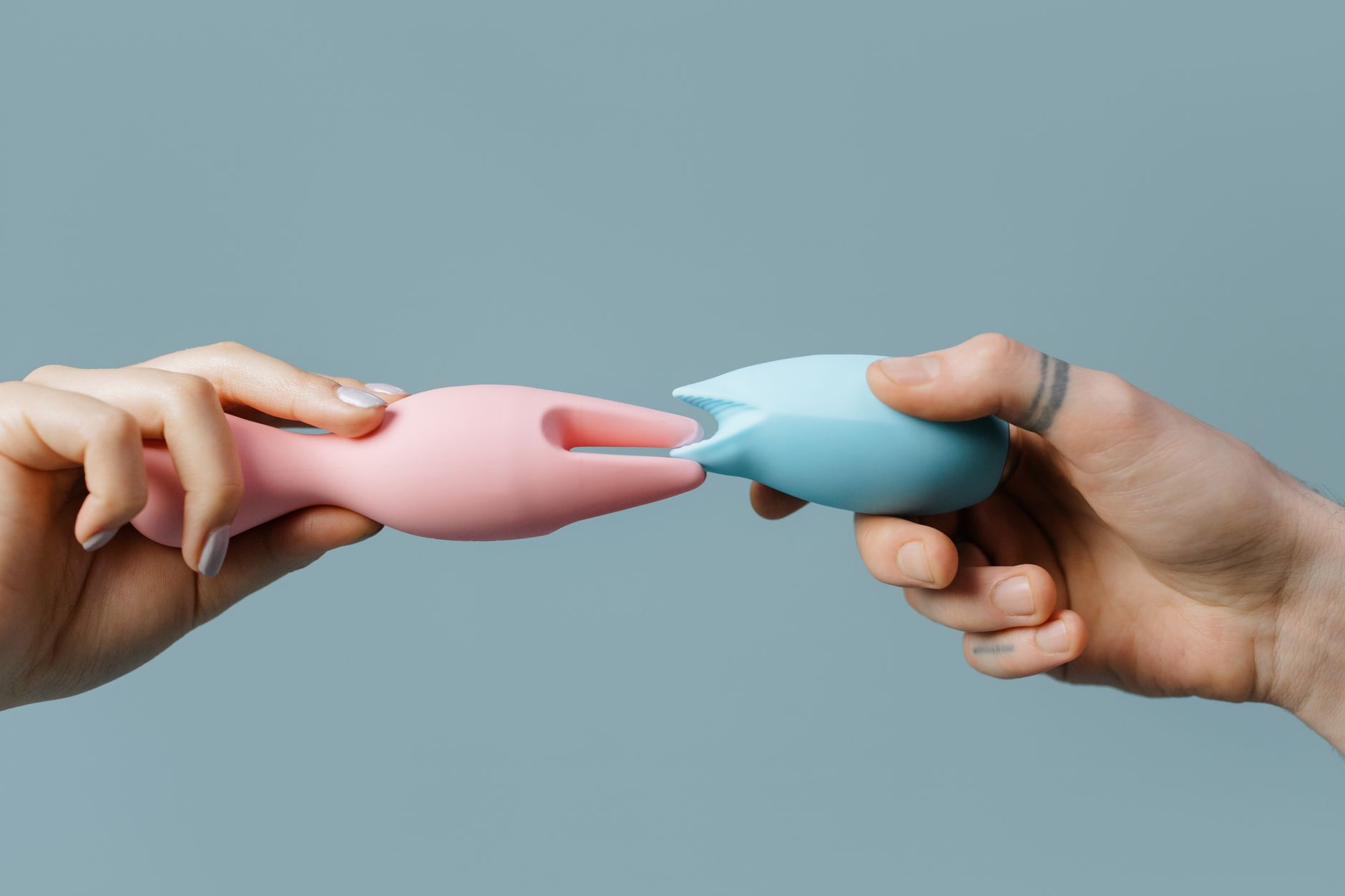
Photo by cottonbro studio on Pexels
The practical stuff that actually helps
Four things that make the experience better: First, use water-based lubricant. Lemon vibrators work better with it, and it feels better for everyone. Second, set a specific time rather than springing it on your partner mid-intimacy. Third, keep the toy clean (follow the care guide). Fourth, don't make it the only way you have sex. Use it sometimes, not always. This keeps it special and reminds your partner that pleasure happens many ways.
Also: battery check beforehand. Nothing kills the mood like realizing it's dead and you have to stop and find a charger.
If they're still hesitant after a genuine try
Some people take time. Some people come around slowly. And some people genuinely don't want to use vibrators, and that's a valid boundary. If it's important to you and they're flatly refusing, that's a conversation about mismatched needs and whether you can find a middle ground. Maybe they're comfortable with you using it alone while they're not in the room. Maybe they're okay with it only during certain types of sex. Maybe it's not a dealbreaker, just a different preference.
The key is: you're negotiating together, not winning an argument.
What better orgasms actually look like with a partner
Once you both get comfortable, orgasms often feel different. More intense, sometimes longer, sometimes multiple. The clitoral stimulation from a lemon vibrator can take you deeper or faster than fingers alone, and your partner's presence, attention, and touch add a layer that no toy can replicate. You get the best of both things.
Many of my clients report that orgasms with a partner and a vibrator feel more full. Not just physical, but emotionally present too. Your partner chose to be part of this with you. You're experiencing pleasure together, even if the tool is doing different work.
That's the goal: not a toy that replaces your partner, but a tool that lets you both feel something richer together.
People also ask
Will introducing a vibrator make my partner feel emasculated?
Maybe at first. But usually not for long, especially if you frame it correctly and he sees your actual pleasure happen in real time. Masculinity isn't fragile. Most partners feel more confident when they're giving you real pleasure, not performing a version of it. The thing that often kills confidence is feeling like nothing he does is working. A vibrator can actually fix that problem.
How do I know if he's actually comfortable with it?
Ask directly, not during sex. Watch his body language the first time. Comfortable looks like relaxed shoulders, eye contact, maybe teasing or laughing. Uncomfortable looks like tension, looking away, mechanical movements. If you see the second thing, pause and talk about it. Don't push.
Can we use a lemon vibrator if we're not super experienced with toys?
Completely. Lemon clitoral vibrators are actually ideal for first-timers because they're intuitive. You turn it on, you find the right placement, you adjust intensity. No learning curve. Your partner can watch and learn what your body responds to. It's a good entry point together.
What if we've tried it and it just doesn't feel good?
Not every toy works for every person. Your body might prefer different stimulation. Your partner might not enjoy holding it. That's fine. What matters is that you tried something together and learned about each other's preferences. That data is valuable even if the vibrator itself doesn't stick around.
Should we use a vibrator every time we have sex now?
No. Save it for when you both feel like it. Using it sometimes keeps it special and reminds you that pleasure happens many ways. The goal isn't to become dependent on it. It's to have another option when you want it.
How do I bring this up without seeming like I'm rejecting him?
Lead with what you want to explore together, not what isn't working. "I've been thinking about trying something new. I'd love to experience it with you." Not "I need this because you're not doing enough." The frame changes everything. You're inviting him into an adventure, not critiquing his performance.
Moving forward
Introducing a lemon vibrator as a couple isn't about the toy. It's about trust, communication, and choosing to explore pleasure together. Some couples find it transforms their sex life. Others use it occasionally. Some decide it's not for them. All of those outcomes are fine.
What matters is that you both chose to try something new and that you stayed connected through the process. That's the actual foundation of good sex with a partner.
If you're thinking about exploring this together and want guidance on how to open that conversation, we're here to help. Reach out through our contact page and let's talk through what might work for your specific situation.