How to Use a Lemon Vibrator With Your Partner: A Communication Guide
Here's the thing: most couples don't talk about bringing a vibrator into sex until one person is already awkwardly holding one, and the other is caught between arousal and confusion. That backwards approach is why it feels weird.
The real friction isn't the toy. It's the unspoken assumption that adding anything to partnered sex means something is wrong. It doesn't. It means you're both curious. And curiosity is exactly the conversation starter you need.
I've worked with hundreds of couples navigating this, and the ones who move forward smoothly are the ones who separate three things: the conversation, the execution, and the evaluation. Let me walk you through all three.
Why the conversation matters more than the toy
Introducing a lemon clitoral vibrator to partnered sex isn't really about the toy at all. It's about whether both partners feel safe enough to want something different without triggering shame, comparison, or rejection.
Most people worry about one of three things: "Will my partner think I don't enjoy sex with them?" or "Will they feel replaced?" or "Will I embarrass myself?" Those are legitimate concerns, and they don't go away because you buy an expensive vibrator. They go away because you've talked through them.
The conversation does two things at once. It removes the surprise element, which is key. But it also lets you both get curious together instead of one person arriving with an agenda and the other feeling ambushed.
How to actually start the conversation
Don't ask permission. Don't apologize. Don't frame it as a problem that needs fixing.
Instead, try: "I've been thinking about trying something new in bed, and I'd like your input." That's collaborative. Or: "I read that a lot of couples use vibrators during sex, and I'm curious if you'd be interested in trying it." That's honest and directional.
Timing matters. This isn't a bathroom conversation or a text. Pick a moment when you're both relaxed, clothed, and not stressed about anything else. A walk, a lazy Sunday morning, right after dinner. Somewhere you can talk without the performance pressure of being in bed.
Listen to what comes up. If your partner says "I'm worried you won't need me," that's not a stupid concern. That's them telling you something real about how they're wired. Your job is to say: "Here's what I actually want. I want to feel different sensations. I want to explore together. I want you there with me." Because all of that can be true at the same time.
The practical setup that reduces anxiety
Beforehand, you and your partner should have seen the toy. Not just heard about it. Held it. Understood how it works. Lemon clitoral vibrators use suction or vibration patterns that feel completely different from penetrative sex, which is the whole point. But "different" can feel threatening if it shows up unannounced.
So: show them the toy. Let them hold it. Turn it on so they hear what the sound level is like. Ask questions together: "How many patterns does it have?" "Is it loud?" "Can we control the intensity?" You're normalizing it by treating it like a tool, not a secret.
Talk about positioning. A lemon vibrator works best when both partners are comfortable and the person using it has easy access. You might stay facing each other. You might shift so they can use it while you're inside them. You might have them use it on themselves while you're involved in other ways. There's no one right way. But talking through the logistics ahead of time means you're not fumbling around trying to figure out geometry in the moment.
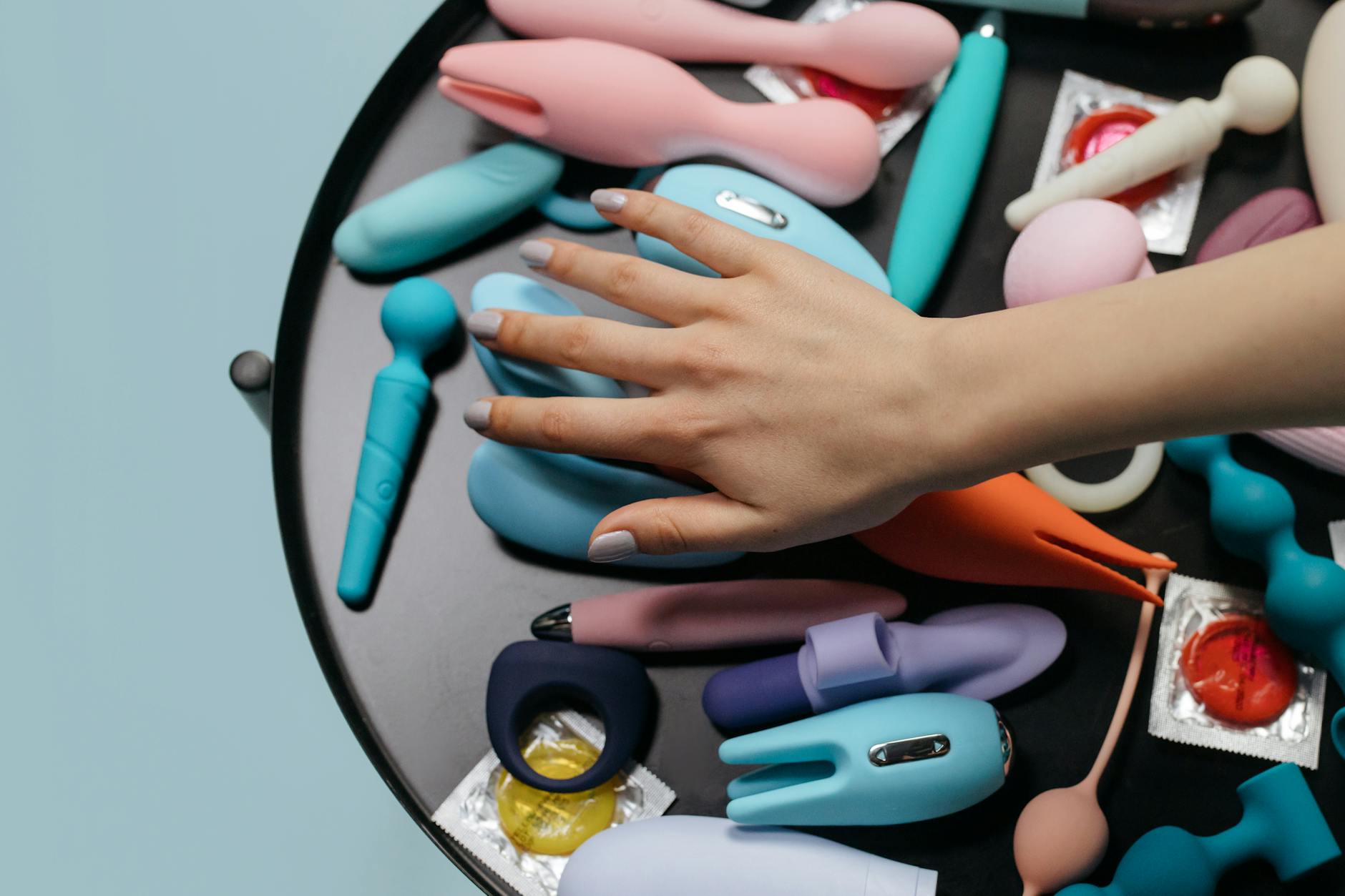
Photo by cottonbro studio on Pexels
The first time you actually use it
Go slower than you think you need to. Start by using the lemon vibrator during foreplay, not intercourse. This does two things: it removes the pressure of "we're trying something new AND also we have to maintain an erection/be ready for penetration," which is too much bandwidth. But it also gives both of you time to adjust to the sensation and the presence of the toy without the distraction of coordinating movement.
Start on a low pattern. The suction sensation is intense by design. Your partner might find it overwhelming at first, which is fine. You're not trying to hit maximum intensity on attempt one. The goal is just to get familiar with how it feels.
Stay in communication. Ask: "Is this good?" "Does the pressure feel right?" "Do you want me to adjust the pattern?" This isn't clinical. It's sexy because it shows you're paying attention and you actually care whether they're enjoying themselves. That's the opposite of a turn-off.
Let pleasure build gradually. One of the best parts of using a lemon clitoral vibrator as a couple is that you can watch your partner's response change as sensation builds. You get to see what works. That information is gold for future sessions.
When it feels different than you expected
Some couples find it immediately works. Some find the person receiving feels inhibited because they're thinking about whether the toy is "working" instead of just feeling it. Some find the partner inserting feels awkward or left out. All of that is normal.
If the person receiving feels self-conscious, take a break and talk about it. Maybe they need the lights dimmed. Maybe they need more focus on them as a whole person, not just the toy. Maybe they need to use it on themselves while you're involved in other ways. Flexibility is the whole point.
If the partner feels replaced, that's a real conversation too. "I notice you seemed distant." "Yeah, I felt like the toy was doing the work and I wasn't needed." Okay, so next time you adjust. Maybe they use the toy while you're kissing them. Maybe they use it while inside them. Maybe you take turns. There are dozens of configurations, and the only bad one is the one where you don't talk about how you're both feeling.
One important note: if pain shows up, stop immediately. A lemon vibrator shouldn't hurt. If it does, there might be something physiological going on that deserves attention from a healthcare provider.
Integration into your regular sex life
Some couples integrate vibrators into almost every session. Some use them occasionally. Some use them in specific contexts (long-distance video calls, times when one partner is less aroused, as foreplay before penetration). The frequency isn't the point. The point is that you've normalized it as an option, not a last resort.
One thing I notice: once couples get past the "this is weird" phase, they often wonder why they waited so long. A lemon clitoral vibrator isn't a band-aid for a broken sex life. It's just another tool for feeling good together. And honestly? That's worth the awkward conversation at the start.
The other thing that shifts: couples who navigate this successfully together often become more curious about other things too. Not necessarily more toys. But more willingness to ask for what they want, to say no without shame, to try positions they wouldn't have considered before. That openness is contagious. It spreads into other parts of your intimacy.
When your partner says no (or maybe later)
Sometimes the answer is "I'm not interested." That's completely valid. The response isn't to convince them. It's to understand why. "It doesn't appeal to me" is different from "I think you don't want me anymore." One is a genuine preference. One is a fear that needs addressing separate from the vibrator conversation.
If it's a genuine preference, respect it. You don't need a vibrator to have good sex. If it's actually a fear masquerading as disinterest, that's worth unpacking with honesty and maybe with a couples therapist if the broader intimacy has been struggling.
And sometimes the answer is "not right now, but maybe later." That's fine too. People change their minds. Desires shift. The conversation you have today plants a seed. Your partner might come back to it in six months or a year. What matters is that you've created enough safety that they can change their mind without making a big announcement.
FAQ: Common questions couples ask
Will using a vibrator with my partner damage our sex life?
No. What damages sex is shame, silence, and feeling like you can't ask for what you want. A vibrator doesn't cause those things. It's just a tool. If your sex life is already struggling, a vibrator won't fix it. But if you're both curious and you talk through it together, it can open up conversations that make things better.
Is my partner secretly wanting to use a vibrator a sign something is wrong?
Not at all. Curiosity about new sensations is completely normal, especially in longer relationships. It doesn't mean they're unsatisfied with you. It means they're interested in exploring. That's actually a healthy sign of engagement.
What if my partner wants to use a vibrator and I don't?
Then you have a conversation about it instead of just saying no and moving on. "I feel self-conscious when we use toys" is different from "I never want toys near our bed." One might shift with time and reassurance. The other is a boundary. Know which one you're actually setting.
How loud are lemon clitoral vibrators during sex?
Most are quieter than you'd expect, and definitely manageable in a typical bedroom. But if sound is a real concern for you (thin walls, kids nearby), talk about that and consider lower-vibration patterns or slower speeds during shared use.
Can we use a lemon vibrator if I can't orgasm easily?
Yes. In fact, for people with difficulty reaching orgasm, a clitoral vibrator often helps because the stimulation pattern is more direct than what a partner can typically provide with fingers or other methods. But check out our guide on why lemon vibrators work better for sensitive tissue for more specific information.
What if we've tried it once and it felt awkward?
That's actually common. The first time is often awkward because you're learning how it fits into your dynamic and you're probably overthinking it. Most couples find the second or third session feels much more natural. If awkwardness persists after a few tries, circle back to the conversation: "What would make this feel more comfortable?" Sometimes it's positioning. Sometimes it's adjusting expectations. Sometimes it's just accepting that vibrators aren't for you and that's okay.
The real outcome
When couples move through this process thoughtfully, what usually happens isn't that sex suddenly becomes amazing. It's that sex becomes something you can actually talk about. You stop treating desire as a fixed thing and start treating it as something you build together. And that conversation skill translates everywhere.
You become better at asking for what you want. Your partner becomes better at hearing requests without feeling threatened. You both get more comfortable with the fact that pleasure is a moving target, not a destination. And yeah, you probably also discover that a lemon clitoral vibrator feels really good. But that's almost a side benefit to the bigger thing you've created: a partnership where curiosity is safe.
If you're thinking about introducing a vibrator as a couple, start with the conversation. Everything else follows from there.