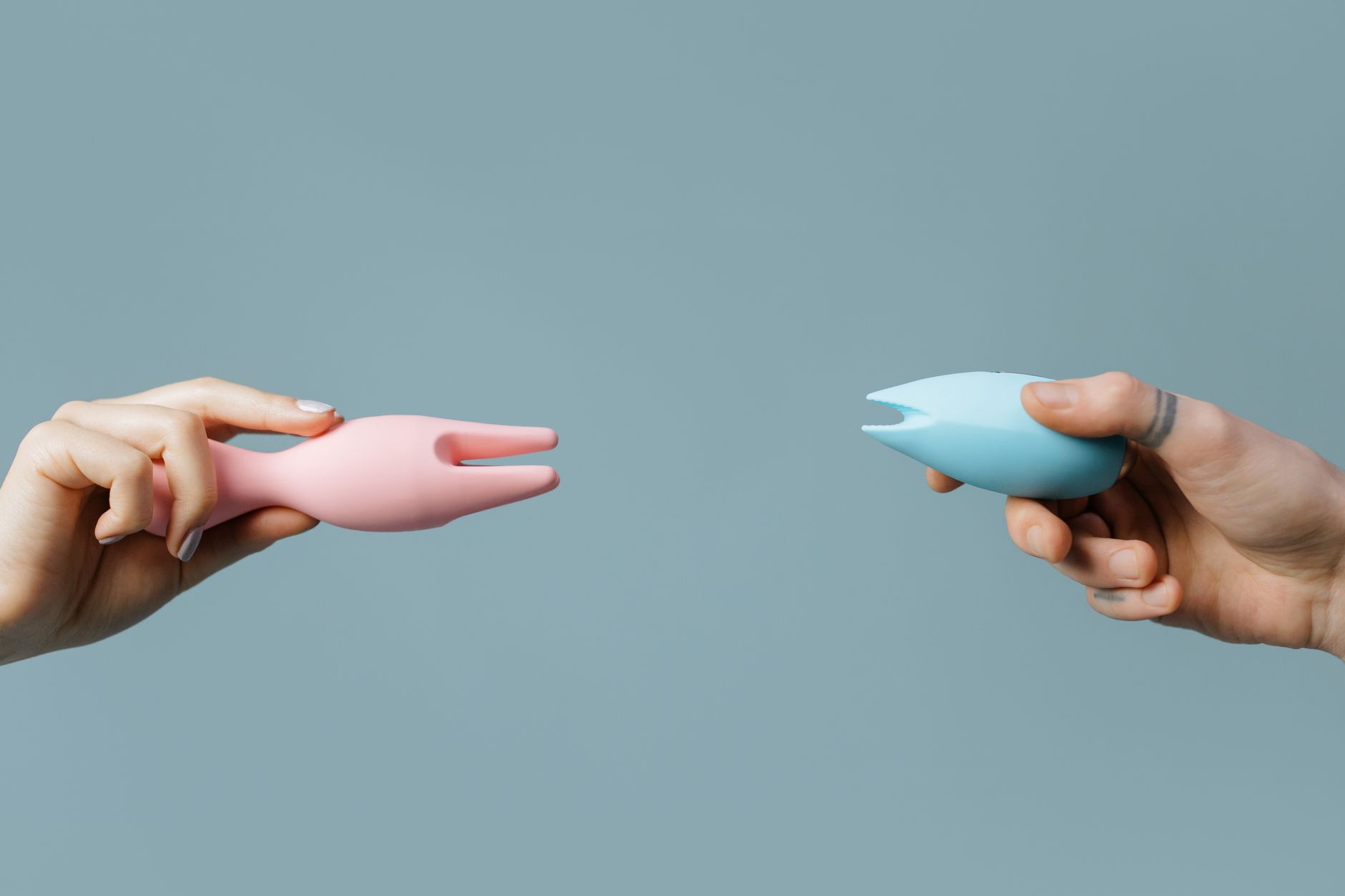
Let's talk about what's actually happening here
Here's the thing about partners who resist toys. It's rarely about the toy itself. It's almost always about what the toy represents to them: a fear they're not enough, worry they're being replaced, or anxiety that wanting something more means something's wrong with them. Your job isn't to convince them toys are great. Your job is to understand the real concern buried underneath the resistance.
I've worked with hundreds of couples navigating this exact friction. The ones who succeed don't push harder. They pause, listen, and rebuild the conversation from the ground up.
What your partner might actually be afraid of
Three fears come up most often, and they're worth naming directly:
"You won't want me anymore." This is the big one. Your partner may believe that a vibrator means you prefer it to them, or that you're somehow moving toward pleasure without them. That's not a stupid fear. That's a legitimate insecurity rooted in the idea that pleasure is finite and scarce.
"Using a toy means something is broken." Some people grew up with the message that good sex shouldn't need props. Introducing a lemon vibrator can feel like admitting defeat, like saying "what we have isn't working."
"I don't know what my role is anymore." Partners sometimes worry that if you bring a toy into the bedroom, they become passive or redundant. They lose the script they've been operating from.
None of these fears dissolve because you explain that toys "enhance" pleasure. They dissolve through repeated experience and genuine reassurance. Which means the work happens before the toy ever appears.
The conversation comes before the lemon vibrator
Don't introduce the tool in the moment. Talk about pleasure first, separate from any specific device.
Start small. Something like: "I've been thinking about how we can feel better together. Not because something's wrong. Because I want us both to feel amazing, and I think there might be ways we haven't explored yet. Can we talk about that?" Then listen. Your partner needs to feel heard before they'll consider anything new.
Ask specific questions: What do you think happens when people use toys? What worries you most? Have you ever felt pressured around sex? Give them room to name the real fear, not the surface-level objection.
Then reframe explicitly. Say something like: "A lemon vibrator isn't a replacement for you. It's a tool that helps my body respond faster, which actually means more time together, more intensity, more of what we both want. It's like the difference between a hand massage and a massage chair. Both feel good. They're just different."
This is the foundation. Skip this step and you're fighting an invisible battle.
How to introduce a lemon vibrator without triggering defensiveness
Once you've had the conversation, here's how to make the actual introduction feel natural, not threatening:
Start with curiosity, not demand. "I found this toy that's supposed to work really well for external stimulation. Would you be open to trying it together sometime? No pressure at all." The word "together" is key. You're not sneaking off to use it alone. You're inviting them into the experience.
Let them hold it first. Seriously. A lemon vibrator loses its intimidation factor fast when someone realizes it's just a smooth, lightweight silicone object. "Feel how light it is. It doesn't even vibrate unless you turn it on." Familiarity breeds comfort. Handing it to your partner lets them explore it on their own terms before any pressure arises.
Explain the function without the sales pitch. "It creates a kind of suction sensation that feels really different from anything else." Don't oversell. Don't say it will "change everything" or promise mind-blowing orgasms. Just describe what it does mechanically. Partners relax when they understand how something works.
Offer multiple entry points. "We could try it while we're already intimate, or just play with it together while watching something on the couch. Or I could use it solo while you watch, if that feels less weird at first." Different people need different on-ramps. Your job is to remove the single "right way" and make space for what actually works for them.
What to do if they say no
Sometimes your partner will still resist. That's real and worth respecting.
If they're not ready, they're not ready. Pushing creates resentment, not openness. Instead, say: "Okay. I get that this doesn't feel comfortable right now. That's fine. But I'd like us to revisit this later. For now, let's focus on what does feel good to you."
Then actually do that. Make sex good without the toy. Show them that pleasure between you two is still the priority. Often, partners become more open to new experiences when they feel secure in the foundation. It's counterintuitive but it works.
You can also ask what they'd be comfortable with. Maybe it's not a lemon vibrator. Maybe it's something else entirely. How to Use a Lemon Vibrator When Natural Lubrication Is Reduced focuses on physical comfort, but the principle applies here too. You're looking for what works for both of you, not a one-size-fits-all solution.
The integration: making it part of your rhythm together
Once your partner is on board, the actual use matters less than the framing.
The first time, keep it simple. You're together, already intimate. You introduce the lemon vibrator as something that helps you feel more, not something that replaces what you're doing. Your partner is still touching you, still involved, still central to the experience.
Here's a real version: You're with your partner, things are building. You pause and say, "Want to try it now?" They say yes. You add the vibrator to what's already happening. You're still engaged with them. They're still engaged with you. The tool is additive, not substitutive.
After the first time, ask for honest feedback. "How was that for you?" Not "Did you love it?" Just "How did that feel?" There's a huge difference. You're making space for a range of responses, not pushing toward enthusiasm.
Many partners find that once they experience the actual sensation and see their partner's pleasure increase, the anxiety dissolves. The fear was larger than the reality. Reality is often just nice.
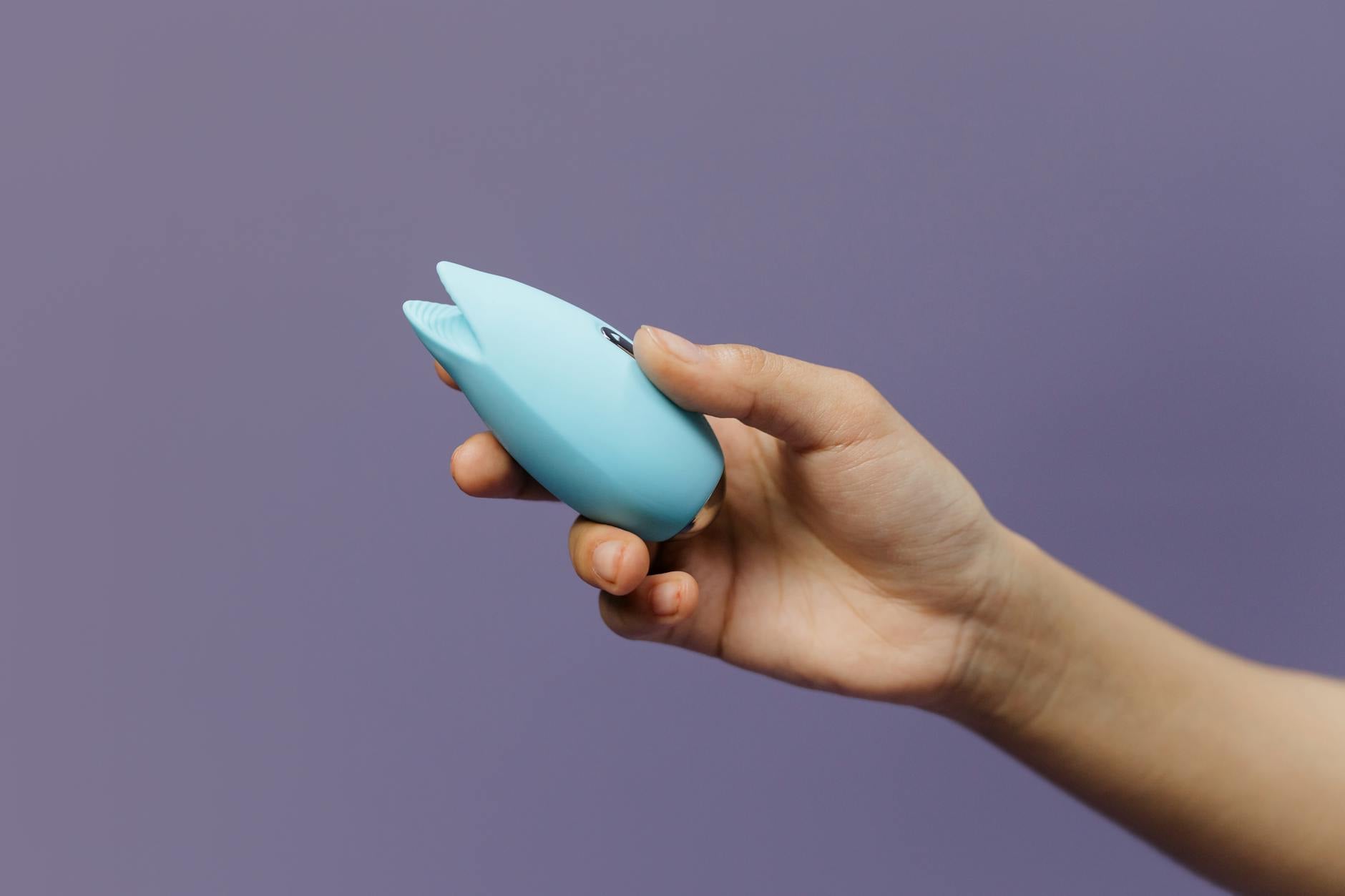
Photo by cottonbro studio on Pexels
Reframing pleasure as collaborative, not competitive
The deepest work here is shifting from a scarcity mindset around pleasure to an abundance mindset. Your partner needs to understand that your orgasm and their participation are not zero-sum.
That means showing them. If using a lemon vibrator together leads to better orgasms, better intimacy, more time spent together, more communication? They'll feel that shift. They won't need you to convince them intellectually because they'll experience it directly.
You can also frame it as a way to take pressure off them. Honestly though, this only works if it's true for you. If you're secretly using the toy because sex with your partner isn't satisfying, your partner will feel that energy and retreat further. But if you're genuinely excited about pleasure together and the lemon vibrator is one of many tools that makes that possible, that comes through.
Many of my clients report that introducing a toy actually improved their relationship, not because of the toy, but because it opened a conversation about pleasure that had been closed. Sometimes we need an external object to give us permission to talk about the internal stuff.
What if this keeps coming up as an issue?
If your partner continues to resist after you've had multiple conversations and tried gentle introductions, there might be something deeper. Unresolved resentment about sex. Shame about their own body or desires. Trauma. These aren't problems a lemon vibrator solves.
In those cases, individual therapy or couples counseling becomes the real tool. Not because toys are bad, but because the resistance to toys is a symptom, not the root issue. How to Use a Lemon Vibrator When Rebuilding Intimacy After Relationship Conflict addresses this from a different angle, but the principle is the same. Sometimes the barrier isn't the toy. It's the relationship itself.
That's not a failure. That's clarity. And clarity lets you decide what you actually want to do next.
The bottom line
Your partner's discomfort with toys isn't a permanent condition. It's a conversation waiting to happen. You're not trying to change their mind. You're trying to understand their fear, address it directly, and then gently show them through experience that pleasure can be shared and expanded, not diminished.
A lemon vibrator is just silicone and sensation. But what it represents in your relationship is much larger. Use it as an opening, not a weapon. Listen more than you explain. Show through actions that they still matter, still feel good, still have a central role in your pleasure. That's how resistance becomes curiosity. That's how curiosity becomes connection.
People also ask
What does it mean if my partner is threatened by a vibrator?
Usually, it means they're afraid of losing you or being replaced. Less often, it's about shame around their own sexuality or beliefs about what "real" sex should look like. The best first move is asking directly: "What worries you most about this?" Rather than defending the toy, understand the fear underneath.
Can using a lemon vibrator actually improve our sex life if my partner is resistant?
Not if you're forcing it. But yes, if your partner becomes genuinely open through conversation and experience. Many couples report that the act of discussing pleasure openly improves intimacy even before the toy enters the picture. The tool becomes secondary to the communication.
How do I know if my partner will ever be comfortable with toys?
You don't until you ask and listen. Some partners need weeks of conversations before trying anything new. Some need to see it work for friends. Some just need time. The question isn't whether they'll eventually agree. The question is whether you're willing to move at their pace while still advocating for your own pleasure needs.
Should I hide the toy if my partner isn't comfortable?
No. Hidden use breeds more resentment and trust issues than open conversation ever could. If your partner genuinely doesn't want toys in shared sexual space, you have a choice to make about what that means for you. But hiding creates distance. Honesty creates the possibility of change.
What if my partner says no and never changes their mind?
Then you need to decide if you can accept that boundary, or if your needs are incompatible with theirs. That's a real conversation to have, preferably with a couples therapist. You're not trying to force them. You're determining if this is a dealbreaker or something you can genuinely live with.
Is there a difference between a partner who's cautious and one who's controlling?
Yes. A cautious partner listens, asks questions, and stays open to conversation even if they say no. A controlling partner forbids toys, shames you for wanting them, and gets angry when you mention pleasure. One is a fear you can work through together. The other is a pattern worth examining in therapy.