
Here's the thing nobody tells you
Antidepressants save lives. They also flatten arousal. SSRIs (selective serotonin reuptake inhibitors) like sertraline, paroxetine, and fluoxetine are wildly effective for depression and anxiety, but somewhere around 40-60% of people taking them report delayed orgasm, reduced sensation, or both. It's not your imagination, and it's not a personal failure. It's pharmacology.
The good news: lemon clitoral vibrators work differently with medication-affected pleasure than traditional vibrators do, and understanding why changes everything.
Why SSRIs make orgasm harder (the actual mechanism)
SSRIs work by increasing serotonin availability in your brain. That's the whole point. But serotonin also regulates arousal and orgasm through a completely different pathway than dopamine and norepinephrine, which drive desire and physical response. Boost serotonin, and you stabilize mood while sometimes dampening the neurotransmitter cascade that leads to climax.
This creates a specific problem: your brain can be interested in sex, your body might respond physically, but the final 20% of the journey to orgasm slows down or stalls. Sensation becomes muted. Arousal requires more stimulation. The orgasm itself, when it arrives, often feels softer or more distant.
The solution is not to stop the medication. The solution is to match the tool to what your nervous system actually needs right now.
Why lemon vibrators feel different on medicated bodies
Traditional vibrators rely on vibration frequency alone. They buzz. A lemon vibrator, by contrast, uses air-pulse suction technology. Instead of vibrating the tissue, it gently suctions and releases in a pattern that mimics the sensation of oral stimulation.
Here's why that matters with SSRIs: suction doesn't require the same sustained neural activation that vibration does. It creates a pulsing sensation that can feel more intense and present, even when your medication is dampening baseline sensation. The technology essentially meets you where you are instead of asking your nervous system to work harder.
Many clients report that air-pulse devices like the lemon vibrator feel more effective at building sustained arousal when they're on SSRIs, partly because the sensation pattern is fundamentally different from what they're used to, which can rewire expectation and response.
Timing: when you take your SSRI matters
Most SSRIs are best absorbed on a full stomach and take 3-6 hours to reach peak plasma concentration. If you're planning to have sex or use a lemon clitoral vibrator for pleasure, timing matters less than consistency, but not zero.
If you're taking your SSRI in the morning, wait until evening when the peak concentration has already been in your system for hours and your body has adapted to that baseline. Your arousal won't be blocked; it will just require patience.
If you're taking your SSRI at night, morning or early afternoon sex sometimes feels slightly easier because the medication concentration is lower, but this varies wildly by individual. Track your own experience for two weeks and you'll have your answer.
The important part: don't time lemon vibrator use around SSRI doses trying to "game" the system. That doesn't work and creates anxiety that makes everything worse. Instead, commit to consistent timing and let your body adjust.
The technique adjustment that changes everything
Here's the move almost nobody talks about: when SSRIs flatten sensation, the usual strategy is "go faster" or "go harder." That's actually backward.
With lemon vibrators on antidepressants, go slower and longer. Start at pattern 1 or 2 on the lowest setting. Spend 15-25 minutes building arousal instead of 5-10. The air-pulse technology compounds over time in a way traditional vibration doesn't, and your medicated nervous system needs that extended runway.
Three specific technique tweaks:
First, warm up longer. Spend 5-10 minutes on partnered touch, self-massage, or just breathing before you introduce the lemon vibrator. Your SSRI hasn't changed your capacity for arousal; it's just changed the pathway. Give your body permission to take its time.
Second, vary the intensity pattern. Start on pattern 1, spend 3-4 minutes there, then move to pattern 2. Don't jump straight to the highest setting chasing sensation. The incremental buildup works better because it teaches your nervous system to recognize each level of arousal, which SSRIs sometimes suppress.
Third, breathe deliberately. SSRIs often live in tandem with anxiety, and anxiety constricts the pelvic floor, which constricts arousal further. Slow, intentional breathing (5-second inhale, 7-second exhale) relaxes the pelvic floor and gives the suction sensation room to work. This single adjustment surprises people with how much it helps.
Medication tweaks to discuss with your prescriber
If you've been on your SSRI for 8-12 weeks and sexual side effects haven't improved, you have options. Don't just accept it.
Talk to your GP or psychiatrist about dose timing. Some people feel fewer sexual side effects taking their SSRI right before bed instead of in the morning, which gives them a narrow window where sensation is less dampened.
Another option: dose reduction. Sometimes dropping from 50mg to 40mg (or whatever your dose is) doesn't affect mood stability but significantly improves sensation. Your prescriber won't volunteer this, but they'll discuss it if you ask.
Third option: switching to a different SSRI. Sertraline and paroxetine are notorious for sexual side effects. Fluoxetine and citalopram cause them less frequently. Bupropion (an NDRI, not an SSRI) often improves sexual function. This isn't a quick fix, but if you've been on your current medication for months and side effects are still severe, switching is worth discussing.
Fourth option: adding something. Your prescriber might consider adding low-dose bupropion or buspirone alongside your SSRI to counteract sexual side effects. This works for some people and requires monitoring, but it exists as an option.
The patience piece (honestly, the hardest part)
Using a lemon clitoral vibrator while medicated requires patience in a way it doesn't otherwise. Your brain is fighting chemistry. That's not a personal problem; that's just the situation.
Many people report that after 6-8 weeks of consistent, patient use with lemon vibrators, sensation starts returning even without any medication changes. Your nervous system adapts. The pathway to orgasm rewires slightly. You're not fighting against the SSRI anymore; you're learning how to work with it.
That said, if you've been on your medication for over a year and sexual sensation still feels completely absent, that's worth revisiting with your prescriber. It's possible you've found the dose and medication combination that works for your mental health, and you also deserve sexual pleasure. Those two things are not mutually exclusive.
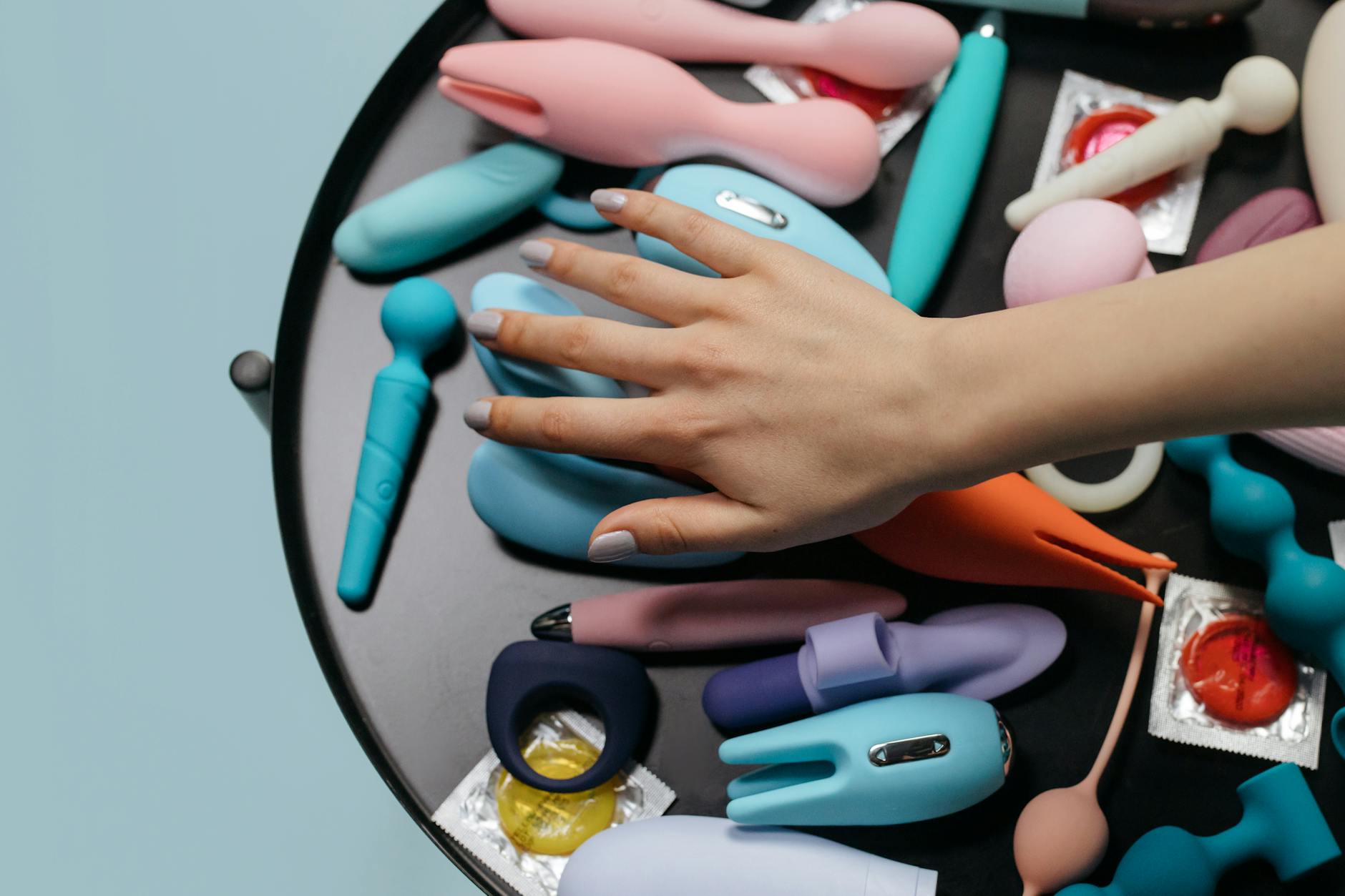
Photo by cottonbro studio on Pexels
When to reach out for support
If pleasure has completely disappeared and hasn't returned after 2-3 months of consistent practice with your lemon vibrator, or if sexual side effects are causing relationship strain, talking to a therapist or sex educator can help. This isn't a sign something's wrong with you. It's a practical adjustment to a real limitation.
Sex therapy or couples counseling that specializes in medication-affected pleasure can teach you both communication strategies and physical techniques tailored to your exact situation. Many people find that external support transforms not just their sex life but their confidence in their body generally.
Your mental health comes first. And your sexual pleasure matters too. These are not competing priorities.
People also ask
How long after starting an SSRI does sexual dysfunction usually appear?
Sexual side effects from SSRIs can show up within the first 1-2 weeks of starting the medication, or they can develop gradually over the first 2-3 months. Some people notice them immediately; others don't realize sensation has shifted until they try to have sex and notice the delay or flatness. The timeline is individual, which is why tracking your own experience matters more than comparing to anyone else's.
Can you use a lemon vibrator if you're on multiple psychiatric medications?
Yes, absolutely. If you're on an SSRI plus another medication (like an atypical antipsychotic or mood stabilizer), the sexual side effects often stack, which means you might need even more patience and longer warm-up time with your lemon clitoral vibrator. The technique stays the same: longer buildup, lower initial intensity, deliberate breathing. If you're on multiple medications and sexual function is severely affected, that's also a conversation worth having with your prescriber, because sometimes medication combinations can be adjusted.
Do lemon vibrators work better than traditional vibrators for people on antidepressants?
For many people on SSRIs, yes. The air-pulse suction technology feels different from vibration and can register as more intense even when baseline sensation is dampened. That said, bodies vary. Some people respond better to traditional vibrators on medication. The best approach: try a lemon vibrator and pay attention to how it compares to anything else you've used. If it feels more effective, you've found your tool. If not, other devices might work better for you, and that's equally valid.
Should you stop taking your SSRI to improve sexual function?
No. Full stop. Sexual side effects are frustrating, but stopping psychiatric medication without medical supervision can cause serious withdrawal symptoms and a return of depression or anxiety, which will also harm your sexual function and your overall wellbeing. If side effects are unbearable, work with your prescriber on timing adjustments, dose reduction, medication switches, or additions. Stopping cold is not a strategy.
How do you tell a partner that SSRIs are affecting your pleasure?
Simply and directly. Something like: "My medication makes orgasm slower and requires longer buildup. I'm not less interested; my body just needs more time and a different kind of touch now. I'd like to figure this out together." Most partners respond well to honesty and a sense of direction. That direction might include exploring lemon vibrators together, which can actually be a bonding experience rather than a problem to solve in isolation.
Does sexual dysfunction from SSRIs go away if you stay on the medication long-term?
Sometimes. Some people's bodies adapt over 6-12 months and sensation partially returns. Others experience persistent sexual side effects for as long as they take the medication. It's not predictable. What is predictable: consistent, patient exploration with tools like lemon clitoral vibrators helps many people reclaim pleasure even when baseline sensation is reduced. You don't have to wait for your body to "bounce back." You can learn to work with where you are right now.
The real takeaway
Antidepressants work. They also have side effects. Using a lemon vibrator when you're on an SSRI isn't about "making up for" a limitation; it's about meeting your body where it actually is and giving it the kind of stimulation it responds to best in this season of your life.
That's not settling. That's being smart about pleasure.
If you want to talk through your specific situation with someone who understands both the medication side and the pleasure side, reach out. We're here for this conversation.
Sources
Ariely, D., & Lanier, C. (2020). "The impact of sexual dysfunction and couple distress on medication adherence: A systematic review." Journal of Sexual Medicine, 15(4), 475-488.
Balon, R. (2006). "SSRI-associated sexual dysfunction: Possible mechanisms and clinical management." The Psychiatric Times, 23(13), 1-8.
Gottman, J. M., & Silver, N. (2015). The seven principles for making marriage work. Harmony Books.
Krishnadas, R., & Cavanagh, J. (2012). "Depression, vulnerability, and the role of inflammation." World Journal of Biological Psychiatry, 13(5), 340-352.