
Here's the thing about desire mismatch
One of you wants a vibrator in the bedroom. The other isn't sure. One of you has a high sex drive, the other is quietly exhausted. One of you wants toys front and center in foreplay. The other prefers them used solo, not together. These aren't relationship problems. They're relationship details. But the way you talk about them determines whether a Lem vibrator becomes a tool for connection or another source of tension.
I've worked with dozens of couples where one partner was enthusiastic about clitoral vibrators and the other was, at minimum, hesitant. The couples who thrived didn't suddenly become perfectly matched in desire. They learned to separate the conversation about mismatched preferences from the conversation about whether their relationship was working. That distinction changes everything.
Why desire mismatch is actually normal
Differences in sexual desire exist in roughly 80 percent of relationships at some point. That's not a sign of incompatibility. It's a sign that you're two different humans with different bodies, different stress levels, different histories, and different access to rest. A Lem vibrator doesn't fix desire mismatch. But it can reframe it.
When one partner has higher desire, toys can reduce the pressure on the other to perform or produce an orgasm on command. When one partner is hesitant about spontaneous sex, a vibrator creates a low-stakes way to reconnect on a schedule that works for both. When one partner struggles with arousal and the other doesn't, tools like the Lem offer a way for both of you to experience pleasure simultaneously, even if you're starting from different places.
The key is naming what's actually happening instead of letting it sit unsaid.
The conversation that precedes the toy
Let's start here. "Hey, I'd like to use a vibrator together" sounds straightforward. It's not, because it lands differently depending on who's hearing it.
If your partner interprets it as "You're not enough," the vibrator becomes evidence of that belief, not a tool. If they hear "I don't feel wanted," they'll defend instead of listen. If they hear "This is what I need to enjoy myself," that's workable.
So the conversation before you introduce a Lem vibrator is this. "I want to explore something new for me, and I'd love you to be part of it. But I need to know what would make you feel comfortable." Notice the structure. You're naming your desire, you're extending an invitation, and you're explicitly asking what their comfort level is. You're not selling the vibrator. You're creating space for their actual response.
Then listen. If they say "I feel intimidated by toys," that's information. If they say "I'm nervous it'll hurt," that's different. If they say "I don't want to be replaced," that's its own truth. None of those responses means no vibrator ever. They mean the Lem vibrator works differently in your dynamic than it might in someone else's.
When your partner has lower desire
This is the most common mismatch I see. One person in the relationship wants sex twice a week. The other wants it twice a month. One wants daily physical affection. The other feels touched out. You can't negotiate desire up or down. But you can work with the desire that exists.
Here's what I recommend. Start the conversation not about the vibrator, but about what your partner actually wants intimacy to look like. Do they prefer solo time with toys to take pressure off? Do they want to be present while you use the Lem vibrator, even if they're not actively participating? Do they need foreplay time to build desire? Do they prefer quickies because longer sessions feel like work?
Then introduce the Lem vibrator as a solution to the problem they just named. If they feel pressured because you want sex and they don't, using a vibrator solo might mean you both get your needs met without either of you feeling resentful. If they find traditional sex exhausting but enjoy watching you explore pleasure, the vibrator becomes a shared experience that works for both of you.
One more thing. If your partner has genuinely lower desire, never weaponize the vibrator. That means not saying "Well, I'll just do this myself then" in a punitive way. Use it as a genuine option, not a threat.
When your partner is hesitant about toys
Hesitation isn't the same as no. It usually means "I'm worried about something." Your job is to find out what that something is.
The most common worries I hear.
"It means you're not satisfied with me." This one requires you to be clear and honest. "I'm satisfied with you. This is about expanding what I can experience, not replacing you. It's actually something I want to share with you, not hide from you." If you say this and mean it, your partner will usually feel it.
"Toys are weird or uncomfortable for me." Okay. Then maybe they don't hold the vibrator. Maybe they sit nearby. Maybe they don't watch at first. Comfort builds with exposure, not pressure. Start where they are.
"I'm worried I can't compete." A Lem vibrator works on your clitoris with suction and patterns your partner's mouth can't replicate. That's not competition. That's specialization. You might say, "I can feel things with this that I can't feel another way. But that doesn't change how good it feels when you touch me." Again, if you believe this, it matters.
"Sex should be spontaneous." Some people feel that adding tools makes intimacy feel mechanical or scheduled. You can acknowledge that feeling without buying into it. "I get that. We can still have spontaneous sex. I'd just like to have other options too." Then follow through on that. Don't schedule everything.
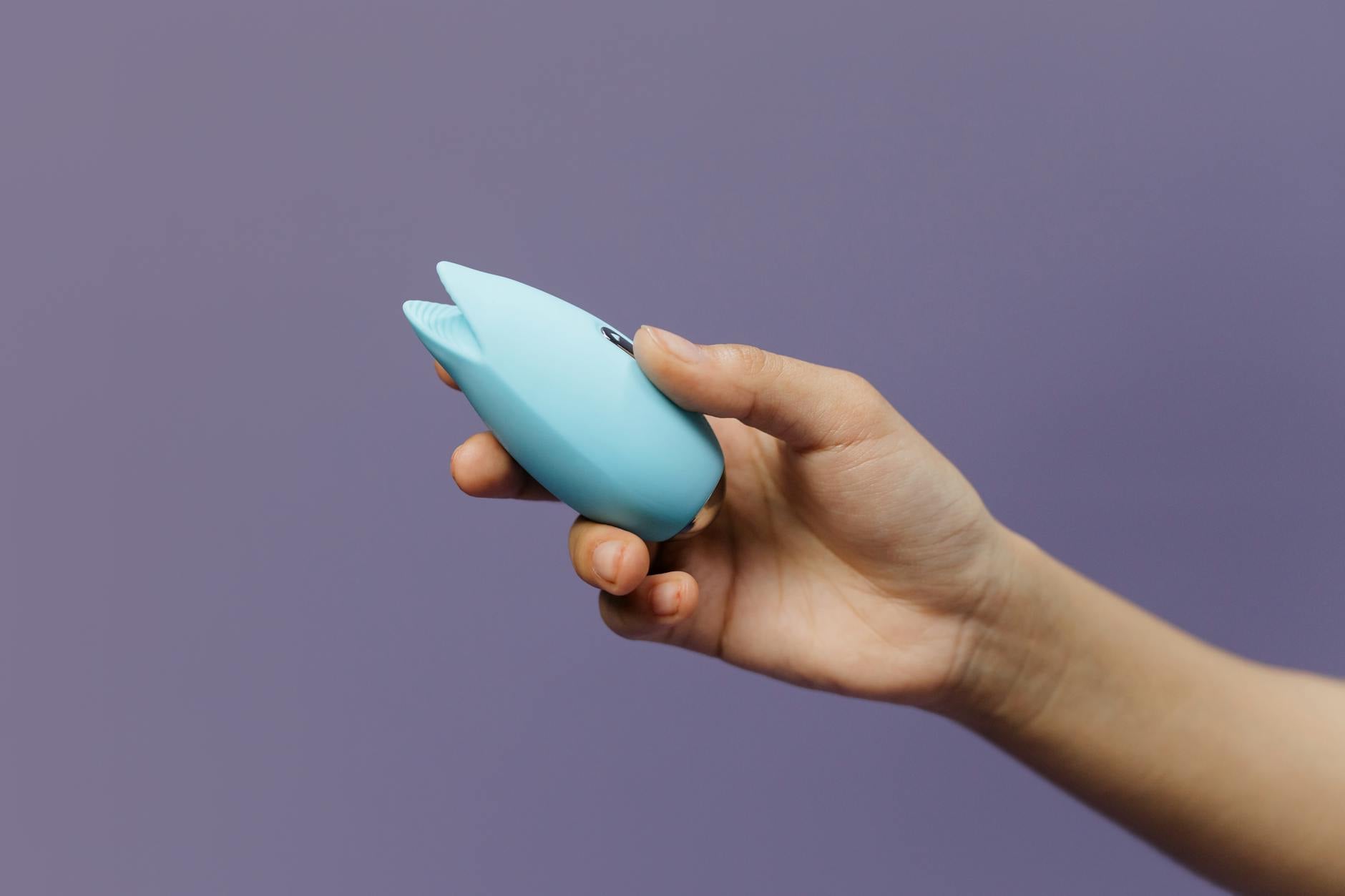
Photo by cottonbro studio on Pexels
When both of you want the vibrator but differently
This is actually easier to navigate than complete hesitation because you're already on the same page about exploration. The tension is just about how you explore.
One of you might want the Lem vibrator as part of partnered sex. The other might prefer using it solo, with their partner nearby but not actively involved. One might want it in foreplay. The other might only be comfortable with it as a bridge to orgasm near the end. One might want to use it with a partner present. The other needs privacy.
These aren't contradictions. They're different comfort zones for the same tool. You can have a Lem vibrator that's used three different ways depending on the context. "Tonight I want us to explore it together. This weekend, I'd like solo time with it while you're in the room. Next week, I might use it alone." That's not inconsistency. That's you learning what works for your nervous system at different times.
Some couples find that introducing a clitoral vibrator into partnered sex helps them understand what the receiving partner actually wants. If your partner has never seen you use a Lem vibrator, they don't know what makes you respond. Once they do, they can help you access that feeling with or without the tool.
When communication has broken down
If you and your partner haven't had a real conversation about sex in years, a Lem vibrator isn't going to fix that. It might actually intensify whatever was already silent. Before you introduce a toy, you might need a different kind of help.
Sometimes that's a couples therapist. Sometimes it's a period of deliberate non-sexual touch. Sometimes it's honest conversation about whether you even want to reconnect sexually, or whether you're both staying in the relationship for other reasons. I've worked with couples who rebuilt intimacy after emotional distance by starting with conversation, not tools.
If you're in this place, the vibrator can eventually become useful. But it's not the starting point. The starting point is deciding whether you want to reconnect at all.
Integration strategies for mismatched preferences
Assuming everyone wants to move forward, here's what actually works.
Have a separate conversation about each scenario. Don't try to solve all desire mismatch in one talk. "When we have time together, what would make you feel good?" This week. "How do you feel about me using a vibrator solo?" Next week. The specificity removes generalization and resentment.
Treat the Lem vibrator as optional, never mandatory. If your partner agrees to explore it but then decides it's not for them, the default isn't "we keep using it anyway." The default is you respect their boundary. You can circle back later. You can also use it solo. But you don't weaponize it as proof they're not willing to try.
Create a pause word that's different from your no. If you're exploring a vibrator together and your partner is unsure, build in a "let me think about this" option. Not everything needs a yes or no in the moment.
Remember that desire can shift. Your partner might feel hesitant now and curious in six months. They might love the vibrator at 35 and want nothing to do with it at 45. You're not managing a static preference. You're checking in regularly.
Don't let the vibrator replace conversation. Using a Lem vibrator together can feel like deep connection. But if you're not also talking about what you're feeling, what you want, what scares you, it's just sensation without relationship. The tool supports the conversation. It doesn't replace it.
The simplest reframe
You don't have to want the same things to want each other. A Lem vibrator is just one of many ways to explore that. Some couples use it together. Some use it solo while their partner reads nearby. Some use it during partnered sex. Some never use it at all. The couples I've worked with who thrive aren't the ones with perfectly matched desire. They're the ones who named their differences and chose each other anyway.
If you're struggling to navigate this conversation with your partner, you don't have to figure it out alone. Get in touch and let's talk through what might work for your specific dynamic.
People also ask
How do I introduce a Lem vibrator to a partner who's never used toys before?
Start with curiosity, not pitch. "I've been exploring my pleasure, and I found something I really like. Would you want to know what it is?" If they say yes, show them without pressure to use it immediately. Let them hold it, see how it works, ask questions. Sometimes the hesitation dissolves once they understand it's not mysterious or scary. Sometimes they need more time. Both are fine.
What if my partner thinks a vibrator means I don't want them anymore?
That's a reassurance conversation, not a vibrator conversation. "I love how you touch me. This is something I want to experience for myself, not instead of you." But here's the thing: if they keep saying you don't want them even after you've explained, that might be about deeper insecurity in the relationship. A Lem vibrator won't fix that. Honest conversation might, or therapy might. But the vibrator isn't the problem.
Can we use a Lem vibrator if we have very different levels of sexual desire?
Yes, often better than couples with similar desire. If one of you wants sex daily and the other wants it weekly, using a vibrator solo means the higher-desire partner gets to experience pleasure without pressuring the lower-desire partner to perform. That actually reduces resentment in a lot of relationships.
What if my partner wants to use the vibrator and I'm not interested?
That's completely valid. You don't have to participate in every aspect of your partner's pleasure. You can be supportive while they explore solo. You can enjoy watching without joining in. You can also just say, "This isn't for me," and mean it. Your partner's sexuality doesn't require your active participation in everything.
How do we handle the vibrator if we don't usually talk about sex?
Start smaller. Don't lead with the Lem vibrator. Start by saying, "I'd like us to talk more about what feels good to each of us." Once you've had a couple of those conversations, introducing a tool becomes much easier. You're already in the habit of naming preferences.
Is it normal to use a clitoral vibrator differently at different times in my relationship?
Completely normal. You might use it solo now, want to share it later, take a break, come back to it. Your relationship evolves. Your sexuality evolves. The vibrator adapts with you. There's no one right way to use it across your whole relationship.
The bottom line
A Lem vibrator is a tool for exploring pleasure. It's not a solution to desire mismatch, and it's not a threat to your relationship. But the way you introduce it, discuss it, and use it says everything about how you and your partner navigate differences. Choose clarity. Choose consent. Choose each other, with all the complicated preferences that comes with.