
Let's be honest about the gap
Time away from pleasure isn't a moral failing. It happens. Life happens. Whether it was grief, stress, medical recovery, relationship changes, or just the weight of everything else, pleasure was on pause. Now you're thinking about coming back to it, and maybe you're unsure where to start.
The good news: your body hasn't forgotten. The neural pathways are still there. Sensitivity returns faster than you think. What matters now is approaching this without pressure, without comparison to how it used to feel, and with tools that actually meet you where you are.
Why a lemon vibrator is the right choice for starting again
When you've been away from pleasure for a while, intensity can feel shocking. A lemon vibrator, like the suction-based design of the Lem, works differently than traditional vibrators. Instead of friction or deep rumbling, it uses gentle suction that builds sensation gradually. This matters because it lets you control exactly how much stimulation you want, exactly when you want it.
The clitoral area especially benefits from this approach after a long pause. Tissue sensitivity has likely shifted. Nerve density hasn't changed, but the way your body registers touch might feel different. With a lemon clitoral vibrator, you're not forcing yourself back into old patterns. You're building new ones.
Prepare your space and mindset first
Before you touch anything, get clear on why you're doing this. Not for anyone else. Not to "fix" yourself or prove something. For you, because pleasure is a legitimate part of being alive, and you deserve to experience it.
Physically: find privacy. This isn't negotiable. A locked door, headphones nearby, phone on silent. Your nervous system needs to know it's actually safe before it will relax enough to feel anything good.
Mentally: Release the expectation that this will feel exactly like it did before. Your body has changed. Your mind has changed. That's not loss. That's data. You're not starting from zero, but you're not starting from exactly the same place either.
Warm up longer than you think you need to
Here's what most guides get wrong: they assume arousal happens on a timeline that works for your brain. It doesn't. After a long break, your body needs time to remember that pleasure is safe again.
Start without the lemon vibrator at all. Spend 10 to 15 minutes just touching yourself. Non-sexual touch first. Your collarbones, your thighs, your breasts if that feels good. The goal is literally just to remind your nervous system that touch is okay. Your hands, your skin, nothing else.
Then gradually move toward the areas that usually feel good. Slowly. This isn't rushing to the finish. You're rebuilding the bridge between your brain and your body.
When you introduce the lemon vibrator, start at the lowest setting
Unpack it. Charge it fully. Hold it in your hand for a minute. Get used to the weight, the material, the shape. There's no rush here either.
When you're ready, start at pattern one on the lowest intensity setting. Many people with lemon clitoral vibrators never go past pattern three or four. That's completely normal. The suction mechanism means you don't need high intensity to feel a lot.
Place it where you want stimulation and let it sit there. Don't immediately begin moving it around. Let your body adjust to the sensation first. If it feels good, stay. If it feels like too much, you can pull back or turn it off without any shame.
Expect sensation to return in waves, not all at once
Your clitoral sensitivity might feel muted at first. Completely normal. After a break, nerve endings take a moment to wake back up. You might also notice that you feel more sensation in some areas than others, or that you need longer to get to a place where orgasm feels possible.
This is your baseline right now. Work with it, not against it. If you can feel the vibrations but they don't lead to orgasm, that's still a win. Pleasure isn't only about reaching climax. It's about the experience of being present in your own body again.
Some people find that their first experiences back feel emotional. That can be sadness, relief, joy, or something unnamed. That's your nervous system releasing tension it's been holding. Let it happen.
Build a sustainable pattern, not a pressure cycle
The mistake I see most often is someone coming back to pleasure and immediately creating a new pressure: "I should be able to do this three times a week." "I should climax every time." "I should want this more."
Forget all of that. For the first few weeks, the only rule is this: if you want to explore, you can. If you don't, you don't. No minimum, no maximum, no expectation.
Many people find that once they release the pressure, desire starts showing up more naturally. Your body knows what it needs. Sometimes it needs rest. Sometimes it needs touch. Sometimes it needs both.
If you're in a relationship, have the conversation separately from the experience
If you have a partner, they might want to be involved eventually. That's a different conversation entirely from "I'm coming back to my own pleasure." Don't mix them.
You might start solo, feel good about it, and then want to explore with a partner. Or you might want to keep solo exploration separate. Both are valid. The key is deciding what you want before you invite someone else in. "I'm figuring out what feels good" is different from "I want to involve you in this," and your partner needs to understand that distinction.
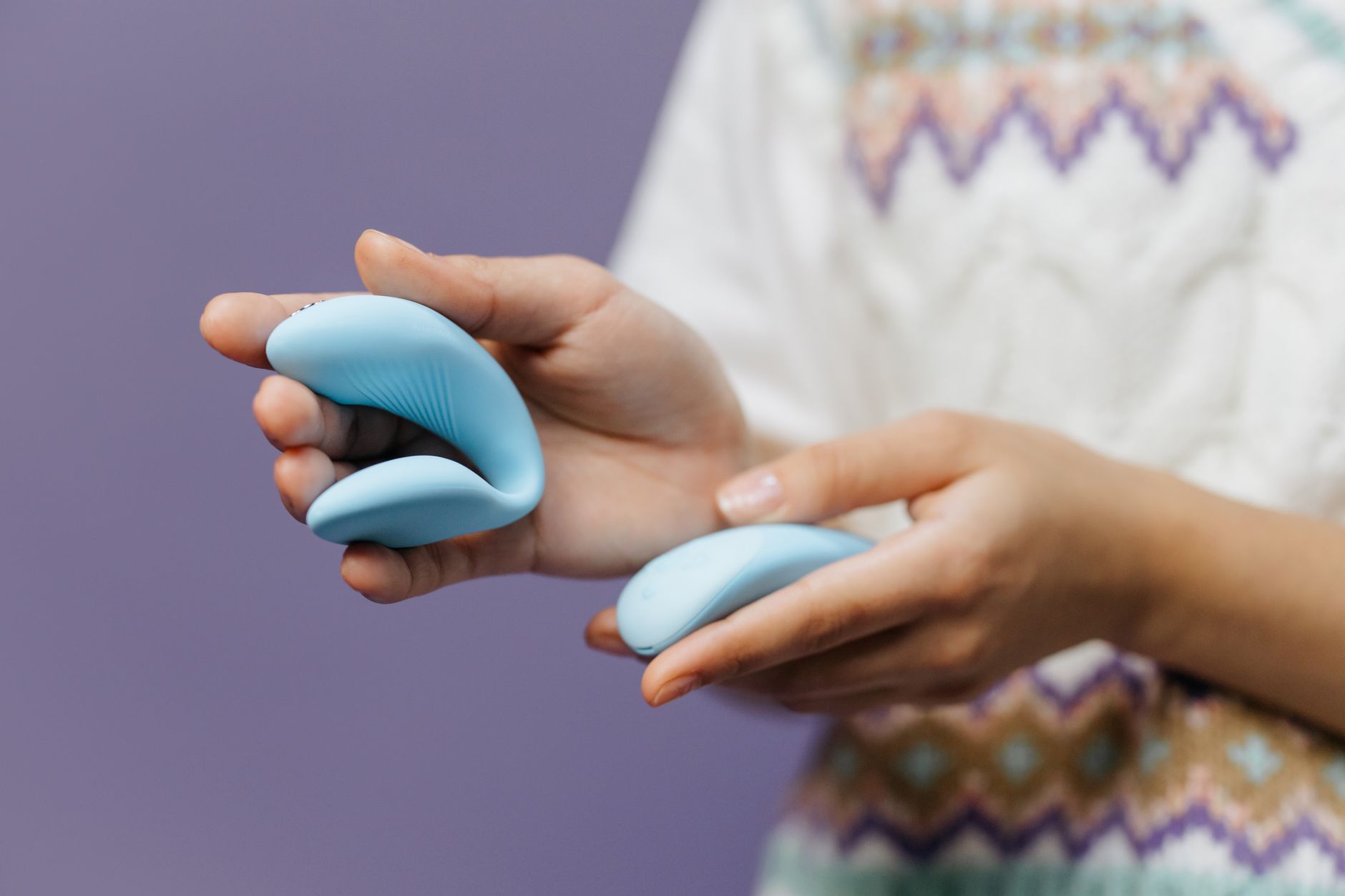
Photo by cottonbro studio on Pexels
Pain, numbness, or dissociation mean pause
If at any point you feel sharp pain, complete numbness that doesn't shift with time, or a dissociative feeling (like you're watching yourself instead of inhabiting your body), stop. This isn't failure. This is useful information.
These sensations sometimes mean you need more time. Sometimes they mean you need professional support. A therapist who specializes in somatic work or trauma can help you understand what's happening. A gynecologist can rule out any medical factors. Neither of these conversations means something is wrong with you. They mean you're taking this seriously.
Expect the timeline to be longer than you want it to be
You might feel good after week one. You might need six weeks. You might need three months. There's no standard, and comparing your timeline to someone else's is pointless.
What matters is this: you're moving in the direction of pleasure again. You're being patient with yourself. You're using tools that actually work for your body, like a lemon vibrator with adjustable intensity that lets you control exactly what you need.
That's not just okay. That's the whole point.
The first time you want to explore with a partner
If and when you want to include someone, remember that you already know what you like. You've spent weeks or months learning your own body again. You don't need to relearn it for someone else.
You might show them what you've discovered. You might keep solo exploration separate. You might find that a partner's touch and a lemon vibrator work together in new ways. Any of these paths is right.
The key difference now is that you're not coming back to pleasure for your partner, or to save a relationship, or to meet an expectation. You're coming back because you chose to, on your own timeline, and your partner is invited to witness that journey if they're worthy of it.
FAQ
How long should I wait before using a vibrator if I've been away from pleasure for over a year?
There's no medical reason to wait. If you feel ready, you can start anytime. That said, many people benefit from a week or two of solo, non-vibrator touch first just to help their nervous system remember that pleasure is safe. Listen to your body's signals, not a timeline.
Will a lemon vibrator feel different on me after such a long break?
Likely yes. Your tissue sensitivity, hormonal state, and psychological relationship to pleasure have all shifted. That doesn't mean it's worse. It often means it's different in ways that are interesting once you get curious about them. Give yourself time to explore what actually feels good now, not what used to feel good.
Can I still orgasm if I've been away for years?
Most people can, though the pathway there might look different. Some need more time, more direct stimulation, different patterns, or a completely different mental state than they used to. Orgasm isn't the only measure of success here. Returning to pleasure is.
What if I use a lemon vibrator and feel nothing at all?
First, check that you're at the lowest intensity setting and starting with a longer warm-up period. Second, remember that "nothing" sometimes means your nervous system is still in protection mode and needs more time. Third, if weeks pass and sensation truly hasn't returned, a conversation with a gynecologist or pelvic floor physical therapist can help rule out any medical factors.
Is it normal to feel emotional when I start exploring pleasure again?
Completely. You might feel relief, grief, joy, anger, or a combination that doesn't have a name. Your body is processing a lot. Let the emotions be there. You don't have to fix them or understand them immediately. They're just part of coming back.
Should I tell my partner I'm using a lemon vibrator before we try to be intimate together?
That depends on your dynamic and what feels right for you. Some people tell their partner as soon as they start solo exploration. Some keep it private until they want to bring it into partnered sex. Some keep it private indefinitely. There's no rule. Do what actually feels safe and right for you, not what you think you're supposed to do.
You're not starting over. You're returning.
There's a difference. Starting over means erasing what came before. Returning means coming back to something that's still yours, changed by time but not erased by it.
Your capacity for pleasure is still there. Your body still knows how to feel good. The gap in time changes some of the details, but it doesn't change the fundamental truth: you deserve to experience sensation, arousal, and pleasure as part of a full life.
A lemon vibrator is just a tool. But it's a smart tool for this particular moment, because it meets you exactly where you are right now, not where you used to be.
If you're unsure about next steps or want to explore how rebuilding pleasure fits into your larger relationship or life, contact us. We're here to support this journey, whatever it looks like for you.