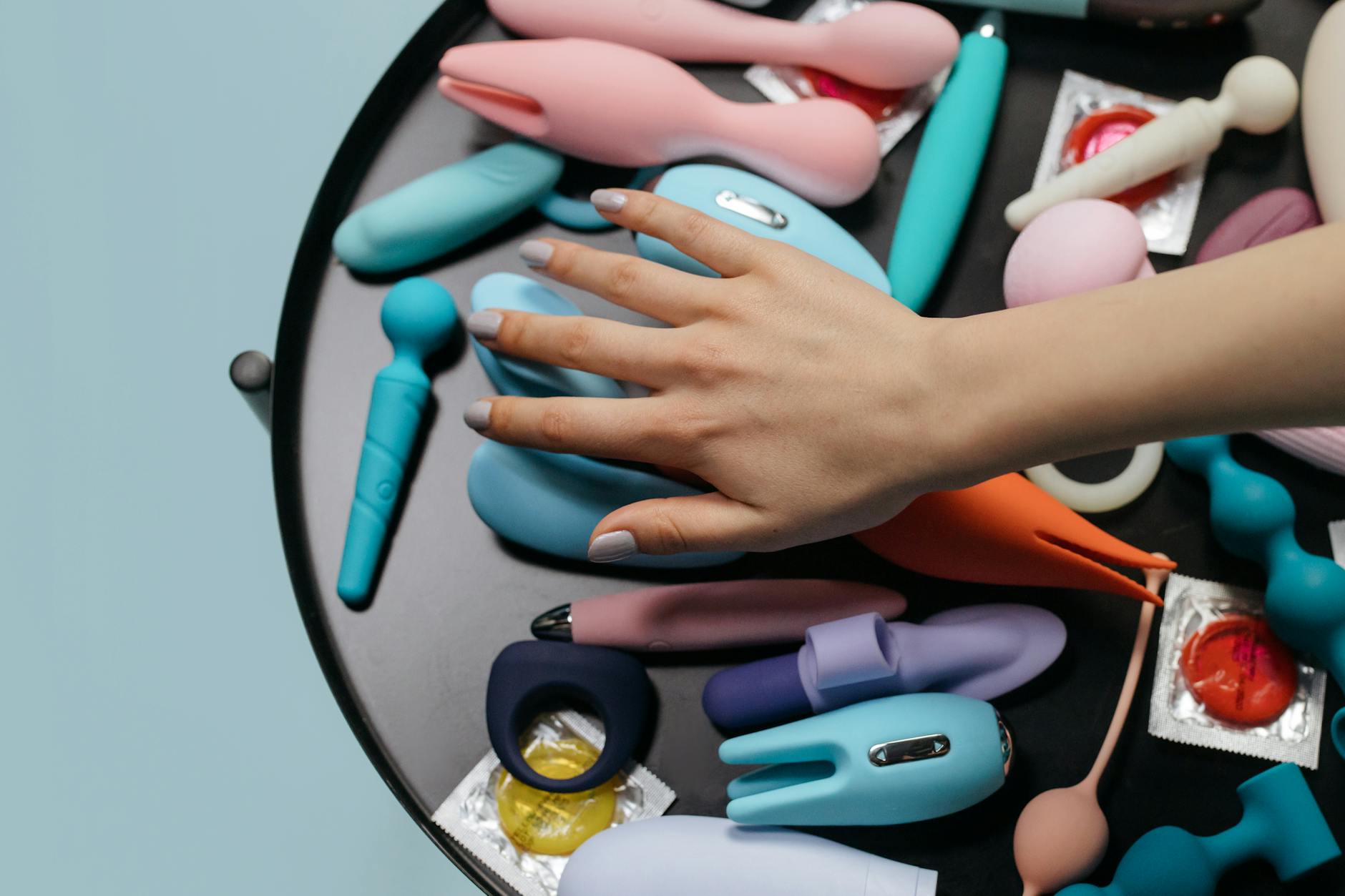
Let's address the elephant in the room
Solo play in a committed relationship still carries this weird charge. Someone brings it up, and suddenly there's silence, or worse, the conversation becomes about what it means. Does it mean the relationship isn't enough? Is one person pulling away? Are they attracted to someone else?
None of that is usually true. But the anxiety is real, and it's worth naming before you move forward.
Here's what I've learned from years of couples therapy: solo pleasure and partnered pleasure are completely different neural and emotional experiences. They're not competing. They're not substitutes. They're just different things your body and mind need sometimes. The couple that understands this gets to keep both.
Why this conversation matters more than the actual vibrator
You can own the most beautifully designed lemon vibrator in the world, but if the conversation that led to solo play was unclear, stilted, or reactive, the vibrator becomes a symbol of something else. It becomes evidence of what's not working.
The vibrator itself is neutral. The communication around it is everything.
Start here: "I've been thinking about exploring some time for myself. Not because anything's wrong, but because my body is asking for something different. Can we talk about what that might look like?"
Notice what's in that sentence. You're naming the impulse as yours (not blaming the relationship). You're separating the impulse from judgment (not because anything's wrong). You're asking permission to have the conversation, which tells your partner their input matters.
The five questions you both need to answer
Before a Lem vibrator or any lemon clitoral vibrator enters the picture, get clarity on these:
1. Frequency. How often are you thinking about solo time? Once a week? Twice? Daily? This isn't about judgment. It's about whether solo play is occasional curiosity or a regular need.
2. Context. Is this solo time separate from partnered sex, or replacing it? If it's replacing it, that's a different conversation (and might need a therapist).
3. Boundaries. Are there things that feel off-limits? Some couples are fine with toys. Some want to know beforehand. Some prefer not to know the details. All of these are valid.
4. Reciprocity. Does both partners want solo time, or is one person expressing this need? If it's both, great. If it's asymmetrical, that asymmetry needs acknowledgment.
5. Insecurity. Be honest: what are you actually afraid of? Rejection? Inadequacy? Your partner preferring solo play to you? Name it so you can work with it instead of around it.
The physical setup that sets you up for ease
Once the conversation is clear, the practical part is straightforward. Here's what I recommend for someone new to solo play with a lemon vibrator:
Create actual privacy. This isn't about sneaking around. It's about removing the ambient anxiety of potentially being interrupted. Lock a door. Put your phone in another room. Set a time when you know you have at least 20-30 minutes.
Start at a low intensity. The Lem vibrator is designed with intensity levels 1-3 as entry points. Most people exploring solo play for the first time move too fast because they're nervous or because they think they need stronger sensation to get where they're going. You don't. Pattern 1 or 2, give yourself 15 minutes, and see what happens.
Use lubrication. Even if you don't usually. Solo play often involves a different kind of touch and duration than partnered sex. Water-based lube removes friction worry and lets you focus on sensation.
Have a goal that isn't orgasm. Seriously. The pressure to orgasm is a quick way to turn solo exploration into another performance. Try going in with the goal of noticing. What patterns feel good? What rhythm? What intensity? What mental state? You're gathering data about your own pleasure, not racing to a finish line.
What to do with the feelings that come up
First solo session happens. Maybe it's great. Maybe it's awkward. Maybe you feel guilty afterward even though rationally you know there's nothing to feel guilty about.
That guilt often isn't about the vibrator. It's about breaking a pattern in the relationship where one person's pleasure was always partnered pleasure. You're introducing a new variable, and your nervous system is flagging it as change. That's normal.
After solo play, check in with your partner. Not play-by-play (unless that's explicitly something you both want). Just: "I did that thing we talked about. I'm feeling good about it, and I wanted you to know." This isn't confession. It's the opposite. It's normalizing.
If guilt persists, ask yourself whether it's coming from inside you or whether there's something unresolved in the relationship that solo play just made visible. Sometimes solo play surfaces a real disconnection that needs attention. Sometimes it's just your nervous system adjusting to change.
When to bring solo play back into partnership
Even if solo play stays solo, it affects the relationship. You've changed. Your relationship to your own body has changed. Sometimes people who discover solo pleasure find that partnered sex becomes deeper, more intentional, less obligatory.
That's the pattern I see most often in my practice. Not "solo play destroys partnership." The opposite: people who know their own pleasure have less resentment, more generosity, more presence.
Some couples do bring solo play and partnership together. "Want to watch?" "Want to join in halfway through?" "Can I sit with you while you do that?" These are all different conversations, and they're all valid. The key is asking first, then respecting the answer.
The lemon vibrator is not the problem
Whatever clitoral vibrator you choose, whether it's the Lem or another lemon sexual toy, the tool itself is not where the vulnerability lives. The vulnerability is in the conversation. It's in asking for something you want. It's in imagining your partner saying no. It's in realizing your body has needs that exist separately from the relationship.
All of that is growth. The vibrator is just the catalyst.
Your partner wanting to explore solo pleasure isn't a rejection. It's honesty. And a relationship that can hold honesty, even about uncomfortable things, is stronger than one built on pretending everything's always partnered and synchronized.
People also ask
Does using a lemon vibrator solo mean my partner isn't enough?
No. Your body can want different things at different times. Solo play is about your nervous system, your specific rhythm, your mental space on a given day. Partnered sex is about two people coordinating. They're not mutually exclusive. Most people who have access to both end up doing both, and the relationship benefits.
How do I know if my partner is uncomfortable with solo play even if they say they're okay with it?
Pay attention to shifts in affection, initiation, or tone after you've had solo time. If things feel colder or more withdrawn, that's worth naming. You can say, "I noticed something shifted after we talked about solo play. I want to make sure we're actually okay." Sometimes people agree to something they're not ready for. Better to revisit than to let resentment quietly build.
Should I tell my partner when I use a lem vibrator alone?
That depends on what you both agreed to. Some couples do. Some keep it private and just agree that solo time happens. The agreement matters more than the specific disclosure. As long as you've talked about what's okay, you're not breaking trust. You're following the framework you created together.
Can using a lemon clitoral vibrator alone actually improve partnered sex?
Yes, often. People who know their own pleasure patterns and preferences tend to be more communicative partners. You can say, "I notice that pattern 2 on the Lem works better for me than pattern 3." That information makes partnered sex easier and more pleasurable for both of you.
What if only one of us wants solo time?
That's fine. Not everyone needs or wants it. The person who does wants to explore it without making the other person feel like they're failing or not enough. The person who doesn't needs to avoid interpreting it that way. Clear agreements on frequency and context help.
How long should I wait before trying solo play after starting this conversation?
There's no rule. Some couples feel ready immediately. Some take weeks to sit with it. The timeline matters less than the readiness. You'll know. There's usually a moment where the anxiety shifts and it just feels like the next logical step.