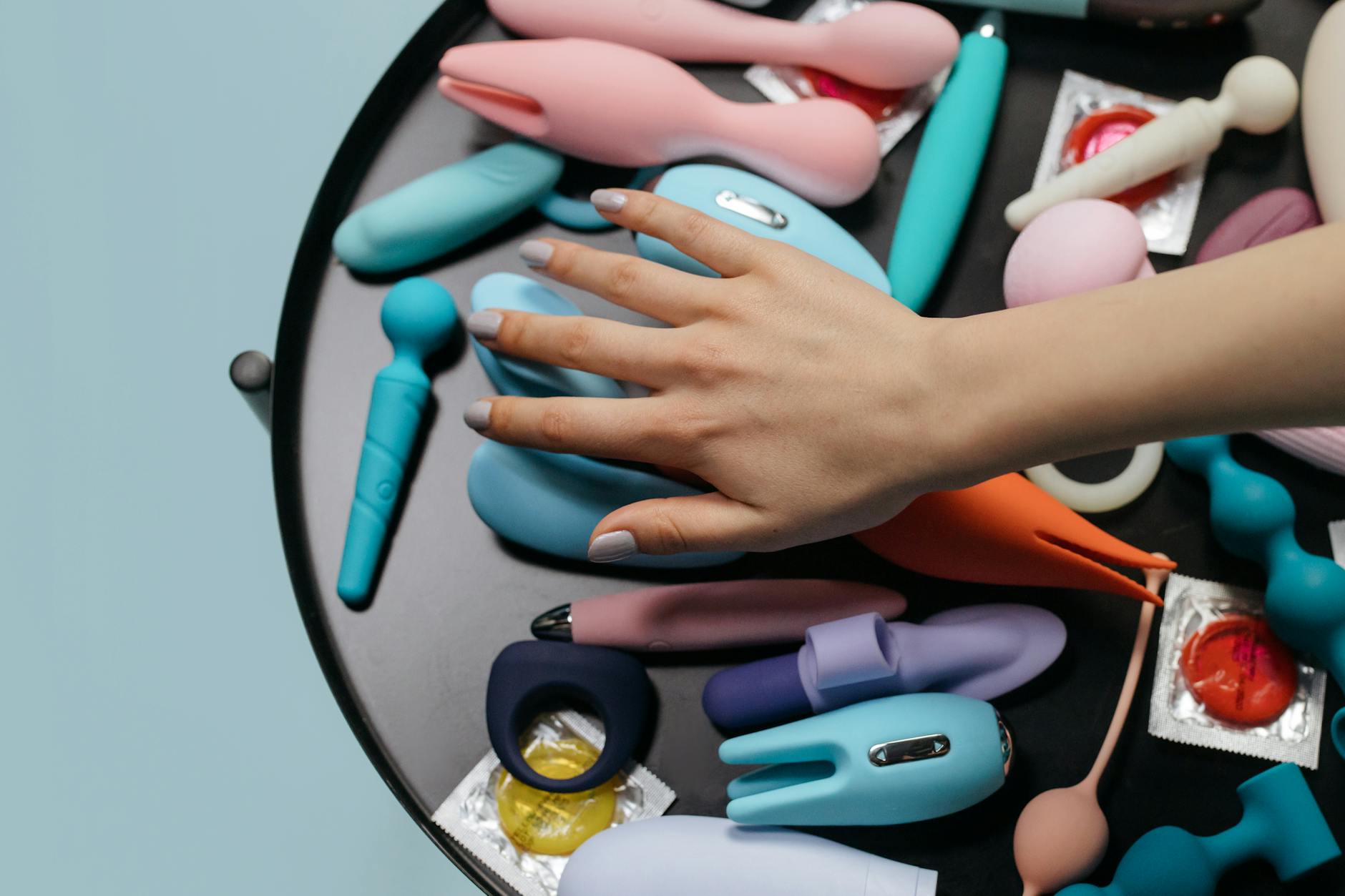
Let's talk about what vaginismus actually is
Vaginismus is when your pelvic floor muscles involuntarily tighten in response to penetration or the anticipation of it. It's not psychological weakness. It's not your fault. Your nervous system has learned that penetration equals danger, so it's doing exactly what it's supposed to do: protect you.
The problem is that this protection becomes a trap. The tighter you tense, the more penetration hurts, which teaches your nervous system that it was right to tense. You end up locked in a pain cycle that penetrative sex can't break. That's where a different approach comes in.
Why clitoral vibration rewires the pattern
Here's the neurological part that matters. Vaginismus is a protective reflex controlled by your sympathetic nervous system, the same system that triggers the fight-or-flight response. To interrupt it, you need to activate the parasympathetic nervous system, the one that says "it's safe to relax."
Penetration activates the reflex. Clitoral stimulation, especially with a tool like a lemon vibrator, bypasses the reflex entirely and goes straight to pleasure pathways. This serves two functions at once. First, it reminds your body what sensation can feel good without pain attached. Second, it teaches your nervous system that sexual touch doesn't automatically mean the pelvic floor needs to guard.
Over time and with patience, your brain starts updating the threat map. Your pelvic floor learns that arousal and clitoral stimulation are safe. This rewiring is gradual, but it works.
Starting slowly with external-only stimulation
If you have vaginismus, your first session with a lemon vibrator should involve nothing inside. Full stop. Your only job is to explore clitoral sensation without any pressure to progress.
Start in a position where you feel safest. For many people, that's lying on your back with knees bent and feet flat. For others, it's sitting up. Pay attention to what reduces mental tension, because mental tension drives pelvic tension.
Set the Lem to the lowest pattern and let it rest gently against your clitoris. Don't try to achieve anything. Don't rush toward orgasm. Your nervous system needs to collect data that this is okay. Spend 10-15 minutes just exploring how different patterns feel. If something triggers tightness, stay with it at a lower intensity or take a break.
This isn't failure. Slowing down is the point.
Building arousal without goal-orientation
One of the biggest mistakes I see with vaginismus is treating stimulation like a performance task. "I should be able to orgasm by now" becomes a ceiling instead of a path. Drop that.
Your nervous system releases tension in the presence of genuine pleasure, not forced achievement. That means you need to spend time actually enjoying what's happening, not mentally monitoring whether it's "working."
Use your Lem in longer sessions. Fifteen minutes is the minimum. Let arousal build at its own pace. If you feel your pelvic floor starting to grip, pause for a few breaths. Breathe into your belly, not your chest. Chest breathing keeps you in fight-or-flight. Belly breathing signals safety.
When you feel pleasure building, let it. When it plateaus, that's fine too. The goal is sensation and safety, not the finish line.
Breathing as a pelvic floor reset
This is the tool that changes everything. Your pelvic floor is directly connected to your breath.
When you inhale, your pelvic floor naturally relaxes downward. When you exhale, it engages slightly. If you're breathing shallow and fast, your pelvic floor mirrors that tension. If you're holding your breath, it locks.
During a Lem session, practice this breathing pattern: inhale for four counts, exhale for four counts. Focus on the exhale, imagining your pelvic floor softening and dropping with each breath out. Some people find it helpful to place a hand on their lower belly and feel it rise and fall.
This single change can reduce pelvic floor tension by 30-40% in a single session. It also signals your nervous system that you're in control, which is critical for rewiring the vaginismus response.
Why partnered use needs explicit communication
If you have a partner, they need to understand that this rewiring process isn't about them. Many partners internalize vaginismus as a rejection. It's not. It's a nervous system response that exists independently of your attraction or feelings toward them.
The most useful thing a partner can do is give you space to explore alone first. Let your nervous system settle around clitoral stimulation without the added variable of someone else's presence or expectations. Once you feel solid with solo sessions, you can invite your partner into the process, but on your terms.
If you do explore together, establish a signal for "pause." Not "stop forever." Just "let's pause and breathe." This gives your pelvic floor permission to relax because it knows it has control.
Vaginismus isn't a life sentence. It's a protective response your body learned. And what your body learned, it can unlearn.
When to combine this with physical therapy
Pelvic floor physical therapy is the gold standard for vaginismus recovery. A PT can assess what's happening in your pelvic floor, teach you targeted relaxation techniques, and track progress over time. If you have access to one, especially someone trained in trauma-informed pelvic health, that's your accelerator.
However, if cost or access is a barrier, a lemon vibrator combined with breathwork and your own nervous system awareness can still move you forward significantly. Many people find that clitoral stimulation gives them enough positive feedback to stick with it, whereas penetration-focused approaches left them frustrated.
The combination of both (a PT plus regular Lem sessions) tends to produce the fastest results. But either one alone is better than suffering alone.
Recognizing when you're ready for the next step
Some people with vaginismus find that clitoral orgasms remain their preference permanently. That's completely valid. You don't need to "graduate" to penetration if external pleasure works for you.
That said, if you want to eventually explore penetration with less pain, you'll know you're ready when a few things have happened. First, you can have 15-20 minute Lem sessions without involuntary pelvic floor tightness. Second, your arousal is building and releasing naturally without extreme effort. Third, you feel less anxiety about your body's responses.
When those three things converge, you might try introducing a finger inside while using your Lem externally. Not penetration. Just presence. One finger, very slowly, just past the entrance. No thrusting. No goal. Just data collection for your nervous system.
This is not a race. Many people spend months or years in the clitoral-only phase. Some never want to leave it. Both paths are healing.
The role of pleasure in recovery
Here's what the medical model often misses about vaginismus: recovery isn't just about pain reduction. It's about pleasure expansion. Your nervous system needs to experience enough consistent, safe, pleasurable sensation that it starts updating its threat assessment.
A lemon vibrator does something penetration cannot: it delivers concentrated, consistent pleasure without triggering the protective reflex. That's not a workaround. That's the actual mechanism of recovery.
Every session where you feel good without pain is a vote for your body's safety. Eventually, those votes accumulate into a new baseline. Your pelvic floor learns that sexual touch is survivable, even enjoyable. The reflex loosens.
This takes patience. But it's possible. Thousands of people with vaginismus have rebuilt their relationship with pleasure using exactly this approach. You're not broken. You're just healing in the right direction.
FAQ
Can using a Lem vibrator actually reduce vaginismus symptoms?
Yes, but not because the vibration is medicinal. Rather, consistent clitoral stimulation in a safe, low-pressure environment retrains your nervous system's response to sexual touch. By bypassing the penetration trigger, you're essentially saying to your pelvic floor: "Sexual sensation doesn't have to mean pain." Repeated positive experiences gradually shift that threat assessment.
Should I try penetration with a Lem vibrator if I have vaginismus?
Not initially. Start with external-only use for at least 4-6 weeks. Once you're comfortable with that, you might experiment with internal stimulation, but only after you've felt your pelvic floor relax consistently during clitoral sessions. Rushing to penetration re-triggers the protective reflex.
How often should I use a lemon clitoral vibrator to see progress with vaginismus?
Two to three times per week is ideal. This gives your nervous system enough positive repetitions to start learning the new pattern, without overwhelming it. Consistency matters more than intensity. Regular, pleasurable sessions over months tend to produce better results than occasional marathon sessions.
Is vaginismus psychological or physical, and does it matter which?
It's both. Vaginismus is a protective response that lives in the nervous system, which bridges psychology and physiology. Trauma, anxiety, pressure, and past pain can all trigger it. But the response itself is physical. That's why talk therapy alone sometimes doesn't work, and why adding a somatic practice like vibration can help.
Can I use a Lem vibrator alongside pelvic floor physical therapy?
Absolutely. In fact, they complement each other beautifully. A PT teaches you manual relaxation and assessment. A clitoral vibrator provides consistent positive feedback and pleasure. Together, they speed recovery. Let your PT know you're using a vibrator so they can advise on timing and approach.
What if I feel more pelvic tension when I use a lemon vibrator?
That's common at first, especially if your nervous system is very protective. It means you've activated the reflex, which is actually useful data. Lower the intensity, slow your breathing, and take frequent breaks. You're not doing it wrong. You're just working with a nervous system that needs gentle, patient rewiring.
Resources and next steps
If vaginismus is affecting your life, you deserve support. Start with your GP or a gynecologist to rule out physical issues. Then seek out a pelvic floor physical therapist, ideally one trained in trauma-informed care. Meanwhile, explore clitoral pleasure at your own pace with a tool like a lemon vibrator. The combination of professional support, nervous system work, and consistent pleasure-focused practice tends to produce the best outcomes.
You're not broken. Your body's just been protecting itself. The work is teaching it that pleasure is safe now. That's possible. And you deserve it.