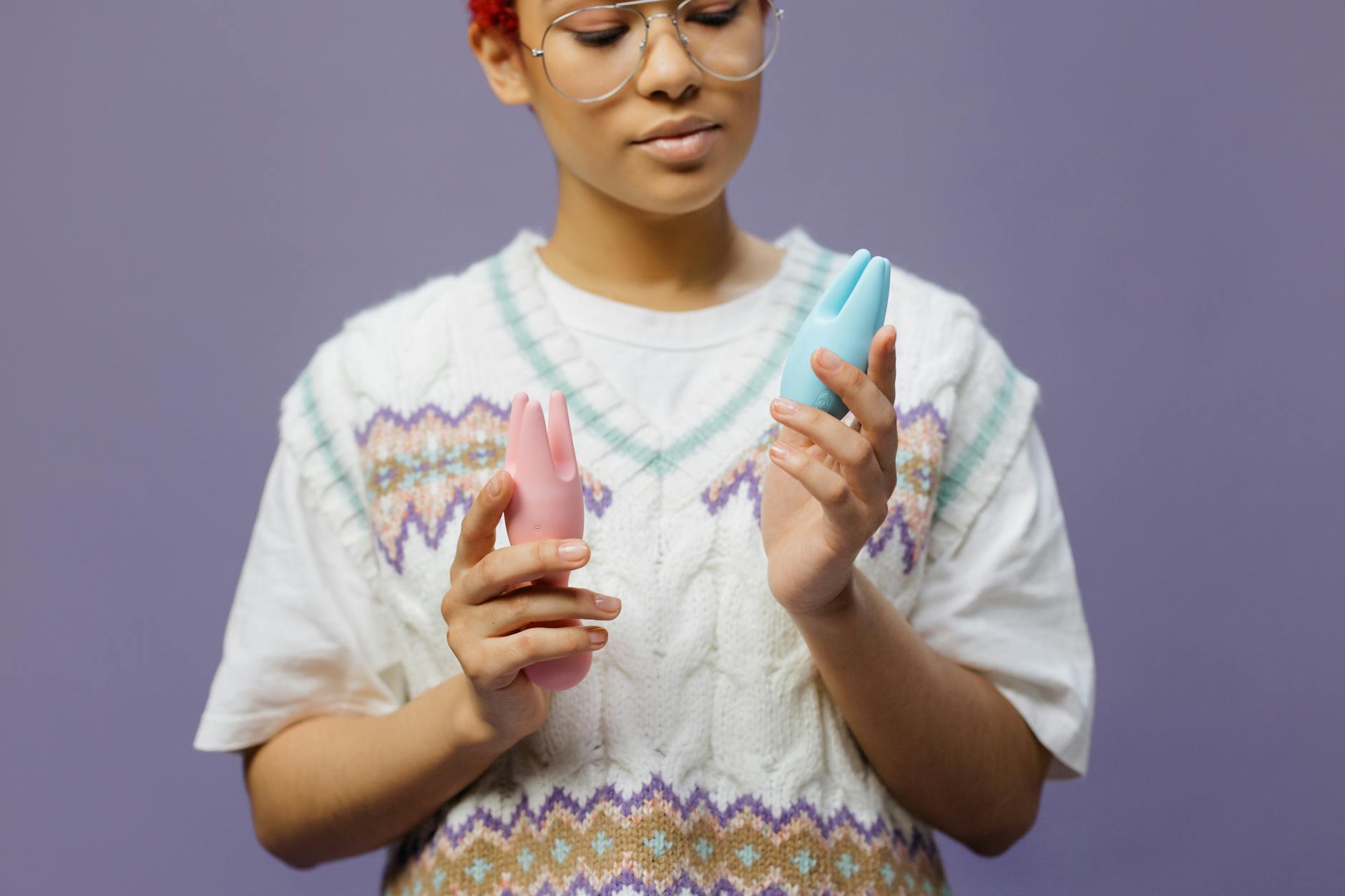
Here's what nobody tells you about aging and pleasure
Your clitoris doesn't wear out. But how you experience it does shift, and that's not a loss. It's a recalibration.
I work with people across decades of life, and the ones who struggle most aren't the ones experiencing change. They're the ones who expect their bodies to work exactly as they did at 25. That expectation kills more orgasms than biology ever could.
What actually happens to clitoral sensation over time
Your clitoris is roughly 8,000 nerve endings packed into a space smaller than a pea. That density doesn't change much with age. What changes is how efficiently those nerves fire and how quickly your brain processes the signal.
Here's the technical part made simple: arousal is a chemical process. Estrogen, testosterone, dopamine, and oxytocin all have to show up on time and in the right amounts. As you age, particularly if estrogen drops (whether from perimenopause, menopause, or other factors), the tissues around your clitoris get thinner. That's not bad. It just means stimulation feels different.
My clients often describe it as going from a wide, diffuse sensation to something more focused. Like your pleasure got a zoom lens instead of a panoramic one. Some people hate this. Others say it's the most intense sensation they've ever had.
Why the lemon sucker design works better as sensation changes
Traditional vibrators rely on speed and friction. A lemon clitoral vibrator uses air-pulse technology, which creates suction instead. This matters more than you might think as sensation shifts.
When tissue thins or becomes more sensitive, direct vibration can feel sharp or even painful. Suction works differently. It stimulates the entire clitoral structure, not just the surface. The Lem vibrator's design means you're not relying on speed to create sensation. You're creating it through pressure waves.
I've had clients in their 50s, 60s, and beyond tell me they couldn't orgasm with traditional vibrators anymore, but the Lem changed everything. The reason isn't magic. It's physics. Air-pulse technology creates a different kind of stimulation that often feels more comfortable on changing tissue while being deeply pleasurable.
The patterns that work when sensitivity shifts
Most people assume they need to crank up intensity as they age. The opposite is usually true.
Start at pattern 1 or 2, even if you used higher settings before. Your nervous system has gotten more efficient. What you perceive as "not enough" on day one might be perfect by week two as your body remembers what pleasure feels like.
Spend more time in the lower patterns. The Lem has seven settings. If you've been using 5, 6, or 7 for years, your nerve endings have adapted to that level of stimulation. They need a reset. Go low. Stay there for a full week if you can. Your sensitivity will come back, and when it does, lower patterns will feel revelatory.
Mix patterns instead of increasing speed. The Lem's different pulse modes create rhythmic variation that feels novel to your nervous system. Your brain finds variation more interesting than intensity. Use pattern 3, spend two minutes there, switch to pattern 2, then back to 3. This pattern play often produces stronger orgasms than just cranking to maximum.
Warm-up matters even more now
You probably know that arousal takes longer as you age. What you might not realize is that this is actually your body being smarter, not weaker.
Your nervous system has learned to distinguish between surface stimulation and real pleasure. It doesn't activate the full orgasm sequence unless it's genuinely interested. That's not dysfunction. That's discernment.
Budget 20 to 30 minutes for solo sessions if you can. Start with the Lem on your inner thighs, belly, or breasts before you go directly to your clitoris. This wakes up your entire sensory system. By the time the suction reaches your clitoris, blood is already moving there, tissue is engorged, and your brain is primed.
With a partner, tell them exactly this. "I need longer warm-up now. That's not a problem. That's foreplay." Many people interpret longer arousal as lack of desire. Reframe it: it's your body asking for more attention, more presence, more skill.
Lubrication shifts too
As estrogen changes, your body may produce less natural lubrication. This is one area where you genuinely do need intervention.
Use a water-based lubricant. Not because you're broken. Because thinner tissue appreciates the support and comfort. A good lube also increases sensation. It lets the Lem glide and create suction without friction.
Apply lube directly to your vulva and to the Lem itself. Most people undersuse lubricant. A quarter-sized amount isn't enough. Use at least a dime-sized amount, maybe more. Reapply halfway through if things start to feel dry.
Silicone lube feels luxurious but damages silicone toys. Stick with water-based. It's not a compromise. It's the right tool for the job.
Pelvic floor changes and what to do about them
Your pelvic floor muscles naturally lose tone with age, just like every other muscle. This can make some sensations feel less intense or change the shape of an orgasm.
Kegels help, but here's the thing nobody mentions: you need to do them regularly, not as a last-ditch rescue plan. Three times a week, 10 to 15 reps, for at least two months before you notice real change.
More importantly, learn to fully relax your pelvic floor. Many people clench when they're aroused, which actually works against pleasure. Spend time simply breathing and letting that area soften. Then use the Lem. The contrast between relaxation and stimulation often produces the most satisfying orgasms.
If you're experiencing pain during use, or if orgasm feels absent even with the right setup, see a pelvic floor specialist. This isn't a dead-end diagnosis. Physical therapy transforms these situations regularly.
The psychology part nobody mentions
Here's what I see most: the body's signals are fine. The brain's permission is the problem.
You've spent decades calibrating your pleasure around other people's timelines, reactions, and preferences. You've learned that your body should respond in a certain way. You've internalized the idea that if it doesn't feel like it used to, something's wrong.
None of that is true.
Your clitoris isn't failing you. Your expectations are fighting you. The moment you let go of "how it used to be" and get curious about "how it is now," everything changes.
I recommend this: use the Lem for pure exploration, not for the goal of orgasm. Spend a session just noticing. What patterns feel interesting? Which speeds make you want to slow down instead of speed up? What happens if you edge and come back down five times? Does the sixth approach feel different?
This isn't just psychology. It's neuroscience. Your brain processes new information better than repetitive information. Novelty itself creates arousal. Curiosity about your own body, at any age, is one of the best aphrodisiacs.
When to get professional support
If you're experiencing pain that doesn't improve with lubrication and patience, see a gynecologist or pelvic health specialist.
If orgasm has become impossible and you've tried the adjustments above for at least three weeks with no shift, it's worth discussing with a doctor. Sometimes genitourinary syndrome of menopause (GSM) is involved, or sometimes hormonal changes need actual medical support.
Your body isn't being difficult. It's just asking for the right kind of help.
The real truth about aging and pleasure
I've worked with people from their 20s to their 80s. The ones having the best sex aren't the youngest. They're the ones who stopped waiting for their body to cooperate and started getting curious about how it actually works.
Clitoral sensation changes with age. So does your capacity for presence, your willingness to ask for what you want, and your ability to tune out the noise. Trade that deal every time. Those later skills make better sex than perfect young nerve endings ever could.
Your body isn't the problem. Your assumptions about your body are. Let those go, pick up a lemon clitoral vibrator like the Lem, and pay attention to what actually feels good right now. That's where the pleasure is.