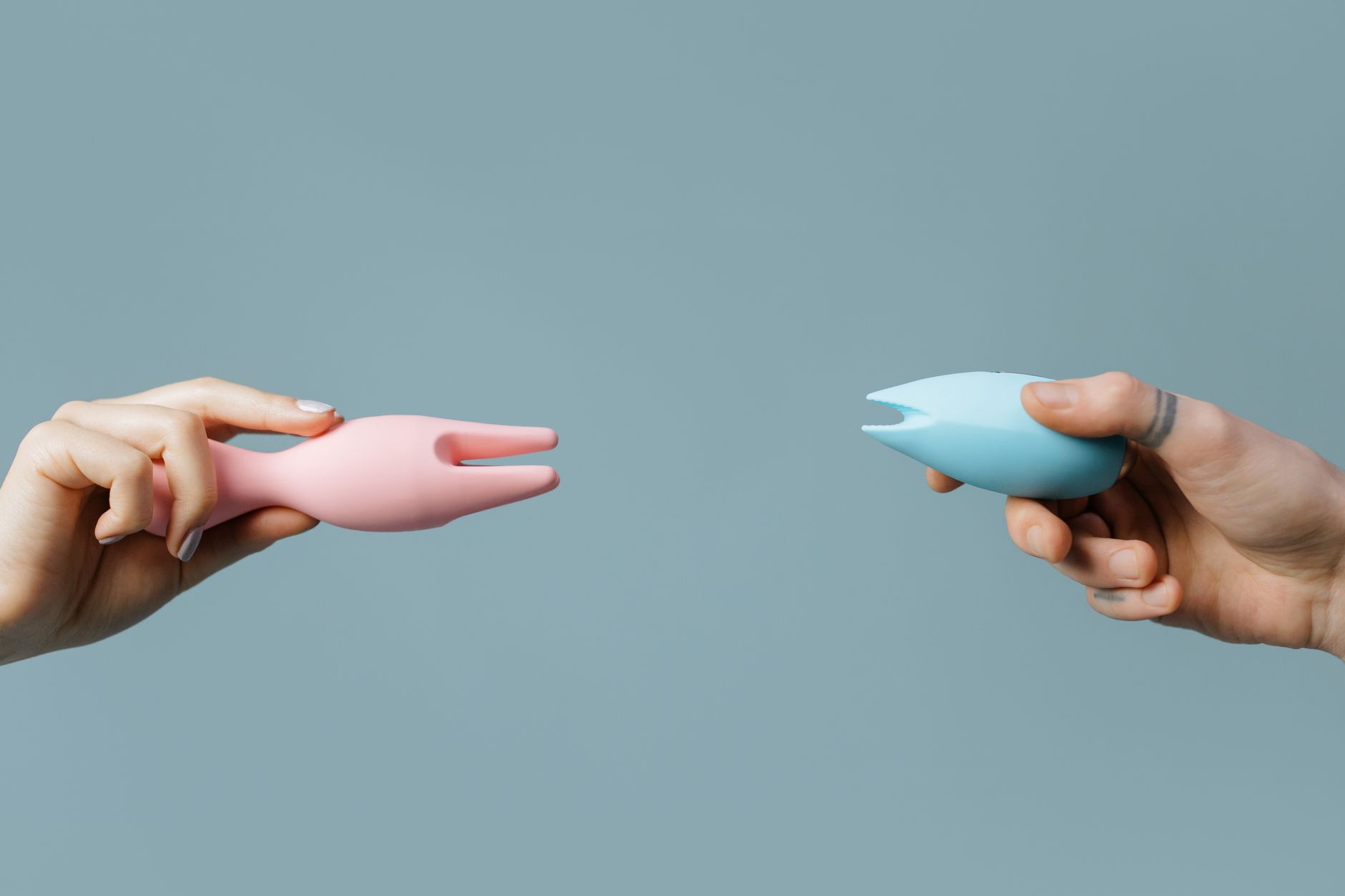
How pleasure reshapes after 50
Let's be real. Your body at 50 isn't your body at 30. But that doesn't mean pleasure stops. It shifts. And honestly, for a lot of people, it gets better.
The tissues around your vulva thin slightly. Lubrication changes. The clitoral glans becomes less exposed in some cases, which actually means you might need less intense direct pressure. Your pelvic floor loses some elasticity but can still generate powerful sensation. And here's the thing nobody talks about. Without hormonal cycles running your life, without the mental load of wondering if you're fertile or protected, your brain can actually focus on what feels good. That's not small.
When people tell me they're worried their pleasure is ending after 50, I hear something else underneath. They're grieving a version of their body they knew well. That's valid. And it's also not the whole story.
What actually happens to arousal and sensation
Estrogen and testosterone both shift. Lower estrogen means thinner, less elastic tissue. Lower testosterone means desire can take longer to activate. Your clitoris has the same number of nerve endings it always did, but the tissue around it responds differently to stimulation.
Here's what I see clinically over and over. People report their orgasms after 50 feeling deeper, more centered, sometimes more intense. Not because the mechanics changed. Because the distraction lifted.
Your sexual response cycle is slower. What used to take five minutes might take fifteen. Your arousal isn't as obvious physically, which some people panic about. But absence of visible wetness doesn't mean absence of arousal. It usually means your body needs more time and sometimes external lubrication.
None of this is permanent or inevitable, either. Hormone therapy, if it's right for you, can shift some of these patterns. But even without it, the right tool and a little patience changes the experience completely.
Why a lemon vibrator works after 50
Lemon vibrators, especially ones like the Lem Vibrator, use suction and pulsing rather than pure vibration. That matters. At 50, direct buzzing on your clitoral tissue can feel sharp, numbing, or overstimulating pretty quickly. Suction offers something different. It creates a gentle pulling sensation that simulates what oral sex does naturally, without the aggressive contact that can exhaust sensitive tissue.
The Lem Vibrator's rhythm also works well for a slower arousal curve. You're not racing toward something. You're building slowly, which aligns with how your body wants to move now.
If direct vibration has always worked for you and still does, keep going. But if you've noticed yourself needing breaks, or if pleasure has started to feel numb or elusive, switching to a lemon clitoral vibrator often opens everything back up. It's not about your body being broken. It's about matching the tool to what your body actually needs now.
How to use it. Actually use it.
First, time. If you used to spend ten minutes on foreplay and could orgasm in five, expand that. Give yourself twenty minutes minimum before you even touch the Lem Vibrator. That's not indulgence. That's physiology. Your blood needs time to route to your genitals. Your nervous system needs time to shift from alert to relaxed.
Use lube. Water-based, every time. Your tissue is thinner. Lube isn't optional. It's fundamental.
Start at a lower setting. The Lem Vibrator likely has multiple pattern options. Begin at the gentlest. Let your body adjust to the sensation. You're not trying to get there fast. You're reconnecting with what feels good right now.
Position matters more than it used to. Some people find lying on their side more comfortable. Some prefer being on their back with a pillow under the small of their back. Some need to be seated with legs spread. There's no right way. There's only what lets your body relax and stay present.
If your clitoral glans feels too exposed and sensitive, angle the vibrator slightly to one side or cover the area with a thin layer of fabric. This sounds small. It changes everything.
Duration also changes. You might need thirty minutes where you used to need ten. That's not a problem. It's not a sign something's wrong. It's just how pleasure works at this stage. Build in that time without expectation. Some sessions lead to orgasm. Some don't. Both are fine.
The intimacy shift
If you're partnered, this is worth naming. Your partner's arousal probably hasn't slowed much. Yours has. That mismatch creates tension if you don't talk about it directly. This isn't a conversation about desire or attraction. It's a conversation about pacing. "I need more time before we touch. That's not about you. That's what my body needs."
Using a lemon vibrator solo can also deepen how you understand your body now. When you know what works for you, communication with a partner becomes concrete instead of abstract.
Some couples find using a tool together during partnered sex bridges the timing gap elegantly. You use the Lem Vibrator while they touch you or enter you. Everyone's on the same page. Pleasure isn't competitive.
You might also find that your pleasure solo is more satisfying than it's been in years. The pressure lifts. You're not performing. You're just feeling.
When to check in with a provider
If sex starts to hurt, that's not normal aging. That's genitourinary syndrome (a real medical condition) or pelvic floor tension or something else treatable. A menopause-informed gynecologist can usually help quickly.
If you feel nothing even with the right tool and time and lube, ask about hormone options. Topical estrogen cream or testosterone therapy can transform sensation. Both have minimal systemic absorption. Both work.
If desire has completely flatlined and isn't returning, that's worth exploring with a therapist too. Sometimes it's medical. Sometimes it's relational. Sometimes it's grief. Usually it's multiple things at once.
The permission you actually need
Here's what I'd say if we were sitting across from each other. Your pleasure after 50 isn't less valid than your pleasure at 30. It's different. It might be slower. It might require more setup. It might feel less urgent. And for a lot of people, that makes it deeper.
You deserve touch that feels good. You deserve to explore what works for your body now. A lemon clitoral vibrator isn't a compromise. It's a tool that actually fits how your body responds. That's not settling. That's wisdom.
Take the time. Use the lube. Start gentle. Let your body surprise you.
People also ask
How often can I use a lemon vibrator after 50?
As often as you want. There's no limit. Some people use it a few times a week. Some use it daily. Some use it sporadically. The only rule is comfort. If the tissue around your vulva feels irritated, give it a rest day. That's rare, but it happens. Otherwise, frequency is about preference, not medical caution.
Will a lemon vibrator feel different on my body at 50 than it did at 30?
Yes. The sensation might feel less intense at first contact because your clitoral tissue is slightly less exposed. But many people find the pulsing and suction sensation more pleasurable after 50 because it doesn't create the numbing that pure vibration sometimes does. It's not worse. It's different. And different often means better once you adjust your expectations.
Can I use a lemon vibrator if I'm on hormone therapy?
Absolutely. Whether you're using topical estrogen, systemic hormone replacement, or testosterone, a lemon vibrator works beautifully. Some people find their sensitivity increases once they start hormone therapy, which might mean adjusting your starting intensity level. But using a vibrator and using therapy aren't in conflict. They're complementary.
What if nothing works after trying a lemon vibrator?
First, give it time. You might need three or four sessions before your body relaxes into a new tool. If after a week of regular use nothing shifts, check in with a menopause-informed gynecologist. You might have genitourinary syndrome, which is highly treatable. Or you might need a different tool entirely. A lemon sucker isn't universal, even though it works for most people.
How do I talk to a partner about needing more time now?
Direct and kind. "My body needs about twenty minutes of build-up before I'm ready. That's not about you or your attractiveness. It's how I'm wired now." Then make a plan. Maybe you use that time for touch that feels good to both of you. Maybe you use part of it with the Lem Vibrator. Maybe you use it solo and then come together. The format matters less than the honesty.
Is it normal to need lube every time after 50?
Completely normal. Your vaginal tissue thins with lower estrogen. That doesn't mean something's wrong. It means your body needs support. Water-based lube is a tool, not an admission of failure. Use it every single time without hesitation. Your pleasure is worth it.
Moving forward
Your body at 50 is not your body at 25. That's not a loss. It's an evolution. The right tool, the right timing, and permission to explore pleasure on your body's own timeline transforms everything. A lemon vibrator meets your body where it is now, which is exactly where you need to be.
If you have questions about finding the right approach for your body or want to explore options tailored to your specific situation, <a href="/contact">reach out to us</a>. You deserve pleasure that actually fits how you are now.