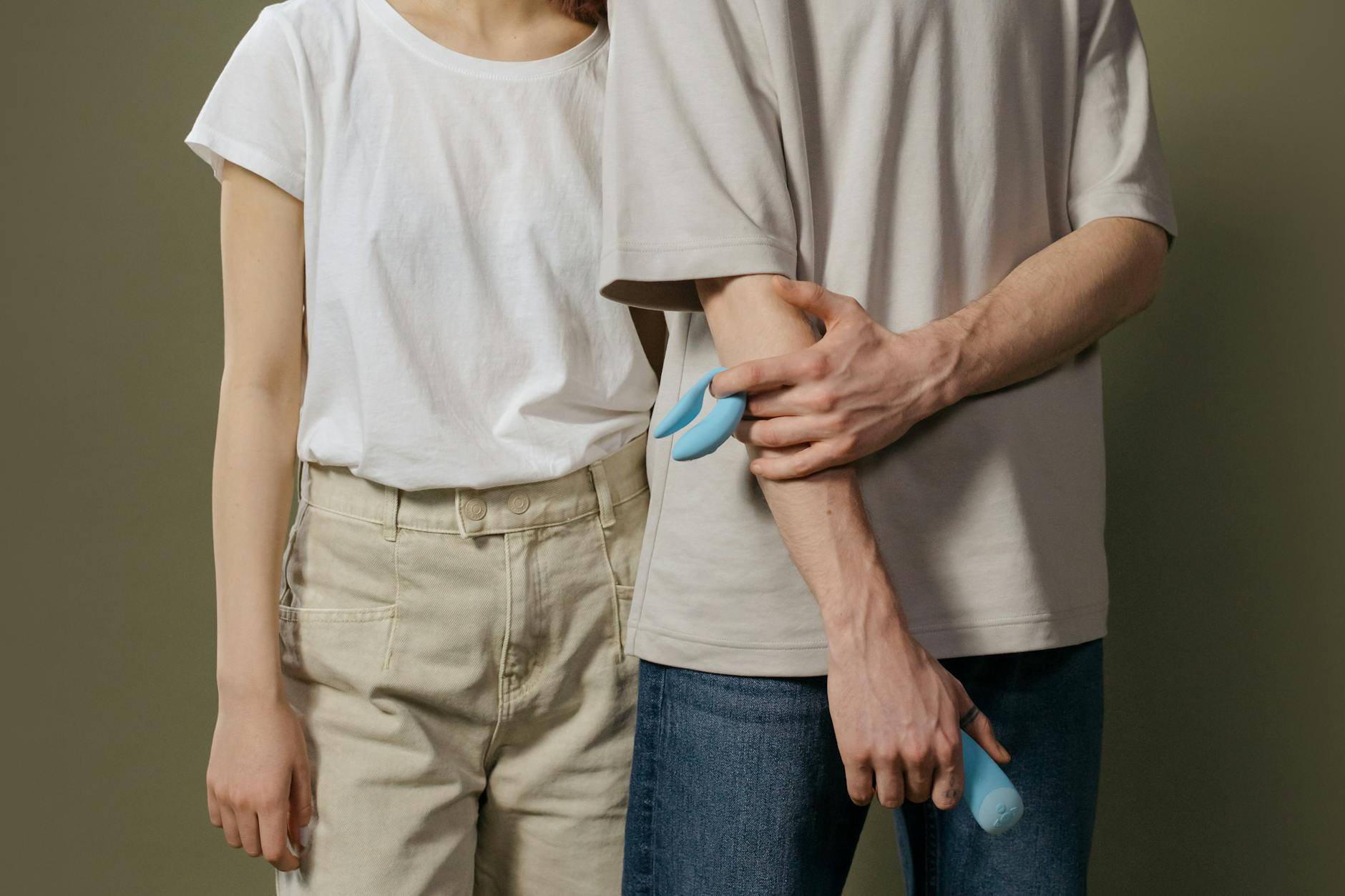
Let's talk about what actually happens to your body after a split
Breakup sex is a myth. But breakup self-pleasure is real, and it's nothing like what you experienced during the relationship. Your nervous system spent years synchronizing with a partner. When that person leaves, arousal doesn't just pick back up where it left off. It recalibrates completely.
I've worked with dozens of people navigating solo pleasure again after long-term partnerships ended, and the pattern is consistent. Everything feels muted at first. Then, if you give it space and patience, it often feels better than before.
Here's why, and how a lemon clitoral vibrator fits into that journey.
The nervous system recalibration phase
Your arousal system is wired for safety, trust, and predictability. During a relationship, your body learned a specific script. You knew how your partner would touch you, when they'd initiate, what patterns worked. That familiarity isn't romantic nostalgia. It's neurobiology. Your nervous system relaxed because it knew what to expect.
After a breakup, that safety net vanishes overnight. What happens next is not a failure of desire. It's your nervous system saying, "Hold on. I don't know if I'm safe here." Arousal takes longer to build. Sensation feels distant. Orgasms, if they come at all, feel smaller or more effortful.
This is exactly where people get stuck. They interpret "arousal feels slow" as "I'm broken" or "I don't want pleasure anymore." Neither is true. Your body is being appropriately cautious in a new environment.
Why lemon vibrators work differently after a breakup
A lemon clitoral vibrator, like any suction toy, offers something really valuable during this phase: consistent, non-judgmental stimulation. You control the intensity, the rhythm, the timing. No negotiation. No watching another person's face. No performing.
For people coming out of relationships where pleasure was entangled with someone else's needs or preferences, that autonomy matters neurologically. The Lem, for example, uses gentle suction and air-pulse technology rather than traditional vibration. It requires less directional adjustment than other clitoral vibrators, which means less cognitive load. You can actually relax into the sensation instead of managing it.
Many people find that sensation builds faster and more intensely when they're not also managing a partner's presence or trying to synchronize timing. That's not weakness. That's your nervous system doing what it's designed to do: prioritize your own safety and pleasure when you're alone.
The timeline you should actually expect
Here's the uncomfortable truth: there's no standard timeline. Some people feel arousal returning within weeks. For others it takes months. The length of the relationship, the nature of the breakup, and your own attachment history all factor in.
But I've noticed a rough pattern in my practice:
Weeks 1-4: Numbness is normal. Your body is processing grief and identity loss simultaneously. Solo pleasure can feel mechanical or pointless. This is a terrible time to judge whether you still enjoy sex.
Weeks 5-12: Sensation starts returning, but inconsistently. Some days arousal is there, sharp and surprising. Other days you feel nothing again. This whiplash is frustrating but it's actually progress. Your nervous system is learning it's safe to experience pleasure again.
Months 3-6: Desire often shifts. What used to turn you on might not anymore. New things might feel intriguing. This isn't betrayal of your past relationship. It's actually you reclaiming your own sexuality separate from someone else's preferences.
A lemon vibrator is worth introducing somewhere in month 2 or 3, when sensation is starting to return but feels fragile. The consistency and ease of use can help you rebuild trust in your own body.
The emotional component nobody mentions
Physically, your clitoris still works. The neural pathways are still intact. But pleasure exists in the brain as much as in the body. After a breakup, that brain space is occupied with grief, anger, self-doubt, or sometimes relief. Arousal requires attention you might not have available yet.
I always tell my clients: if you feel guilty taking time to rediscover solo pleasure, that's worth exploring. Guilt often masks something useful. Maybe you're not ready. Maybe you're worried about "moving on too fast" or "betraying" the relationship. Maybe you're afraid the pleasure you find alone will prove the relationship wasn't working.
All of that is real. And none of it changes the fact that your pleasure belongs to you, not to the person who left.
How to actually use a lemon vibrator during this phase
Start with no pressure. Literally. If you introduce the Lem or another lemon clitoral vibrator too soon, it can feel invasive. Your nervous system is already overwhelmed.
Wait until you have at least one experience of solo arousal first. Not orgasm. Just the feeling of wanting something. Then, when you try the vibrator, do it in broad daylight in a room you like, maybe with music you enjoy. Nothing is less erotic than a post-breakup guilt spiral in the dark.
Start at the lowest intensity. Many people skip straight to pattern 3 or 4, assuming they need maximum stimulation to feel anything. You probably don't. Low intensity lets your nervous system relax into the sensation rather than bracing against it.
And crucially: if it doesn't work today, that's information, not failure. Put it away. Try again in a few days. Your body will let you know when it's ready.
When desire stays gone longer than you expected
Some people go months without feeling arousal return. That's not abnormal, especially if the breakup involved betrayal, financial stress, or shared trauma. Your nervous system might still be in protection mode.
If that's you, a lemon clitoral vibrator isn't the intervention. What you need is time, possibly therapy, and permission to stop expecting yourself to "bounce back." Healing looks different than happiness, and your sexuality will find its way back when your nervous system believes it's truly safe.
But here's what I've learned: people almost always get there eventually. Desire doesn't stay gone. It just rewrites itself around who you are now, not who you were when you were partnered.
The surprising part most people don't talk about
Many of my clients tell me their most satisfying solo experiences came after a breakup. Not immediately. But months in, when the numbness wore off and curiosity returned, they found a kind of pleasure that had nothing to do with performance or sync or reading another person's signals.
That freedom changes things. Your body isn't a duet anymore. It's a solo. And that solo often has more range, more intensity, and more genuine satisfaction than anything that came before.
A lemon vibrator, with its intuitive controls and consistent sensation, gives you a tool to explore that new pleasure without complexity. No negotiation. No timing. No one watching. Just your body, your choice, and whatever feels good in the moment.
That's not consolation for what ended. But it might be closer to healing than you think.
FAQ: Navigating Pleasure After a Relationship Ends
Can you use a lemon vibrator immediately after a breakup?
Technically yes, but emotionally maybe not. If you're numb or in acute grief, a lemon clitoral vibrator will probably feel pointless. Your nervous system needs to stabilize first. Most people find weeks 5-8 is when trying feels natural rather than forced. Listen to your body, not a timeline.
Does solo pleasure feel guilty after a long-term relationship?
Often, yes. That guilt usually stems from one of three places: you're not ready yet (legitimate), you're worried you're betraying the relationship (you're not), or you're afraid pleasure alone proves the relationship was missing something (it might, and that's worth processing with a therapist). The guilt usually fades as you reframe your sexuality as yours alone.
Why does arousal take longer after a breakup?
Your nervous system spent years synchronized with a partner. It learned their touch, their rhythm, their presence meant safety. After a breakup, you're a stranger to your own body again. Your arousal system is being appropriately cautious until your nervous system believes you're safe exploring solo. This is normal and temporary.
Do you need lubricant with a lemon vibrator after a breakup?
Yes, often more than you might expect. Stress, anxiety, and grief can all reduce natural lubrication. Water-based lube is essential with the Lem or any lemon clitoral vibrator. It also removes the pressure of waiting for your body to produce enough wetness on its own, which takes mental load off and lets you relax more.
How long before pleasure feels normal again after a split?
There's no fixed timeline, but most people notice a shift around the 3-month mark. That doesn't mean full pleasure. It means you've stopped expecting it to work like it did before and started discovering what it feels like now. The Lem or another lemon vibrator can help you track that shift because it's so responsive to small changes in your arousal state.
Is it normal if orgasms feel different or smaller after a breakup?
Completely normal. Orgasms are tied to your overall nervous system state. When you're grieving or in emotional recalibration, orgasms often feel less intense or more localized. This isn't permanent. As your nervous system settles, sensation typically deepens again. Some people find their post-breakup orgasms are actually more intense once they return because they're purely for themselves.
Moving forward
Your pleasure is not collateral damage from a relationship ending. It's part of who you are, separate and intact. If it feels lost right now, that's grief talking, not truth. A lemon vibrator can't fix emotional pain. But when your nervous system is ready to rediscover sensation, it's a remarkably helpful tool for learning that pleasure without a partner looks nothing like pleasure with one. And for many people, it looks better.
If you're struggling with the emotional side of rebuilding after a split, that deserves professional support. Reach out if you'd like to talk through what healing looks like for you.